

A traditional Japanese wedding is usually a Shinto ceremony (shinzen shiki) held at a shrine with close family. The couple wear formal kimono, share sake in a ritual called san-san-kudo, and offer prayers to the kami. A larger reception follows. In Japan, marriage becomes legal through registration at a municipal office, not through the ceremony.
A Japanese wedding can look very different depending on whether the couple choose a shrine, a chapel, or a secular ceremony.
Understanding the main formats, and the customs that stay constant across them, makes it easier to plan one or to attend one as a guest.
Where Japanese Wedding Customs Come From
Marriage customs in Japan changed a great deal over the centuries. Historically, weddings were often held at home, centered on the families and a ritual sharing of sake.
The shrine ceremony most people picture today became widely popular in the early 1900s. It is commonly linked to the 1900 wedding of Crown Prince Yoshihito, which was held in a Shinto setting and inspired the public to follow.
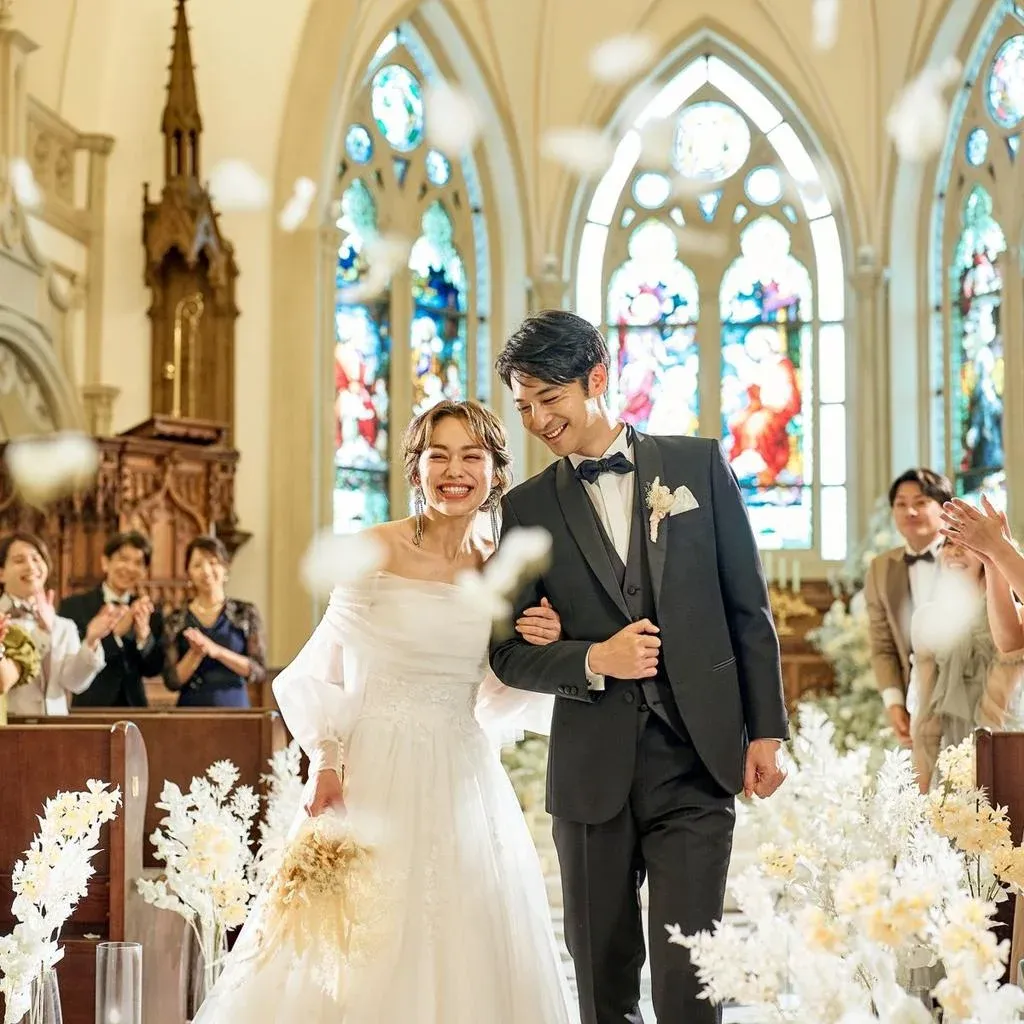
Today, Japan has several ceremony styles side by side. Shinto weddings are the best-known traditional format. Christian-style chapel weddings are also very common in Japan, including among couples who do not practice Christianity. Both are considered ordinary, mainstream choices.
The Shinto Wedding Ceremony (Shinzen Shiki)
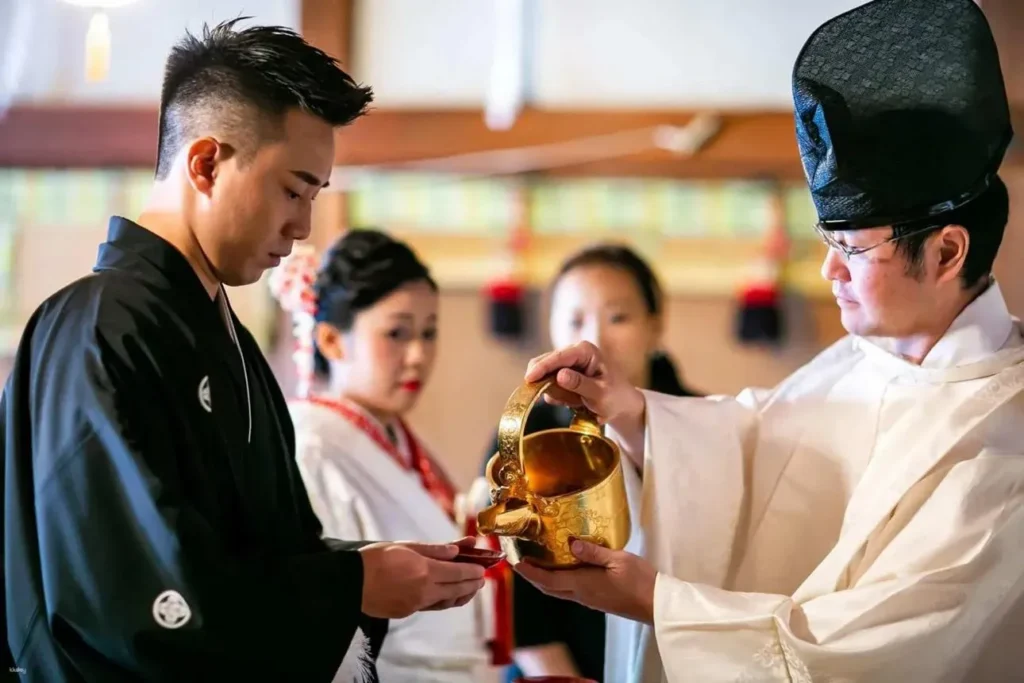
A shinzen shiki is a short, formal ritual, often lasting around 30 minutes. It is led by a Shinto priest, with shrine maidens (miko) assisting. Attendance is usually limited to immediate family, and sometimes a few close relatives. The details vary by shrine, but the usual sequence includes:
- Procession. The couple, priest, and family walk to the sanctuary together, often under a large red paper umbrella.
- Purification. The priest performs a ritual cleansing (shubatsu) of the couple and guests.
- Prayer. The priest reads a prayer (norito) announcing the marriage to the kami and asking for blessings.
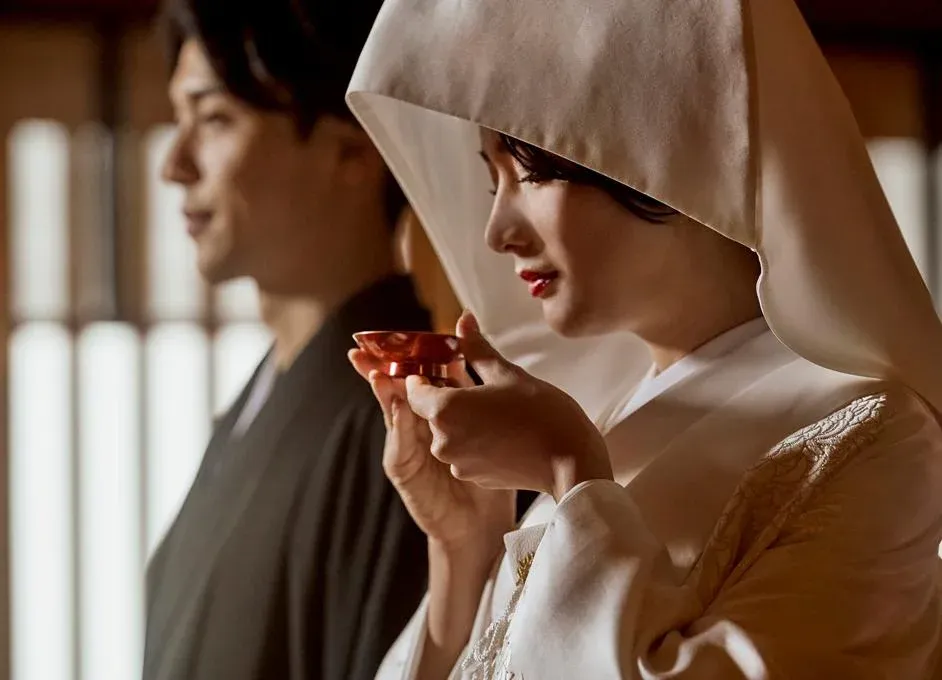
- San-san-kudo. The couple take three sips each from three sake cups of increasing size. The name means “three-three-nine.” The ritual is commonly interpreted as binding the couple together.
- Vows. The couple read their vows aloud.
- Ring exchange. This is a modern addition borrowed from Western weddings, now common at many shrines.
- Offering. The couple present a sprig of the sacred sakaki tree (tamagushi) to the kami.
- Family sake. Both families drink sake together, symbolizing the joining of the two households.
Traditional Japanese Wedding Attire
Attire is one of the most recognizable parts of a Japanese wedding. For a Shinto ceremony, these are the traditional choices.
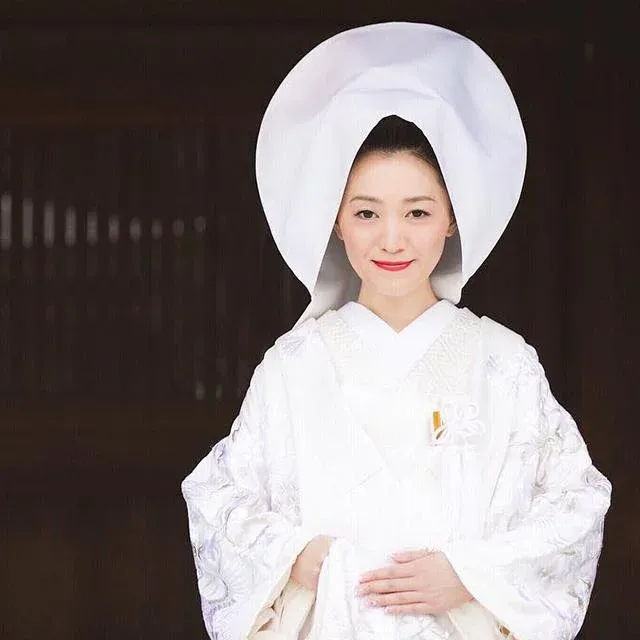
The bride typically wears a shiromuku, a pure white kimono. She covers her hair with either a tsunokakushi, a white hood, or a wataboshi, a wide white hat.
The tsunokakushi is often explained as hiding the bride’s “horns” of jealousy, though explanations vary and many families now describe it simply as a symbol of gentleness and respect.
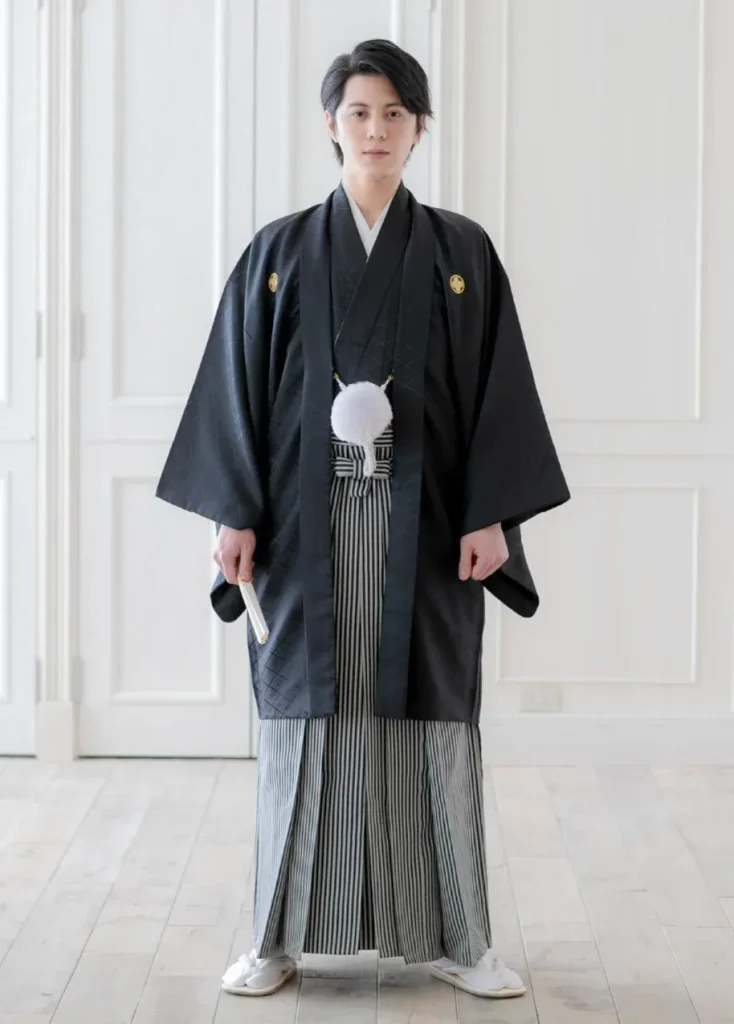
The groom wears a montsuki haori hakama, a black formal kimono jacket and pleated trousers, marked with the family crest.
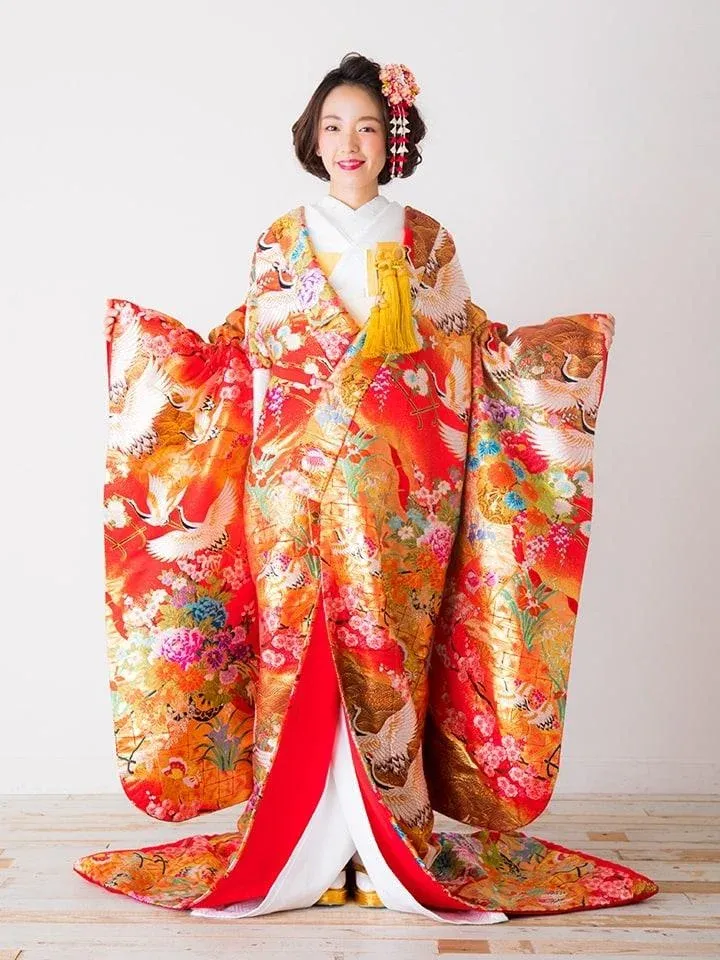
Many brides change outfits during the day, a custom called oironaoshi. A common change is from the white shiromuku to a brightly colored kimono, such as an iro-uchikake in red or gold, and then sometimes to a Western gown. Red and gold carry associations with good fortune and celebration in Japanese tradition.


Other Japanese Wedding Ceremony Types
Not every Japanese wedding is a Shinto one. These are the main alternatives:
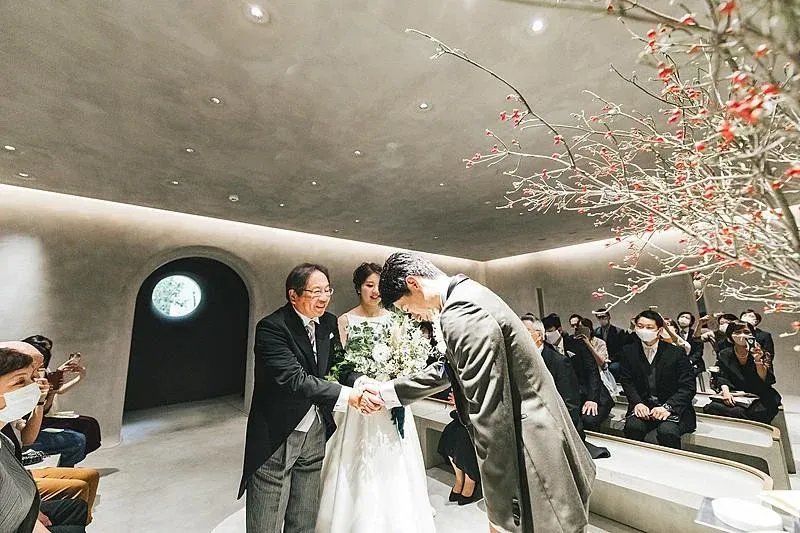
- Christian-style chapel wedding. Held in a chapel, with a white dress, vows, and often a hired officiant. It is popular in Japan for its Western look, even when the couple are not Christian.
- Jinzen shiki. A “witnessed by people” ceremony with no religious officiant. The couple make their vows in front of family and friends.
- Buddhist ceremony (butsuzen shiki). Held at a temple, with prayers before the Buddha. It is less common than Shinto or chapel weddings.
Choosing a format is a personal and family decision. Many couples blend elements, such as a Shinto ceremony for family and a Western-style party afterward.
The Japanese Wedding Reception and Gift Customs
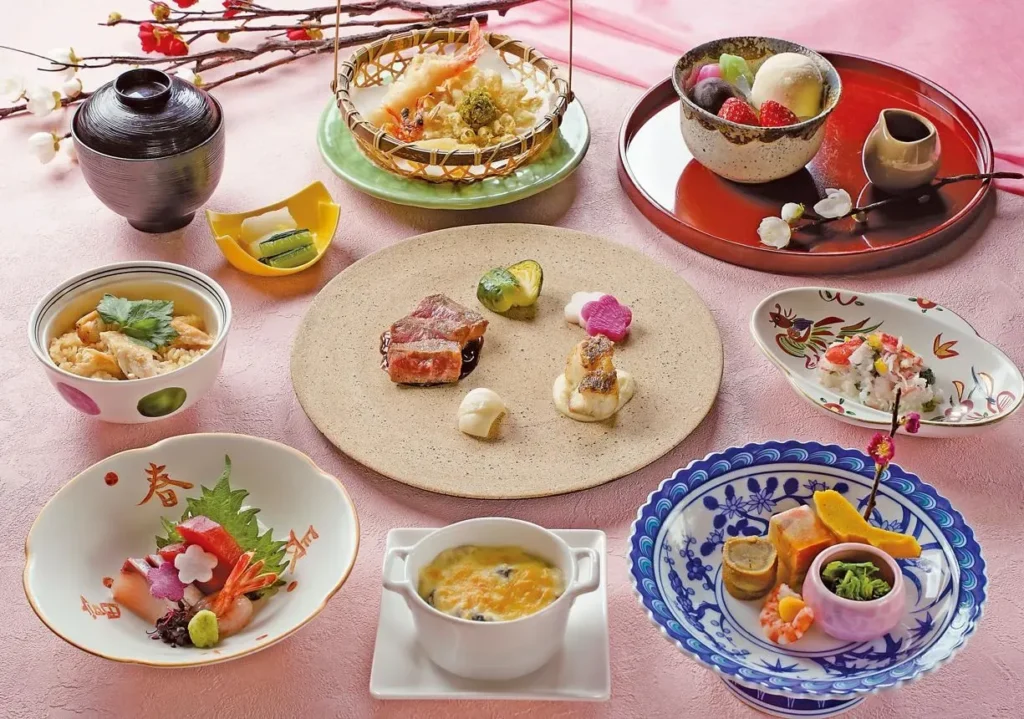
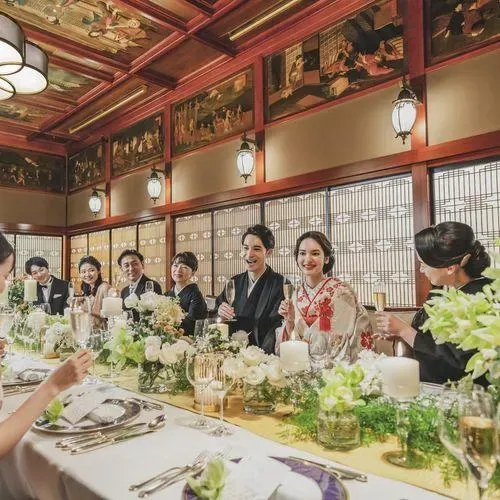
The reception, called a hirōen, is a larger celebration that follows the ceremony. It often includes speeches, a meal, a cake-cutting, and entertainment. Guests may include coworkers and friends who did not attend the ceremony.
Gift-giving follows specific rules in Japan:
- Goshūgi (cash gifts). Guests give money in a special envelope, rather than buying items from a registry. Bills are traditionally crisp and new. Guests often choose odd-numbered amounts and avoid unlucky numbers like 4, which sounds like the word for death. Typical amounts vary by relationship and region, so treat any figure as approximate.
- Mizuhiki cords. The decorative cord on the envelope forms a knot that cannot be undone. This reflects the hope that the marriage lasts. People do not use the same knot for funerals or events they hope won’t repeat.
- Hikidemono (return gifts). Guests leave with a gift from the couple, often a practical item or a catalog card to select one.
- Kagami biraki. At some celebrations, guests break open a sake barrel lid with wooden mallets and share the sake. It is a ceremonial toast, and some couples add it to the reception.
Many Japanese couples also consider the traditional lucky-day calendar (rokuyō). The day called taian is regarded as especially auspicious. Butsumetsu is traditionally avoided for celebrations. This is a common practice rather than a requirement, and not every couple follows it.
Having a Japanese Wedding in the United States
Planning a Japanese wedding in the US involves a few practical points. These claims apply to the United States.
The legal marriage. A US marriage requires a marriage license that the state where you marry issues, plus a ceremony that an officiant authorized in that state leads. A Shinto ritual by itself may not satisfy this requirement.
Many couples complete the legal marriage separately, or confirm in advance that state law authorizes their officiant. Rules vary by state, so check with the county clerk.
Finding a priest and venue. Few Shinto shrines outside Japan perform weddings, although a few exist in places with large Japanese communities, such as Hawaii and the West Coast.
Contact them directly to confirm whether they perform weddings and what they require. Some couples travel to Japan for the shrine ceremony instead.
Attire and rentals. Traditional kimono can be rented or purchased from specialist shops, and a dresser (kitsuke-shi) can help with the complex layering. Allow extra time for dressing, since it takes longer than a standard bridal gown.
Cultural blending. Many Japanese American couples combine elements, such as a sake ceremony within an otherwise American wedding. Incorporating one or two customs, with explanation in the program, helps guests understand what they are watching.
What to Expect as a Guest
If you are invited to a Japanese wedding, a few simple guidelines help:
- Follow the dress code on the invitation. In Japan, women generally avoid wearing white, since white is reserved for the bride.
- If you are attending in Japan, bring a goshūgi envelope. At a wedding in the US, a gift on the registry or a card with a check is generally acceptable unless the couple say otherwise.
- Expect a formal tone at the ceremony. Speeches and toasts are typically structured, and the toast “kanpai” is common.
- Accept the return gift graciously. It is a gesture of thanks.
Frequently Asked Questions
People call a traditional Shinto wedding shinzen shiki, meaning a wedding held before the kami. They call the celebration that follows hirōen.
In a Shinto ceremony, brides typically wear white (shiromuku). Many then change into a colorful kimono, often red, for the reception. White and red are both considered auspicious in Japanese tradition.
Gifts are cash, given in a decorated envelope. Amounts depend on your relationship to the couple and the region, so ask a trusted friend or relative if unsure. Avoid amounts that include the number 4 or are evenly divisible, as these are considered unlucky.
In Japan, no. Legal marriage happens by registering at the local government office. In the US, a ceremony is only binding if you hold a valid marriage license and an authorized officiant completes it.
Some shrines in Japan welcome foreign couples and offer English-language support. Policies differ by shrine, so contact the shrine directly before booking.
Conclusion
A Japanese wedding blends ritual, symbolism, and family at its center, whether it is a quiet shrine ceremony or a mix of traditions. If you are planning one in the US, start by confirming your legal marriage requirements with your county clerk, then decide which traditions matter most to you and your families.

Daniel Morgan is a writer and editor specializing in wedding traditions, cultural celebrations, vows, gifts, food, music, and the stories behind modern wedding customs. At MarryPlane, he explores how couples around the world celebrate marriage while explaining traditions in a respectful, accessible way for modern readers.