
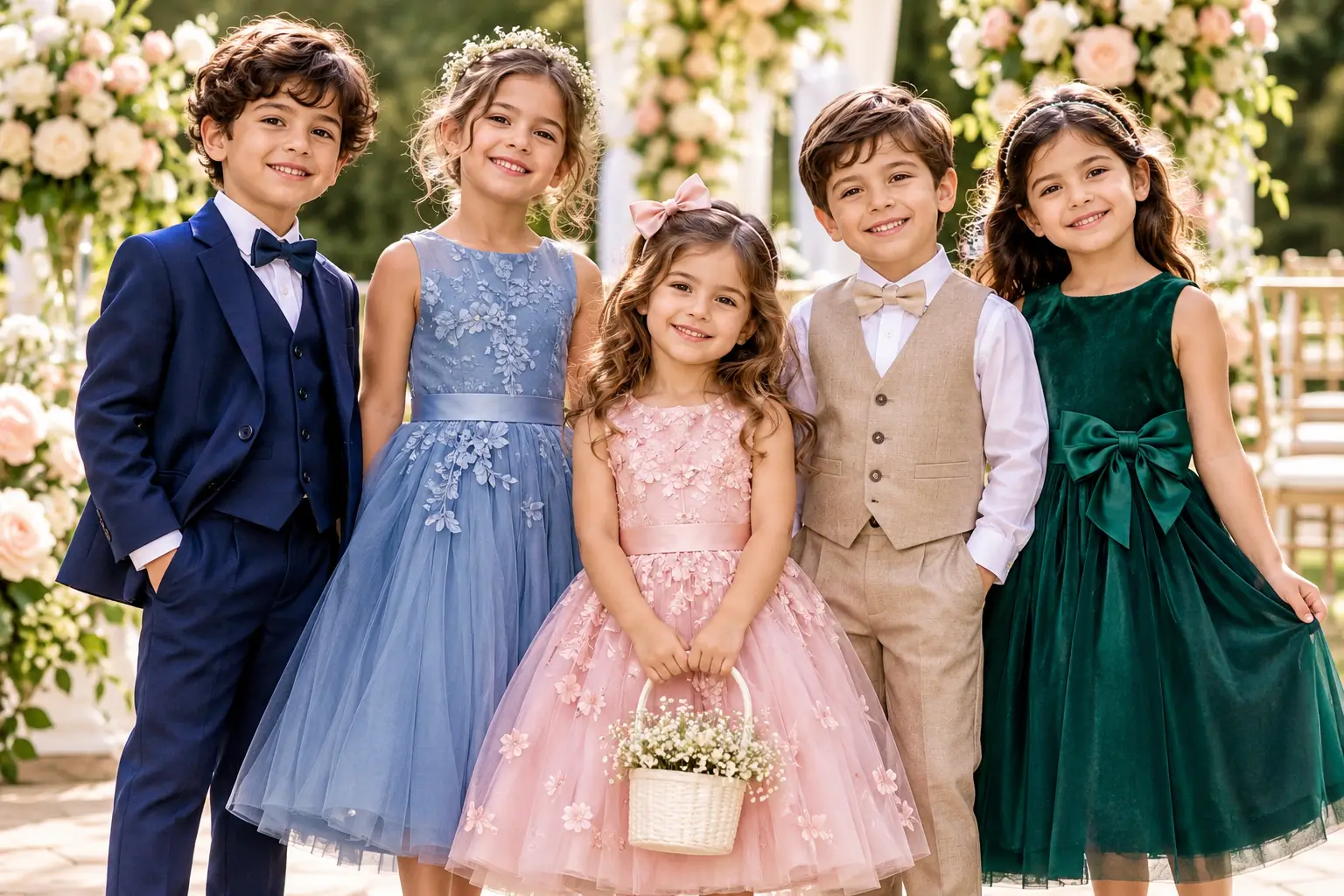
The best wedding outfit for kids is one that matches the wedding’s formality, uses soft breathable fabric, and lets the child sit, run, and dance without fuss.
For most weddings, that means a knee-to-tea-length dress or a shirt, vest, and trousers set in a muted or coordinating color, with flat, broken-in shoes.
| Wedding type | Girls | Boys |
| Black-tie or formal | Floor-length tulle or satin dress, hair accessory, ballet flats | Three-piece suit or tuxedo, bow tie, leather shoes |
| Semi-formal | Tea-length dress in crepe, chiffon, or lined cotton | Blazer or vest, collared shirt, tailored trousers |
| Outdoor or garden | Cotton, linen, or eyelet dress; flat sandals | Linen shirt, suspenders, chinos or shorts |
| Beach | Lightweight sundress or linen set | Short-sleeve linen shirt, light trousers or shorts |
| Cultural or traditional | Lehenga, gharara, hanbok, kimono, or other regional dress | Sherwani, kurta pajama, waistcoat, or regional formalwear |
What Makes a Wedding Outfit “Best” for a Child
A child’s outfit has to work for hours, not just photographs. Weddings can include a long ceremony, a wait for the couple’s portraits, dinner, and dancing. The outfits that succeed share five qualities:
- Comfort first. Soft linings, no scratchy tulle against the skin, no stiff collars, and elastic or hidden stretch at the waist.
- Easy movement. Kids need to climb into chairs, kneel, and run. Check that the outfit allows it before the day.
- Right formality. A child can be dressed up without matching adult black-tie.
- Practical color. Mid-tones and patterns hide stains better than pure white or pale pastels.
- Easy changes. A bathroom trip should not require a fifteen-minute struggle with buttons.
Best Wedding Outfits for Girls
Tea-length dresses are the most versatile choice. A hem that sits between the knee and mid-calf avoids tripping and looks polished in photos. Look for a fitted bodice with a gently flared skirt in satin, crepe, or lined cotton.
Tulle-skirted dresses are the classic flower girl look. They have volume and movement, but check that the inner lining is soft cotton and the tulle layers are not scratchy at the neckline or armholes.
Floral and eyelet cotton dresses suit garden, farm, and daytime weddings. They breathe well and are easier to clean than satin.
Two-piece sets, such as a top with a coordinating skirt or a matching sharara, are practical for younger girls and photograph beautifully.
Styling details: A satin sash, small flower crown, or simple hair bow adds polish without weight. Skip heavy headbands, long trailing ribbons for toddlers, and anything that can snag.
Best Wedding Outfits for Boys
Vest and shirt sets are the best all-rounder. A collared shirt, fitted vest, and tailored trousers look sharp, and the child can remove the vest if they get warm.
Full suits and tuxedos suit formal evening weddings and ring bearers. Choose jersey-lined or lightly stretch fabric and check the shoulders and sleeve length so jackets do not bunch when arms are raised.
Linen shirts with suspenders and chinos fit rustic, outdoor, and summer weddings. Rolled sleeves and a bow tie or no tie keep things relaxed.
Kurta pajama, sherwani, or waistcoat sets work well for South Asian weddings. A cotton-silk or soft brocade kurta in ivory, deep green, navy, or maroon feels festive and holds up through long celebrations.
Styling details: Clip-on or pre-tied bow ties are easier than neckties. Suspenders are often more comfortable than belts for small boys.
Choosing by Age
- Babies (under 1): Soft cotton rompers, a baby dress with a snap-crotch bodysuit, or a mini waistcoat set. Prioritize easy diaper access and breathable fabric.
- Toddlers (1 to 3): Elastic or stretch waists, minimal buttons, and short hems. Avoid long skirts and layered looks that make walking difficult.
- Young children (4 to 8): Their personalities now shape the outfit. Let them choose between two options, because kids who feel good in an outfit stay happier in it.
- Pre-teens (9 to 12): Cut and fit matter more. A tailored jumpsuit, midi dress, or slim-fit suit feels grown-up without being a miniature adult costume.
- Teens: Treat them as guests. Follow the adult dress code in a more age-appropriate cut.
Colors That Work Well
- Neutrals: Ivory, champagne, blush, sage, dusty blue, and soft gray are safe, elegant, and photograph well.
- Jewel tones: Emerald, burgundy, navy, and deep teal suit autumn, winter, and evening weddings.
- Pastels: Light pink, lavender, mint, and butter yellow work for spring and daytime celebrations.
- Coordinating with the wedding palette: Match one accent color, such as a sash, tie, or pocket square, rather than dressing every child head to toe in the same shade.
Avoid white or ivory unless the couple has asked for it. Those shades are traditionally reserved for the bride. Flower girls often wear white by the couple’s choice, but guest children should check first.
Seasonal Considerations
- Spring and summer: Cotton, linen, voile, and lightweight chiffon. Choose light colors and breathable linings.
- Autumn: Mid-weight crepe, velvet trim, or corduroy trousers. Layers like cardigans and blazers add warmth.
- Winter: Velvet, wool-blend vests, tights, and a coat or shawl for outdoor moments.
- Hot or humid climates: Prioritize natural fibers and avoid heavy satin, polyester linings, and jackets that cannot come off.
Shoes and Accessories
Shoes cause more wedding-day problems for kids than outfits do. Choose a flat or low-sole shoe that has already been worn around the house, so there are no surprise blisters. Ballet flats, closed leather loafers, and simple sandals work well. Bring spare socks or tights.
Keep accessories minimal. A small bag for a flower girl, a pocket square for a ring bearer, or a simple hair clip is enough. Anything that can be pulled, lost, or swallowed should be left at home.
Budget Considerations
Kids outgrow outfits quickly, so smart shopping matters:
- Rent or borrow formal suits and tuxedos, especially for ring bearers.
- Choose re-wearable pieces like a cotton dress or a vest and trousers that can be worn again.
- Buy a size up only for items that can be hemmed or adjusted, and do it a few weeks ahead.
- Check secondhand and resale shops for high-quality formalwear in near-new condition.
Common Mistakes to Avoid
- Buying only for photos. An itchy or restrictive outfit will lead to a tearful reception.
- Leaving fitting too late. Order or buy at least a few weeks ahead to allow for alterations.
- Matching the bride. Avoid white and ivory unless the couple has asked.
- Overlooking shoes. New stiff shoes are a common cause of meltdowns.
- Skipping a backup. Pack a spare outfit or a simple cover-up in case of spills.
- Dressing above the venue. A floor-length gown at a barn wedding or a full tuxedo at a beach ceremony can feel out of place.
FAQs
What should a child wear to a wedding as a guest?
Follow the invitation’s dress code in a child-friendly way. A dress or shirt-and-trousers set in a non-white color works for most weddings. For formal events, step up to a tea-length dress or a vest-and-shirt set.
Can kids wear white to a wedding?
Usually not, unless the couple has chosen white for the flower girls. Guest children are better in other colors to avoid competing with the bride.
What do flower girls and ring bearers wear?
That is the couple’s decision, and parents should follow their instructions. Flower girls often wear white, ivory, or a shade from the wedding palette. Ring bearers typically wear a suit or a vest-and-trousers set that coordinates with the groomsmen.
How do I keep a kid’s wedding outfit comfortable?
Choose soft linings and natural fabrics, check the fit while the child sits, kneels, and lifts their arms, and pick flat shoes that have been pre-worn. Bring a spare outfit.
Should kids match the wedding party?
Coordinating is better than matching exactly. One shared color or accent ties the group together while keeping each child comfortable and individual.
Final Styling Advice
Start with the venue and formality, then pick a comfortable fabric in a color that suits the season. Add one thoughtful detail, such as a sash, bow tie, or hair piece, and finish with flat shoes.
Test the outfit at home, and bring a backup. A child who is comfortable and feels good will look best in every photograph.

Emily Carter is a wedding planning writer and editor at MarryPlane. She covers wedding timelines, budgets, venues, invitations, vendors, ceremony planning, and practical details that help couples feel prepared for their big day. Emily focuses on clear, realistic advice that makes wedding planning easier without taking away from the excitement of the celebration.