
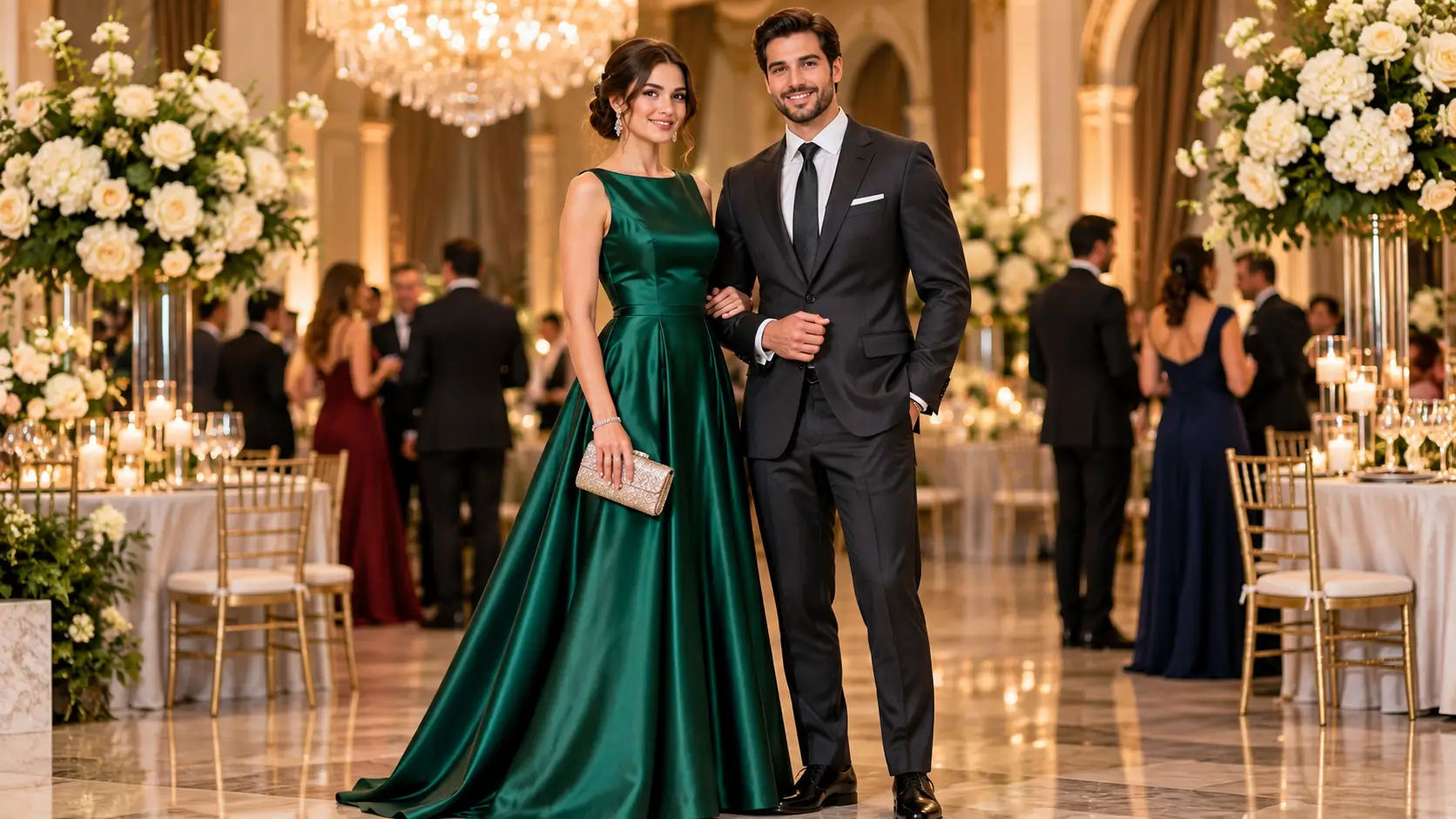
A black tie optional wedding is a formal evening event where tuxedos and floor-length gowns are encouraged, but a polished alternative is also welcome.
Wear a tuxedo or a dark, well-tailored suit with a tie and leather dress shoes. Wear a floor-length gown, an elegant formal midi dress, or sophisticated formal separates. Skip anything casual, short, or flashy.
| Formal option (closest to black tie) | Acceptable alternative | |
| Men | Black tuxedo, white dress shirt, bow tie or long tie, patent or polished oxfords | Dark suit (charcoal, navy, black), crisp white shirt, silk tie, polished leather shoes |
| Women | Floor-length evening gown | Formal midi or tea-length dress, dressy separates, tailored formal jumpsuit |
| Gender-neutral | Tuxedo, formal suit, or floor-length gown, in any combination | Formal tunic or jacket with tailored trousers or a skirt, in rich, structured fabric |
What “Black Tie Optional” Actually Means
Think of black tie optional as black tie with a margin of flexibility. The hosts are signaling a formal, evening-style celebration, usually in a ballroom, hotel, historic venue, or upscale restaurant, without requiring everyone to rent a tuxedo or buy a gown.
It sits between two other dress codes:
- Black tie expects tuxedos and floor-length gowns. There is little room for alternatives.
- Formal or “black tie invited” is slightly looser still. A dark suit and a long or very dressy cocktail dress are common.
- Cocktail attire is a clear step down. Knee-length dresses and lighter suits are the norm.
If you’re unsure which end of the range to aim for, dress more formally. At a black tie optional wedding, being the best-dressed guest rarely goes wrong. Being underdressed does.
What to Wear: Women and Those Wearing Dresses
Floor-length gowns
A long gown is the safest and most striking choice. Look for fabrics with weight and movement, such as satin, crepe, silk, velvet, taffeta, or structured chiffon. Picture a column silhouette in deep emerald crepe, an A-line gown in midnight satin with a sweeping hem, or a fitted velvet dress with a slight train.
Formal midi and tea-length dresses
A midi works if it looks genuinely formal. That means rich fabric, clean tailoring, and a hemline that falls mid-calf rather than at the knee. Beaded lace, structured satin, and jacquard read as evening wear. Cotton, jersey, and casual prints do not.
Dressy separates and jumpsuits
A wide-leg silk jumpsuit, or a full satin skirt with a tailored bodice or beaded top, can match the formality of a gown. The test is whether the pieces look intentional and evening-appropriate: a floor-sweeping hem, a fabric with sheen or texture, and no casual details.
Best colors
- Rich jewel tones: emerald, sapphire, ruby, amethyst
- Deep neutrals: black, navy, charcoal, chocolate, burgundy
- Soft evening shades: dusty blue, sage, champagne, and mauve, when the fabric is luxe enough to hold the formality
- Metallics: muted gold, silver, and bronze, in moderation
Avoid white, ivory, and cream unless the couple has asked for it. Be cautious with any shade close to the bride’s dress.
What to Wear: Men and Those Wearing Suits
The tuxedo
A classic black tuxedo is correct here. Key details include a satin or grosgrain lapel, a crisp white formal shirt, a black bow tie or a slim black silk tie, and black patent or highly polished oxfords. Midnight navy is a sophisticated alternative that can look richer than black under evening light.
The dark suit
This is the “optional” part. A charcoal, navy, or black suit with a white shirt and a dark silk tie is fully appropriate. It needs to be sharply tailored, well pressed, and made of a quality fabric. Skip bright blues, light greys, patterned suits, and anything with a casual cut.
Details that matter
- Shoes: black leather oxfords or derbies, polished. No loafers, no suede, no sneakers.
- Socks: dark, over the calf, in a matching or complementary color.
- Accessories: a pocket square, cufflinks, and a dress watch add polish without noise.
- Belt or braces: a black leather belt, or suspenders with a tuxedo.
How to Style a Black Tie Optional Look
Keep one focal point. If your dress is heavily beaded, choose understated jewelry. If your gown is simple, a statement necklace or sculptural earrings can anchor the look.
Choose shoes you can stand in. Block heels, kitten heels, and elegant formal flats are all fine under a long hem. For men, wear in new leather shoes before the day.
Think about the venue. Grass and gravel call for block heels or wedges. Cobblestones, historic venues, and long staircases reward flat or low heels.
Add a formal wrap. A satin shawl, tailored dress coat, or velvet wrap finishes a gown and keeps you warm.
Use a structured clutch. Metallic, satin, or beaded evening bags suit this dress code far better than a casual crossbody.
Hair and grooming: Polished updos, low buns, sleek waves, and classic styles all read as formal. Neat grooming and a fresh haircut matter as much as the outfit for any guest.
Seasonal Considerations
| Season | Fabrics and tones | Practical notes |
| Spring | Chiffon, crepe, soft satin; dusty blue, lilac, sage | Bring a light wrap for evening temperature drops |
| Summer | Lightweight silk, georgette, breathable linen-blend formal suits | Choose lighter-weight tuxedo fabrics, and consider midnight navy over black |
| Fall | Velvet, jacquard, satin; burgundy, forest green, deep plum | Layers like a velvet jacket or dress coat work well |
| Winter | Velvet, heavy satin, long sleeves; black, midnight, jewel tones | Pair with a formal wool coat, and consider closed-toe shoes |
Outdoor ceremonies call for sturdier footwear and a practical wrap. Indoor ballroom receptions allow for the most dramatic silhouettes.
Fit, Comfort, and Inclusivity
- Choose a dress you can sit, dance, and eat in. Try it seated before committing.
- Tailoring transforms a suit. Sleeve length, shoulder fit, and trouser break matter more than price.
- Support is part of the design. Built-in bras, boning, and sturdy lining help formal dresses sit well for hours.
- Dress code flexibility is real. Tuxedos and suits are suitable for any gender. Gowns, skirts, and tunics are equally valid. What matters is formality, fit, and fabric.
- Religious or cultural attire that is formal and evening-appropriate, such as a formal saree, sherwani, abaya, or hanbok, is welcome at a black tie optional wedding.
Budget Considerations
You don’t have to buy new:
- Rent a tuxedo or gown from a formalwear rental service.
- Wear a dark suit you own and elevate it with a new shirt, tie, and polished shoes.
- Buy pre-owned. Resale platforms and consignment shops often carry formal dresses and tuxedos.
- Reuse and restyle. An evening dress from a previous event can feel new with different jewelry, a wrap, and shoes.
Spend where it shows: tailoring, shoes, and the quality of the main garment.
Common Mistakes to Avoid
- Dressing too casually. A sundress, a short cocktail dress, or a light summer suit is too relaxed.
- Wearing white or ivory. Save it for the bride, unless the couple says otherwise.
- Treating “optional” as “ignore it.” The wedding is still formal, and a tuxedo or gown is the benchmark.
- Wearing scuffed or casual shoes. Formal looks fall apart at the feet.
- Skipping tailoring. An ill-fitting tuxedo or gown looks less formal than a perfectly fitted dark suit.
- Wearing too much sparkle. Beading and sequins are fine, but they should look elegant, not like party wear.
- Ignoring the invitation details. The time of day, venue, and season all shape the right choice.
If You’re in the Wedding Party
Couples hosting black tie optional weddings often dress the wedding party in floor-length gowns and tuxedos, or in formal dark suits.
If you’re a bridesmaid, groomsman, or family member, ask the couple whether they prefer a tuxedo or a dark suit so that the group looks cohesive. Mix-and-match gowns in a shared color palette are common, and the couple’s wishes come first.
FAQs
Can I wear a short dress to a black tie optional wedding?
It’s generally best to avoid it. A short dress reads as cocktail attire. If you want a shorter hem, choose a formal midi or tea-length dress in luxe fabric.
Do I have to wear a tuxedo?
No. A dark, well-tailored suit with a tie and polished shoes is acceptable. A tuxedo is the most formal choice.
What is the difference between black tie and black tie optional?
Black tie expects tuxedos and floor-length gowns. Black tie optional allows polished alternatives such as dark suits and formal midi dresses.
Can I wear black to a black tie optional wedding?
Yes. Black is a classic formal color and is widely accepted at evening weddings. Add texture, jewelry, or a colorful accessory to keep the look elevated.
Is a jumpsuit appropriate?
Yes, if it’s made from formal fabric such as silk, satin, or crepe, with a tailored cut and elegant accessories.
Conclusion
Aim for the formality of black tie and use the “optional” flexibility only if you need it. Choose a floor-length gown or a tuxedo if you can.
If not, a dark suit or a luxe midi dress, perfectly fitted and finished with polished shoes and refined accessories, will fit the occasion. When in doubt, go more formal, and let tailoring and fabric do the work.

Olivia Bennett is a wedding fashion and jewelry writer at MarryPlane, covering wedding dresses, guest attire, suits, shoes, veils, rings, and bridal accessories. She focuses on helping readers understand styles, materials, fit, and current wedding fashion while keeping her recommendations practical and timeless.