

A wedding cape is a stylish alternative to a traditional veil or a beautiful extra layer for a bridal outfit. Available in sheer tulle, delicate lace, flowing chiffon, satin, and embellished fabrics, wedding capes range from short shoulder coverings to dramatic floor-length designs.
The right style can add elegance, movement, warmth, or a modern statement without hiding the beauty of your wedding dress.
What Is a Wedding Cape?
A wedding cape is a garment worn over or attached to a wedding dress, usually draping from the shoulders, neckline, or back.
Unlike a traditional veil, which typically falls from the head, a bridal cape creates a flowing silhouette around the shoulders and body.
Some capes attach directly to the gown, while others fasten around the neck or shoulders and can be removed throughout the day.
Depending on the design, a cape may resemble a sheer cloud of tulle, a delicate lace overlay, a tailored shoulder wrap, or a dramatic train that follows the bride as she walks.
Wedding capes work with many bridal aesthetics, including minimalist, romantic, vintage-inspired, modern, and formal styles.
They can also provide additional coverage for a ceremony without requiring a completely different dress.
Why Choose a Wedding Cape?

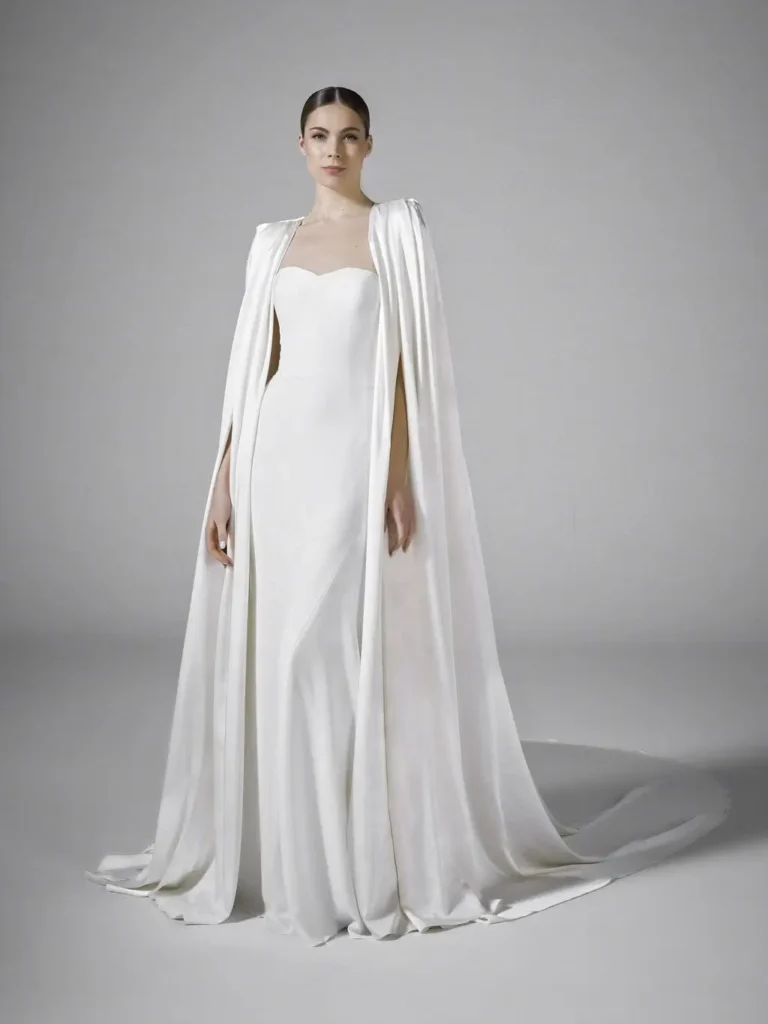

A cape can transform the appearance of a wedding gown while offering practical styling benefits.
- A distinctive bridal silhouette: A cape creates movement behind the shoulders and can make a simple dress feel more dramatic.
- An alternative to a veil: Brides who prefer not to wear a headpiece can use a cape to create a graceful, flowing effect.
- Additional coverage: Lace, chiffon, or opaque fabric can cover the shoulders and upper arms, depending on the cut.
- A second-look option: A detachable cape can add drama for the ceremony and come off for dancing or the reception.
- Versatility across dress styles: The right design can complement strapless, sleeveless, long-sleeved, and minimalist gowns.
A cape is not automatically warmer than a veil or shawl. Lightweight tulle provides little insulation, while lined satin, velvet, or heavier fabrics offer more coverage and warmth.
1. Popular Wedding Cape Styles
The best bridal cape depends on the wedding dress, desired level of drama, venue, and how much movement or coverage you want.
Sheer Tulle Wedding Cape
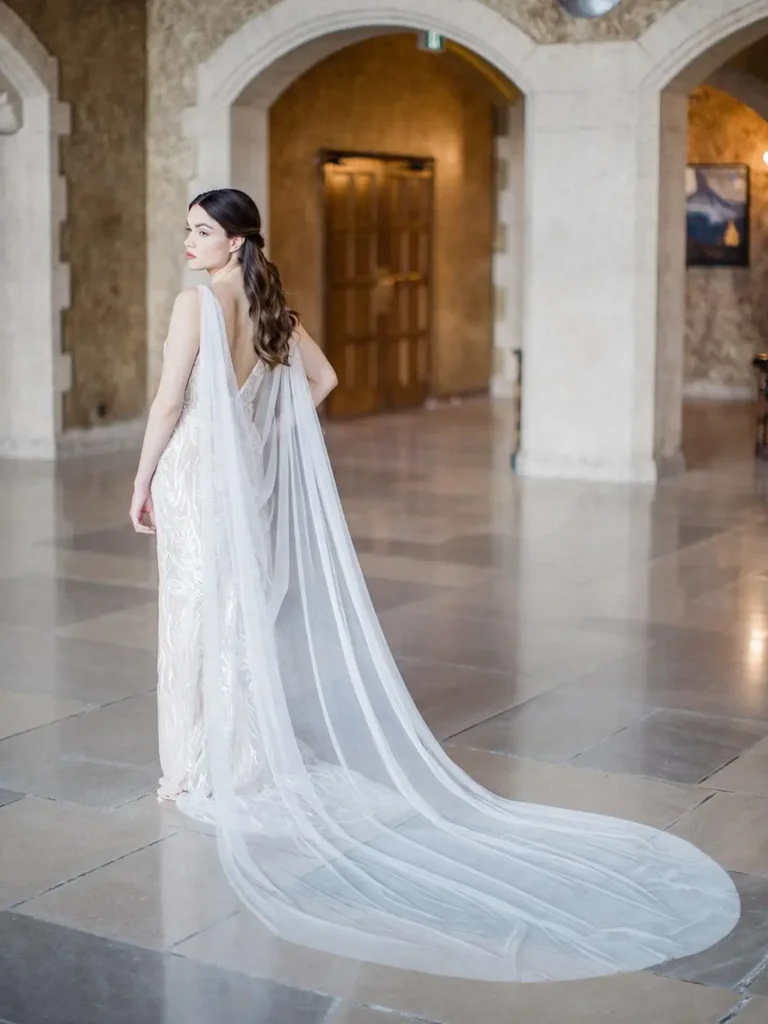
A sheer tulle cape is ideal for brides who want a light, romantic finish. Fine netting allows the wedding dress to remain visible underneath, while the extra fabric creates soft movement.
Choose a floor-length version for a formal ceremony or a shorter shoulder-length design for a subtle finishing touch. Tulle works especially well with clean satin gowns, strapless dresses, and delicate floral details.
Best for: Romantic weddings, garden ceremonies, modern bridal looks, and brides who want a veil-like effect without a traditional veil.
Lace Wedding Cape
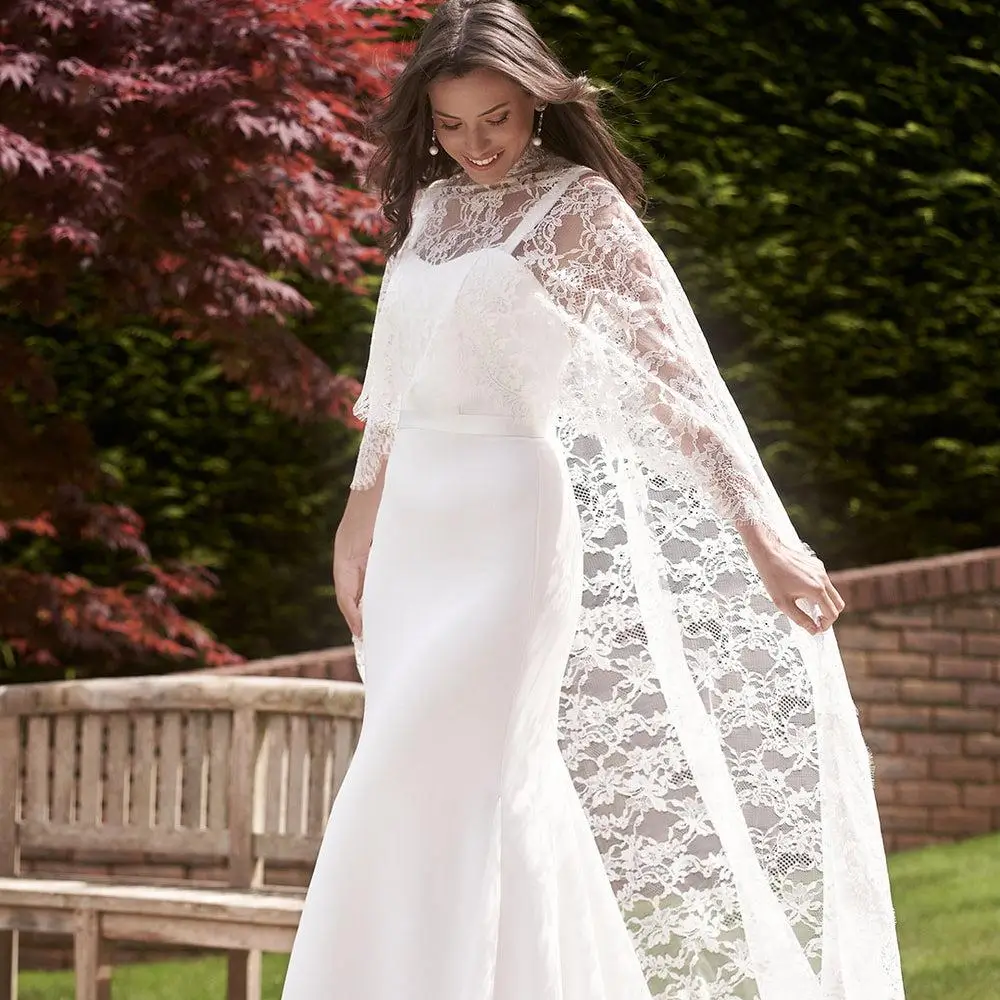
A lace wedding cape adds texture and intricate detail. Floral lace creates a soft, romantic look, while geometric or scalloped patterns can feel vintage-inspired or contemporary.
For a balanced outfit, pair a heavily patterned cape with a relatively simple gown. If your dress already features lace, look for a similar motif or a complementary pattern rather than trying to match every detail exactly.
Best for: Vintage-inspired weddings, romantic ceremonies, classic bridal styles, and gowns with minimal embellishment.
Long Wedding Cape
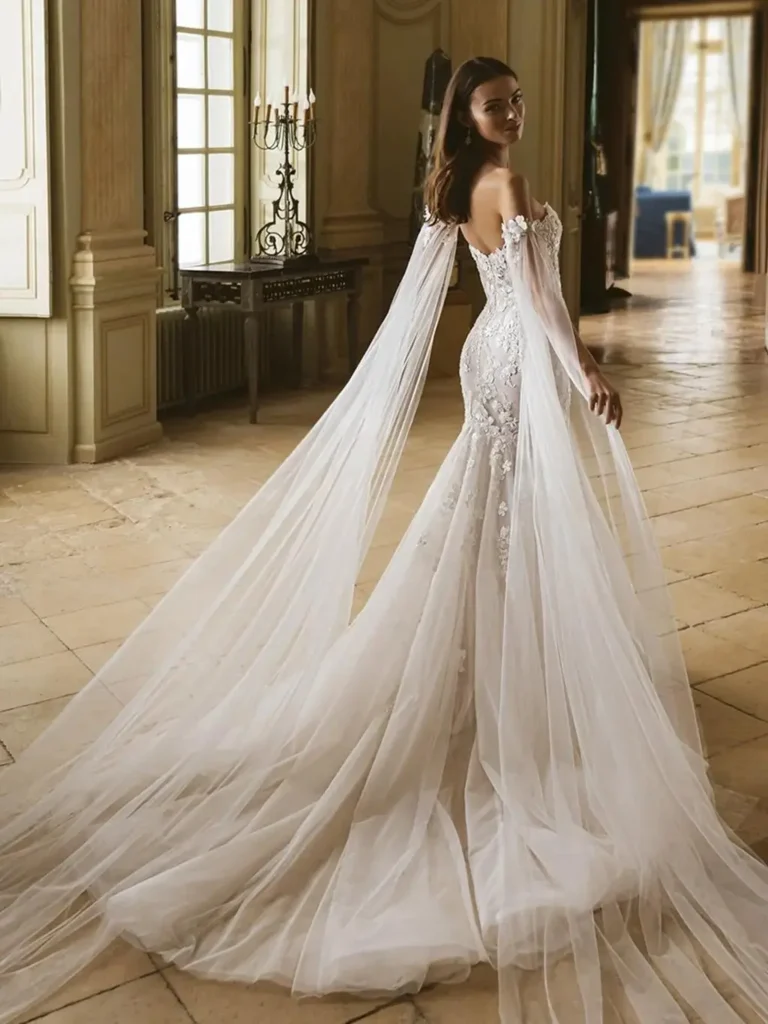
A long wedding cape creates an elongated line from the shoulders to the floor. Depending on its fabric and construction, it can look like a second train, a floating layer, or a dramatic alternative to a cathedral-length veil.
Long capes are particularly effective with simple gowns because the fabric becomes a major feature of the overall look. However, consider aisle width, stairs, outdoor terrain, and how easily the cape can be managed.
Best for: Formal weddings, grand venues, editorial bridal looks, and brides seeking a dramatic entrance.
Short Wedding Cape or Shoulder Cape
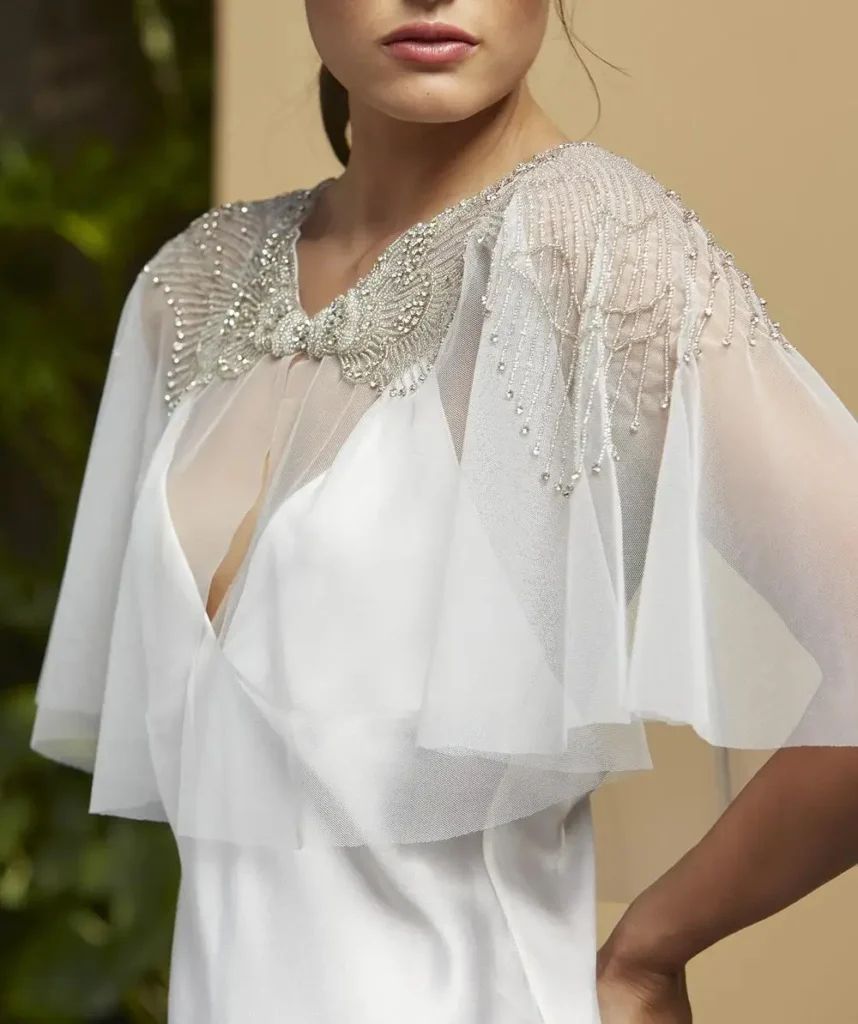
A short capelet sits around the shoulders and upper back. It offers a compact alternative to a long cape and can introduce texture or coverage without adding a large amount of fabric.
Depending on the construction, a capelet may have an open front, a small collar, a high neckline, or delicate ties at the neck.
Best for: Civil ceremonies, understated dresses, vintage-inspired outfits, and brides who prefer a less dramatic accessory.
Satin Wedding Cape

Satin creates a smooth, structured appearance with a subtle sheen. Compared with transparent tulle, an opaque satin cape makes a stronger visual statement and can complement architectural gowns or clean, minimalist silhouettes.
A fluid satin cape offers soft folds, while a more structured version creates sharper lines around the shoulders.
Best for: Modern weddings, minimalist gowns, winter celebrations, and formal bridal styling.
Chiffon Wedding Cape

Chiffon falls softly and moves easily with the body. Its fluid drape makes it a good choice for brides who want an elegant layer without the visual weight of satin or dense lace.
A chiffon cape can work beautifully with a simple sheath dress, a flowing A-line gown, or a destination-wedding outfit. Because the fabric is lightweight, it may move considerably in windy conditions.
Best for: Beach weddings, outdoor ceremonies, destination celebrations, and relaxed romantic styling.
Embellished or Beaded Wedding Cape
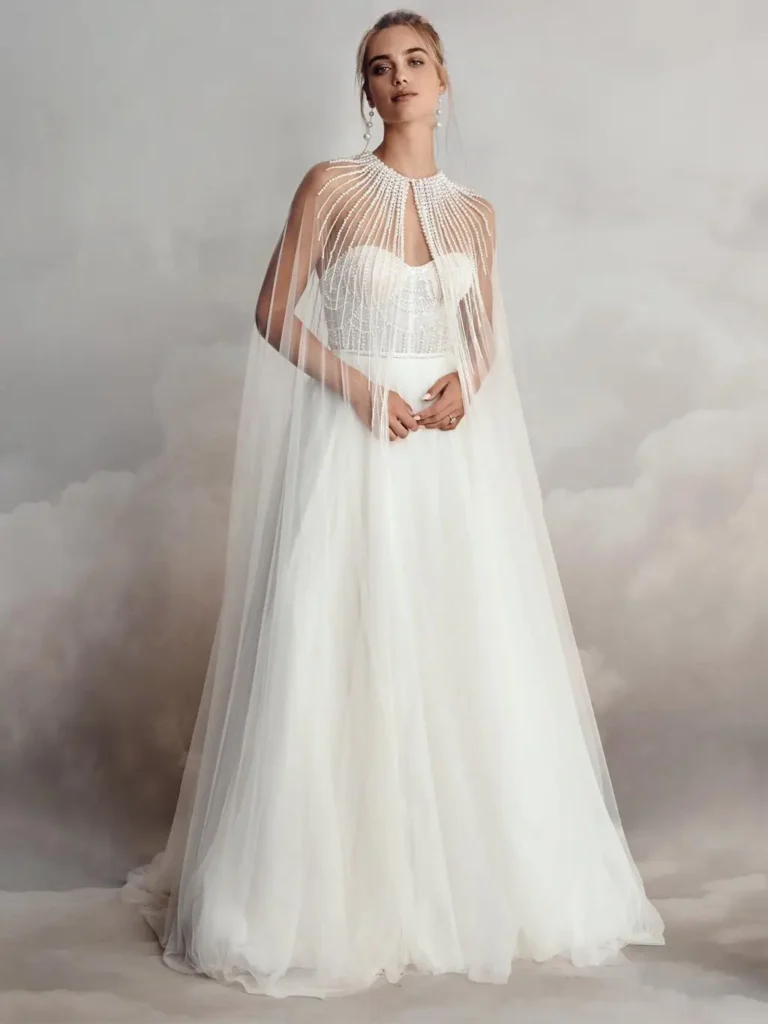
An embellished cape may feature pearls, sequins, crystals, embroidery, or subtle metallic details. It can bring sparkle to an otherwise simple dress without requiring a heavily decorated gown.
Consider where the embellishments sit. Details concentrated around the shoulders or neckline draw attention upward, while embellishments spread across a long cape create a more dramatic effect.
Best for: Evening ceremonies, glamorous weddings, formal receptions, and brides who want a statement accessory.
2. Wedding Cape vs. Wedding Veil: Which Should You Choose?
A wedding cape and a wedding veil can both create a graceful, flowing bridal silhouette, but they differ in how they attach and how they frame the outfit.


| Feature | Wedding cape | Wedding veil |
| Attachment | Usually shoulders, neckline, or gown | Usually hair or headpiece |
| Coverage | Can cover shoulders, arms, and back | Usually falls from the head over the back |
| Overall look | Modern, dramatic, romantic, or structured | Traditional, ethereal, or romantic |
| Fabric choices | Tulle, lace, chiffon, satin, velvet | Tulle, lace, silk tulle, and similar lightweight fabrics |
| Best feature | Can change the gown’s silhouette | Frames the face and complements bridal hairstyles |
Choose a cape if you want shoulder coverage, a distinctive silhouette, or a removable layer that changes the look of your gown.
Choose a veil if you love the traditional bridal aesthetic, want to frame your hairstyle, or prefer a sheer layer that falls from your head.
You can also wear both. A simple veil paired with a lightweight cape may work beautifully, provided the two pieces do not compete for attention. Try the complete combination with your dress before making a final decision.
3. How to Choose a Wedding Cape for Your Dress
The most successful pairing considers the dress’s neckline, silhouette, fabric, and existing embellishments.
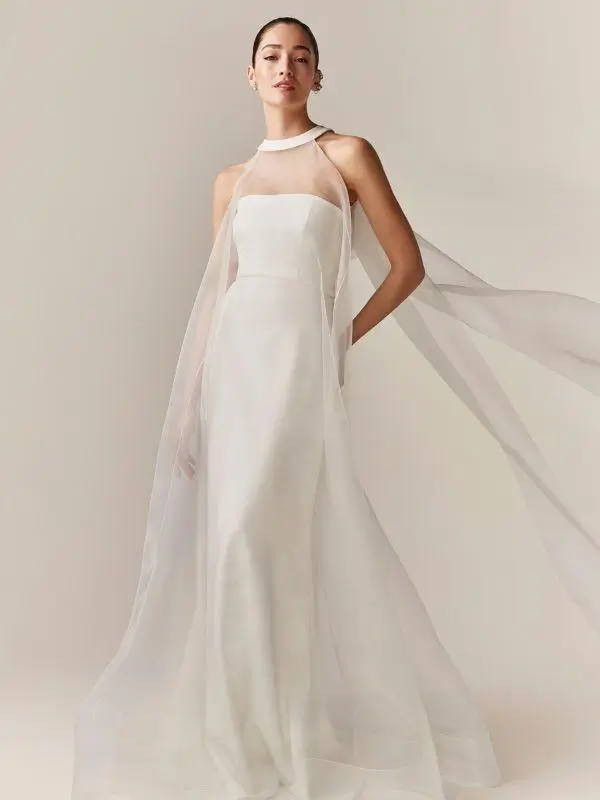
Strapless wedding dresses
A sheer tulle, lace, or flowing chiffon cape can add coverage around the shoulders without hiding the neckline. A cape attached at the upper back also creates a striking effect from behind.
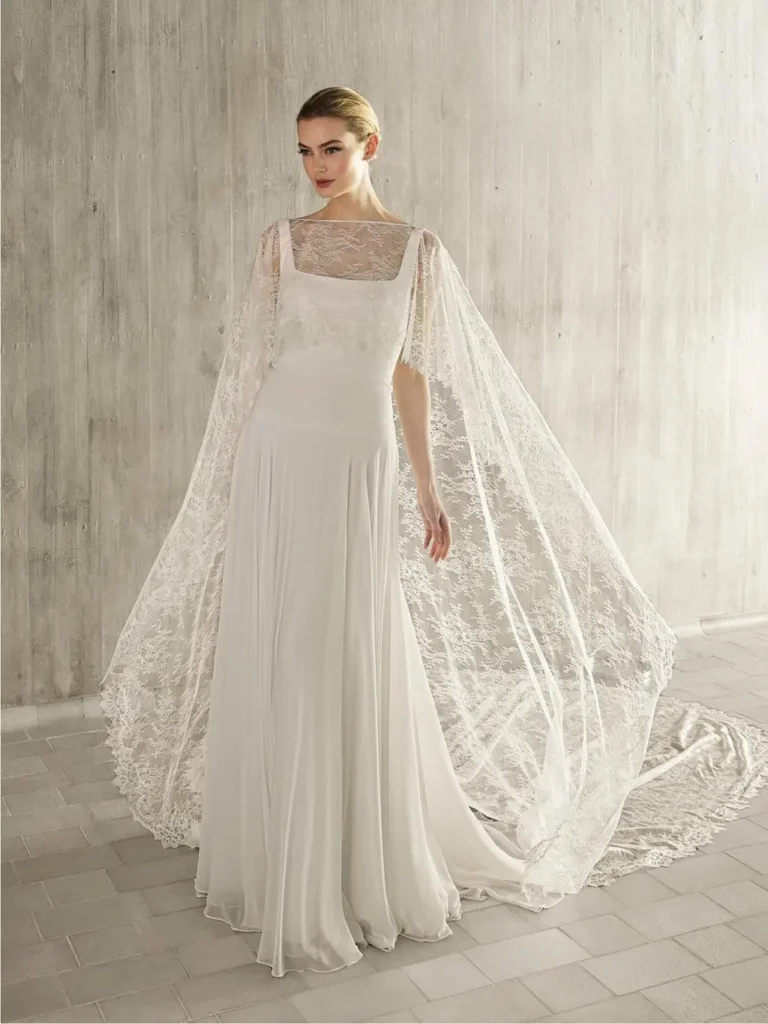
Square and sweetheart necklines
Try a cape that falls from the shoulders or attaches just behind the neckline. Avoid a bulky collar if you want the dress’s neckline to remain the focal point.
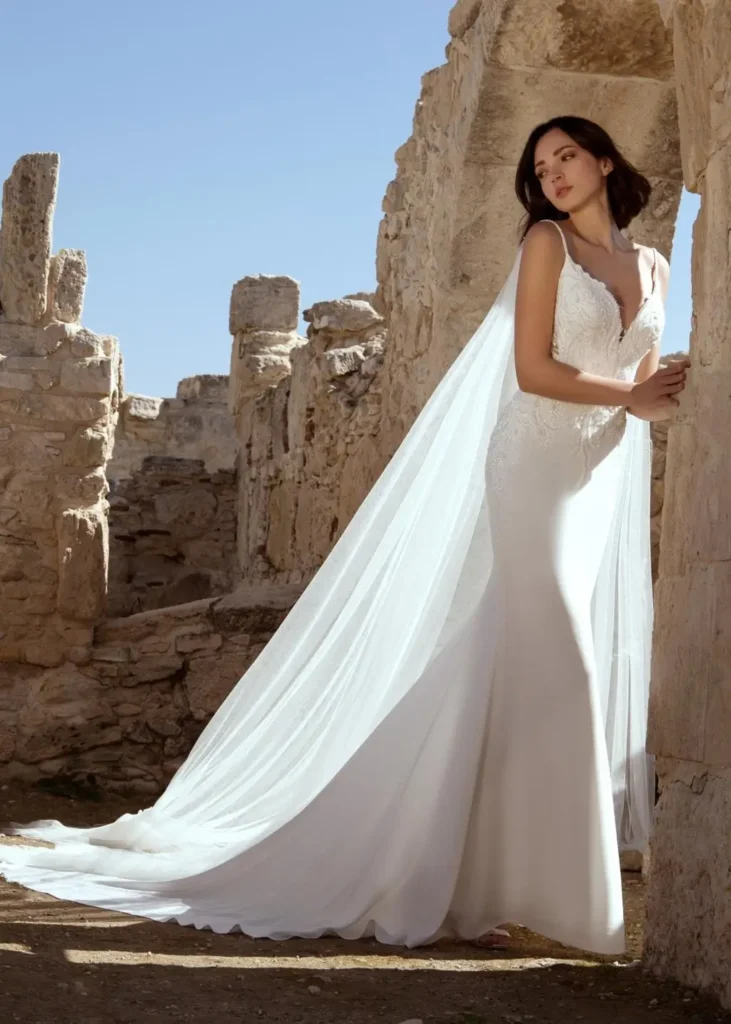
Fitted and column gowns
A long, fluid cape adds movement and contrast to a narrow silhouette. A structured satin cape creates a sharper, more architectural look.

A-line and ball gowns
Lightweight tulle or chiffon can complement a full skirt without adding excessive volume. If your gown already has a long train, consider a cape that ends slightly above it.

Long-sleeved wedding dresses
Choose a cape with enough room around the shoulders and upper arms. A delicate sheer layer can add dimension, while a heavy or bulky design may make the outfit feel crowded.
Should the Cape Match the Dress Exactly?
Not necessarily. The goal is to create a coordinated look rather than an exact fabric match.
- Pair a smooth crepe dress with a soft tulle cape for contrast.
- Coordinate a lace cape with the gown’s lace pattern or overall level of detail.
- Use satin with a minimalist dress for a clean, polished finish.
- Choose subtle embellishments when the gown already includes beads, pearls, or crystals.
Pay attention to color as well. Bright white, soft ivory, champagne, and warm off-white can look different under natural and artificial light. Compare fabric swatches whenever possible.
4. Wedding Cape Colors and Styling Combinations
White and ivory are classic choices, but a bridal cape does not have to be identical in color to the dress.
White on white
A crisp, monochromatic combination feels clean and contemporary. Match the undertones carefully to avoid an unintended difference between the dress and cape.
Ivory on ivory
Warm ivory tones create a soft, harmonious look. This combination works especially well with satin, silk-like fabrics, and delicate lace.
Champagne and ivory
A lightly contrasting champagne cape can add warmth and depth. Keep the contrast intentional and check how the colors appear in photographs.
Soft blue, gray, or blush
A subtle colored cape offers a personal touch without requiring a colored wedding dress. These shades can complement understated floral arrangements and seasonal palettes.
For a traditional bridal appearance, start with white or ivory. For a fashion-forward look, consider a soft contrasting shade, colored embroidery, or delicate metallic details.
5. Wedding Cape Ideas for Different Seasons
The season affects both the fabric and the practical comfort of your cape.
Spring
Spring ceremonies often suit sheer tulle, lightweight lace, and chiffon. These fabrics add coverage and texture without making the outfit appear too heavy.
For an outdoor garden wedding, consider a shorter or detachable cape if the venue is exposed to wind.
Summer
Choose breathable, lightweight fabrics such as fine tulle or airy chiffon. A cape can create beautiful movement for an outdoor ceremony, but even a light layer may feel uncomfortable in hot, humid weather.
A removable design lets you take it off before an outdoor reception or dancing.
Autumn
Lace, heavier chiffon, and lined fabrics can work well when temperatures begin to fall. Consider a cape with more coverage around the shoulders and upper back.
However, a sheer cape should not be treated as a substitute for a warm coat when the weather turns cold.
Winter
For winter weddings, explore lined satin, velvet, or a cape made from a suitable wool blend. These materials can create a luxurious silhouette while providing more insulation than tulle.
Check the lining, weight, and fastening method. A floor-length cape may look beautiful indoors but become cumbersome over snow, wet pavement, or uneven outdoor surfaces.
6. Is a Wedding Cape a 2026 Bridal Trend?
Yes. Bridal fashion coverage in 2026 highlights capes, capelets, and detachable layers as alternatives to traditional veils and as ways to transform a wedding outfit. Designers are exploring both minimal, clean-lined capes and richly textured versions with lace or embellishment.
Three approaches are particularly useful to consider:
- Minimalist capes: Clean lines and sheer fabrics that complement simple gowns.
- Statement capes: Floor-length designs, sculptural shapes, or detailed embellishments that become the centerpiece of the outfit.
- Convertible bridal looks: Detachable capes that create one look for the ceremony and another for the reception.
The appeal goes beyond a short-lived trend. A well-chosen cape offers a practical way to personalize a gown, add coverage, and change the silhouette without buying an entirely different dress.
Rather than choosing a cape simply because it is fashionable, consider whether its shape and fabric suit your dress, venue, and personal style.
7. How to Style a Wedding Cape
A cape already adds visual interest, so the rest of your accessories should work with its shape rather than compete with it.
Choose Jewelry That Complements the Neckline
If your cape has a high neckline or embellished collar, small earrings and a simple bracelet may be enough. With a strapless gown and a plain cape, a necklace or statement earrings can add definition.
Avoid heavy necklaces that compete with lace or beading around the shoulders.
Plan Your Hairstyle Around the Attachment
A cape that attaches at the shoulders gives you more freedom with your hairstyle. If the design fastens near the neck or includes a hood, try it during your hair trial to make sure the attachment sits comfortably.
An updo can showcase a detailed neckline, while soft waves can complement a flowing cape.
Keep the Bouquet in Proportion
A long, dramatic cape pairs well with a streamlined bouquet, while a shorter capelet may suit a fuller bouquet. These are styling guidelines, not strict rules; the overall scale and shape of the dress matter most.
Choose Shoes for the Venue
A floor-length cape may draw attention to the train, but your shoes still need to suit the ground beneath you. Block heels or flats may be practical for grass, sand, or uneven paths, while traditional heels can work well indoors.
Test the Complete Outfit
Walk, sit, turn, and raise your arms while wearing the cape. Check that it does not pull at the neckline, slip from the shoulders, or interfere with your bouquet.
Take photographs from the front, side, and back. A cape’s proportions can look very different in motion than they do on a hanger.
8. Comfort, Fit, and Practical Considerations
The right cape should feel secure and move naturally with your body. Its appearance is important, but the attachment and construction are equally worth checking.
Before purchasing, consider the following:
- Shoulder fit: The cape should sit securely without pinching or restricting arm movement.
- Weight: Dense embellishments and heavy fabric can pull on the fastening.
- Length: Make sure the hem does not catch beneath your shoes or drag in places where it could become dirty.
- Fastening: Check whether the cape uses discreet hooks, buttons, ties, or another secure attachment.
- Fabric movement: Try walking near a fan or in a gentle breeze if you expect an outdoor ceremony.
- Photography: Ask someone to check the cape’s position before portraits, particularly if it has a long train.
- Removal: If the cape is detachable, confirm that someone can remove it without disturbing your hairstyle or gown.
Is a Wedding Cape Suitable for Every Body Type?
Yes. There is no single body shape that a cape is designed for. The most important considerations are proportion, preferred coverage, comfort, and how the cape works with the gown.
- A short capelet can define the shoulders and add detail near the neckline.
- A long vertical cape can create an elongated visual line.
- A soft, open-front cape can frame the dress without fully covering its silhouette.
- A structured cape can introduce shape and definition around the shoulders.
- A full, flowing cape can create volume and movement behind the body.
If you prefer not to add width around your shoulders, try a lighter fabric with a narrow attachment. If you want more coverage around your upper arms, choose a cape with sufficient width and a comfortable drape.
These are visual options rather than rules about which styles you should wear. The best choice is the one that makes you feel comfortable and confident.
9. How Much Does a Wedding Cape Cost?
The cost of a wedding cape varies considerably with fabric, construction, embellishment, length, and whether it is custom-made.
A simple tulle cape may cost less than a fully beaded, embroidered, or lined design. Custom pieces can also cost more because of fitting, materials, and specialist craftsmanship.
Rather than relying on a single price estimate, compare options within your budget and check exactly what is included.
| Option | What to consider |
| Ready-to-wear cape | Convenient, with fewer customization options |
| Detachable cape | Offers styling flexibility for the ceremony and reception |
| Custom-made cape | Allows a closer match to your dress, neckline, and preferred length |
| Vintage or pre-owned cape | May offer distinctive details, but needs careful inspection |
| DIY cape | Can reduce labor costs if you have suitable sewing skills and materials |
Before ordering, confirm the return policy, production timeline, alteration costs, fabric composition, and care instructions.
If you are purchasing online, review photographs that show the cape both on a person and laid flat. Ask for exact measurements, especially for the shoulder width and overall length.
10. Wedding Cape Shopping Checklist
- Match the cape to the wedding dress neckline and silhouette
- Compare fabric color under natural and indoor lighting
- Check the fastening and shoulder comfort
- Confirm the length works with the gown’s train
- Test walking, sitting, and arm movement
- Check whether the cape is detachable
- Review return, alteration, and care policies
- Confirm delivery well before the wedding
11. Common Wedding Cape Mistakes to Avoid
Even a beautiful cape can feel out of place if it does not work with the rest of the outfit.
Choosing too much embellishment. If your gown already features intricate lace, pearls, or crystals, a heavily decorated cape can make the outfit look busy. Balance detailed elements with simpler ones.
Ignoring the dress’s train. A cape and train can overlap awkwardly or become difficult to manage. Try the complete outfit before deciding on the final length.
Assuming sheer fabric provides warmth. Tulle and lightweight lace offer limited insulation. Choose a lined or heavier option if warmth is important.
Forgetting about wind. Long, lightweight capes can lift, twist, or tangle outdoors. Consider the venue’s conditions and ask how the cape can be secured.
Buying without trying the fastening. A cape that slips off the shoulders or pulls at the neckline can become uncomfortable during a long ceremony.
Overlooking the reception. If you plan to dance or change into a different outfit, confirm how quickly the cape can be removed and stored.
Ordering too late. Custom pieces and alterations may require additional time. Allow a buffer for fitting and any adjustments.
12. Wedding Cape Alternatives to Consider
If a cape does not suit your dress or venue, several other accessories can provide coverage or create a similar effect.
Bridal bolero
A bolero provides structured coverage over the shoulders and arms. It is a good choice if you prefer a more fitted layer than a flowing cape.
Bridal shawl
A shawl is easy to drape around the shoulders and can be removed whenever needed. It works particularly well for relaxed ceremonies and cool evenings.
Traditional wedding veil
A veil offers a classic bridal finish and draws attention to the hairstyle. Choose this option if you prefer a head-attached accessory rather than shoulder coverage.
Bridal shrug or capelet
A shrug or short capelet adds detail around the shoulders without the length of a full cape. It is useful for understated looks and smaller venues.
Frequently Asked Questions About Wedding Capes
1. Can you wear a wedding cape instead of a veil?
Yes. A wedding cape can replace a traditional veil if you prefer a shoulder-attached accessory. Sheer tulle and lace designs create a similar flowing effect, while satin and structured capes offer a more modern appearance. You can also wear both if the styles complement each other.
2. Are wedding capes still in style in 2026?
Yes. Wedding capes and detachable bridal layers feature in 2026 bridal fashion coverage, with options ranging from minimalist sheer designs to dramatic, embellished pieces.
Choose a design that suits your gown and personal style rather than relying on trends alone.
3. What wedding cape looks best with a simple wedding dress?
A simple dress works well with a sheer tulle cape, a flowing chiffon design, or a dramatic satin cape. Choose tulle for a soft romantic finish, chiffon for movement, or satin for a clean, structured look. A lace or beaded cape can add detail without requiring a more elaborate gown.
4. Can you wear a wedding cape for an outdoor ceremony?
Yes. Lightweight chiffon and tulle are popular choices for outdoor ceremonies because they create movement without adding much weight.
However, wind can lift or tangle long capes. Consider a secure fastening, manageable length, and the weather at your venue.
5. Are wedding capes comfortable for the reception?
They can be, especially when the cape is lightweight and fits securely. A detachable design is often the most practical option because you can wear it for the ceremony and remove it before dancing. Check the fastening and practice removing it before the wedding day.
Final Thoughts
A wedding cape can change the entire feel of a bridal outfit, adding flowing movement, elegant coverage, or dramatic detail without requiring a second dress.
Start by considering your gown’s neckline, silhouette, and fabric, then choose a cape that complements those features.
For a romantic look, try sheer tulle or lace. For a modern statement, consider satin or a clean, floor-length design. If versatility matters most, choose a detachable cape that lets you transition effortlessly from ceremony to reception.
The best wedding cape is one that feels comfortable, works with your venue, and makes your wedding outfit feel unmistakably yours.

Daniel Morgan is a writer and editor specializing in wedding traditions, cultural celebrations, vows, gifts, food, music, and the stories behind modern wedding customs. At MarryPlane, he explores how couples around the world celebrate marriage while explaining traditions in a respectful, accessible way for modern readers.