

An Irish wedding blessing is a short traditional or folk prayer wishing a couple happiness, protection, and lasting love.
The best known is “May the road rise up to meet you,” often read at ceremonies, printed on programs, or given as a toast. Its exact author is unknown.
Many American couples with Irish roots, and plenty without, want a few words that sound warm and old rather than formal.
The Irish blessing tradition fits that need. Below are the most widely used texts, their meanings, some Irish-language phrases, Bible readings that pair well with them, and practical ways to use them in a US ceremony or reception.
The Most Popular Irish Wedding Blessing
The text most couples choose is commonly called the Irish Blessing. It is a traditional blessing rather than a wedding-specific one, but it has become a staple at weddings across the United States. Wording varies from source to source. This is a common version:
May the road rise up to meet you,
may the wind be always at your back,
may the sun shine warm upon your face,
the rains fall soft upon your fields,
and until we meet again,
may God hold you in the palm of His hand.

Origin (tradition, authorship uncertain): No confirmed author or date exists for this blessing. Most sources treat it as a traditional or folk blessing, and several versions circulate. Call it “a traditional Irish blessing” rather than crediting a named person.
What the lines mean (common interpretation):
- The road and the wind: An easy path ahead and help from behind.
- Sun and soft rain: Comfort and a good harvest. The farming imagery reflects rural life.
- The palm of God’s hand: Divine protection. For a secular ceremony, many couples replace “God” with “love” or end at the rain line.
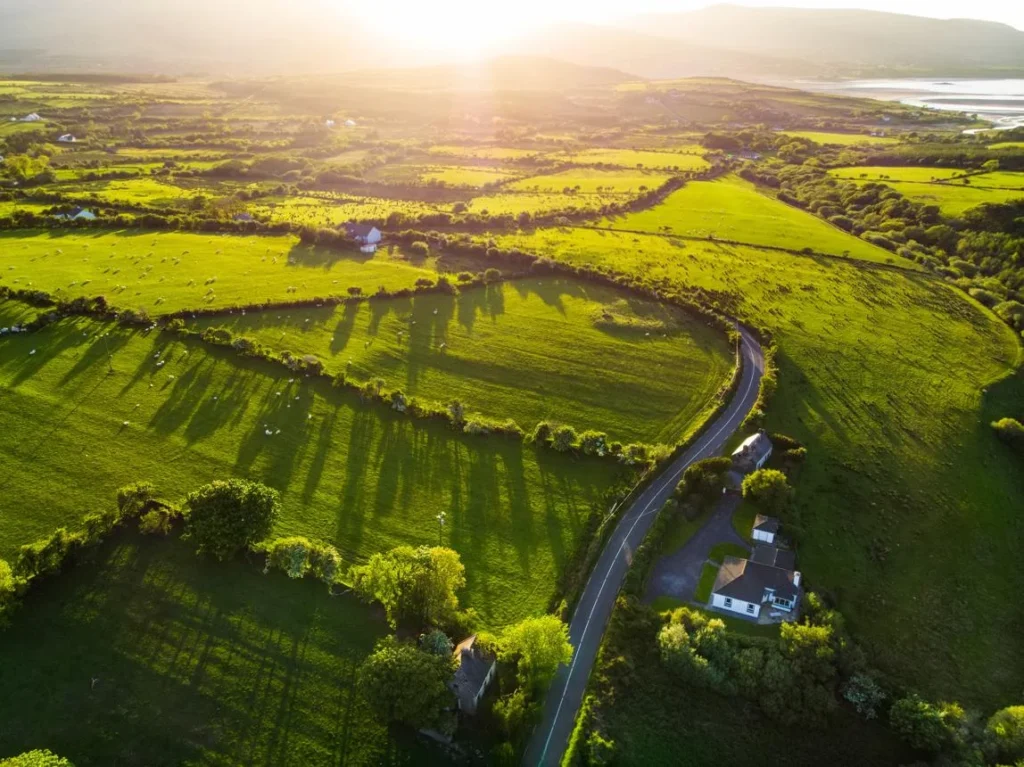
The final line, “until we meet again,” reads as a farewell. Couples often trim or adapt it for a ceremony. One option is to end on the “palm of His hand” line and drop the part about parting.
Other Traditional Irish Wedding Blessings and Toasts
Several other sayings are popular at receptions. They are folk sayings with no reliable author, and wording differs between sources.
- “May you be poor in misfortune, rich in blessings, slow to make enemies, and quick to make friends.” Often followed by a wish for happiness from “this day forward.” It works well as a toast or on a reception sign.
- “May the roof above you never fall in, and may the friends gathered below never fall out.” A lighter, humorous choice that suits a best man or a parent.
- “May your home always be too small to hold all your friends.” Often used on guest books and housewarming-style gifts.
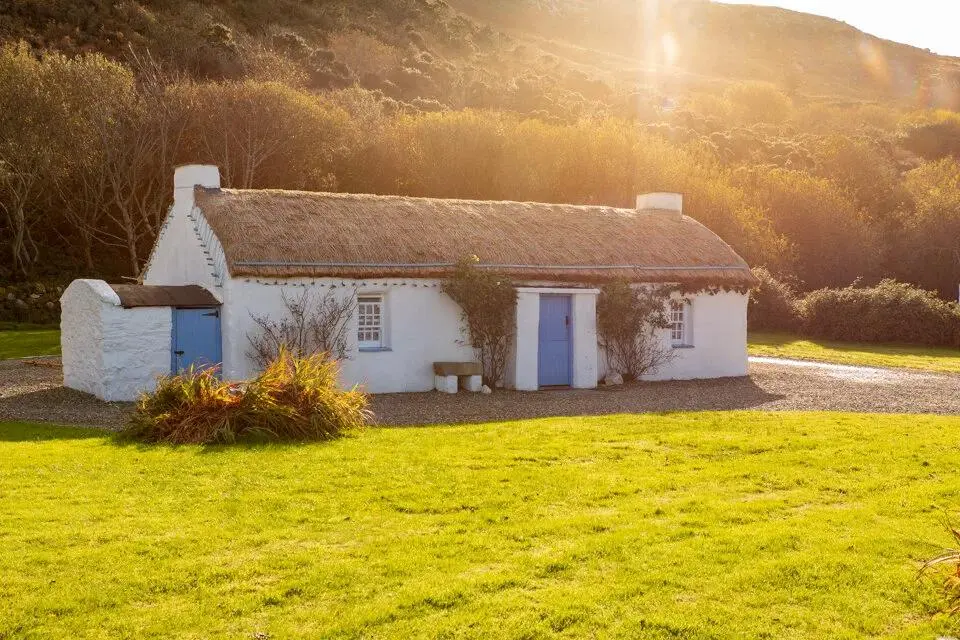
For a ceremony reading, the road blessing is the better fit. For the reception, the shorter toasts tend to land better with a room full of people holding glasses.
Irish Phrases for a Wedding
Irish (Gaeilge) is the original language of Ireland. These phrases are widely used and easy to add to a program, sign, or toast. Pronunciations are approximate English renderings.
| Irish | Meaning | Approximate pronunciation |
| Sláinte | Health, used as “cheers” | SLAHN-cha |
| Céad míle fáilte | A hundred thousand welcomes | kayd MEE-leh FALL-cha |
| Grá mo chroí | Love of my heart | graw muh KHREE |
| Mo chuisle | My pulse (a term of endearment) | muh KHISH-la |
If you plan to say any of these aloud, ask a fluent speaker to confirm pronunciation. Irish spelling and sounds differ a great deal from English.
Bible Readings Often Paired With an Irish Blessing
Many Irish and Irish American ceremonies combine a blessing with a short scripture reading. These two are common choices. Both are given in the King James Version (KJV), which is in the public domain.
Ecclesiastes 4:9-12 (KJV):
“Two are better than one; because they have a good reward for their labour. For if they fall, the one will lift up his fellow: but woe to him that is alone when he falleth; for he hath not another to help him up.
Again, if two lie together, then they have heat: but how can one be warm alone? And if one prevail against him, two shall withstand him; and a threefold cord is not quickly broken.”
Ruth 1:16-17 (KJV):
“And Ruth said, Intreat me not to leave thee, or to return from following after thee: for whither thou goest, I will go; and where thou lodgest, I will lodge: thy people shall be my people, and thy God my God.”
Another frequent choice is 1 Corinthians 13:4-8, the passage on love. Check the translation your officiant or parish prefers.
How to Use an Irish Wedding Blessing at Your Wedding
- During the ceremony: Have a friend or family member read the road blessing after the vows, or have the officiant close the ceremony with it.
- In the program: Print the full text on the back page. Guests who are not familiar with it often keep the program.
- At the reception: Use a short toast from the section above. Parents and the wedding party can each take one line.
- With a handfasting: Some couples read a blessing while a cord binds their hands. Handfasting is a modern trend in many US ceremonies. Historians debate how widely Irish couples practiced it as a formal wedding rite, so present it as a symbolic ritual rather than an Irish legal custom.
- On signs, favors, and cards: Short lines such as “Céad míle fáilte” suit a welcome sign. The road blessing works well on a framed print as a gift.
A note on Catholic ceremonies: In the United States, a Catholic wedding follows the Church’s approved rite, and readings usually come from approved texts. Many parishes do not allow added secular readings during the Mass itself. A common solution is to use the blessing at the rehearsal dinner, in the program, or at the reception. Ask your priest or parish wedding coordinator what is permitted.
Writing Your Own Irish-Style Blessing
If the traditional texts do not quite fit, an original blessing in the same spirit is an option. The pattern is simple: begin with “May,” pair an image from nature or home with a wish, and keep each line short. Two original examples:
May your table always have room for one more chair.
May you always find your way back to each other,
however far the road runs.

Keep any family names, places, or in-jokes that matter to you. Personal details make a blessing feel traditional in tone and specific in meaning.
FAQ
Nobody has reliably identified the author. Most sources call it a traditional Irish blessing, and the wording differs from one published version to the next.
Traditional folk blessings with no known author are generally free to use. Authors of modern poems or “wedding blessings” may still hold the copyright, so check before you reproduce them in a printed program.
No. Irish blessings are widely used at weddings in the US regardless of background. If you do not have Irish ancestry, introduce the text as a traditional Irish blessing so guests understand where it comes from.
Yes. Because these blessings are folk texts with many versions, adapting them is normal. Removing religious wording or trimming the farewell line is common.
Conclusion
An Irish wedding blessing gives a ceremony or reception a short, warm moment of meaning, and the road blessing is the safest starting point. Pick one text, decide where it fits (ceremony, program, or toast), and confirm with your officiant that it works with your ceremony format.

Daniel Morgan is a writer and editor specializing in wedding traditions, cultural celebrations, vows, gifts, food, music, and the stories behind modern wedding customs. At MarryPlane, he explores how couples around the world celebrate marriage while explaining traditions in a respectful, accessible way for modern readers.