

An Indian wedding is a marriage celebration that draws on the customs of India’s many communities, including Hindu, Sikh, Muslim, Christian, and Jain traditions.
Details vary by region and faith, but most include pre-wedding gatherings, a central ceremony with sacred rituals, and a celebration afterward, often spread over several days.
There is no single Indian wedding. India has many languages, religions, and regional cultures, and each shapes how couples marry.
In the United States, families often blend these customs with American venues, vendors, and guest lists. Below you will find the main events, what they mean, and how they differ, so couples can plan and guests can follow along.
What Makes an Indian Wedding Different?
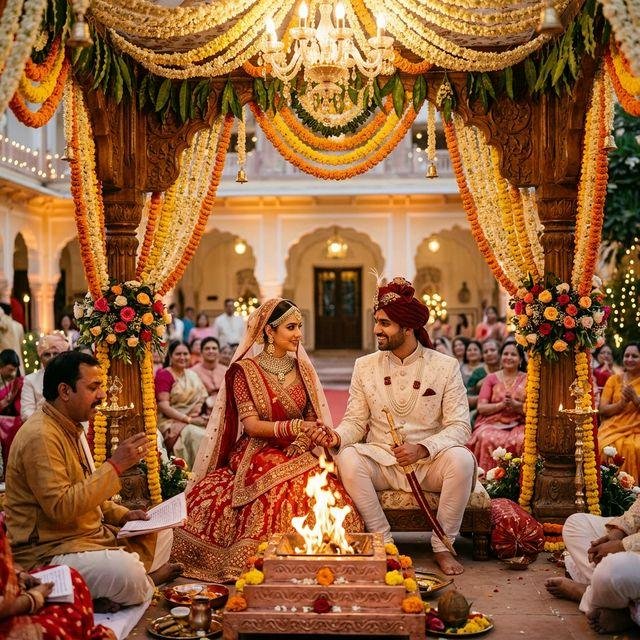

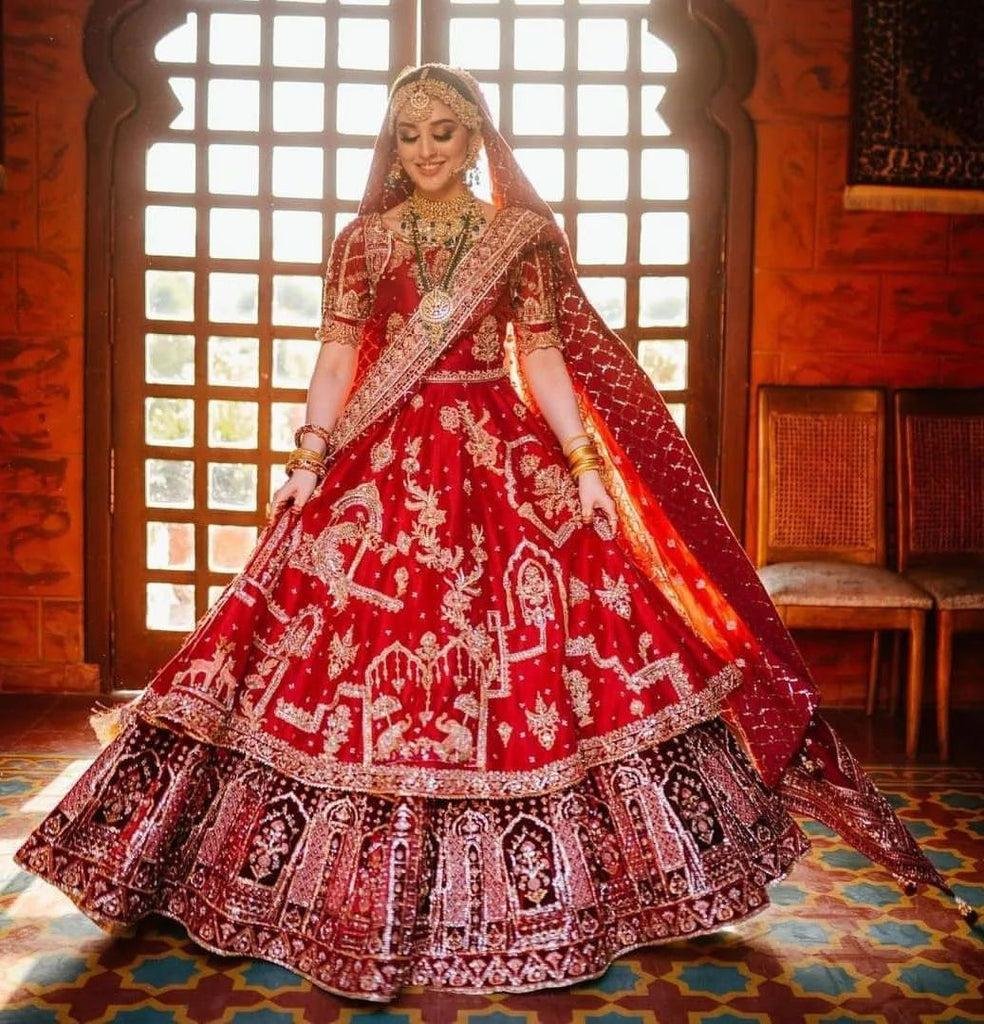


In Hindu tradition, people treat marriage (vivaha) as a sacrament and one of the life-cycle rites, not only a legal contract. Many of its ritual forms trace back to ancient Sanskrit texts, and the sacred fire (Agni) serves as the witness to the vows.That is why so many Hindu rituals center on a fire altar under a canopy called a mandap.
Other communities have their own foundations. A Sikh wedding, the Anand Karaj, takes place in the presence of the Guru Granth Sahib. A Muslim wedding centers on the nikah, a marriage contract agreed by both parties before witnesses, which includes a gift from the groom called mahr.
Christian weddings in India follow church liturgy, often with local touches. Some Christian communities in Kerala, for example, use a wedding pendant called a minnu.
Because “Indian wedding” is a broad label, the most useful question is always “which community?”
Pre-Wedding Events
Events before the main ceremony are where much of the color and music happens. Which ones a family holds is a matter of region and personal preference.
- Roka or sagai (engagement): A common practice in many North Indian families. The two families formally agree to the match, often with gifts and a small ceremony.
- Mehndi: Henna is applied to the bride’s hands and feet, and often to female relatives. A popular tradition says the groom’s name or initials are hidden in the design, though not every family follows it.
- Haldi (also called pithi): A turmeric paste is applied to the bride and groom at separate gatherings. Turmeric is traditionally linked with blessing and purification.
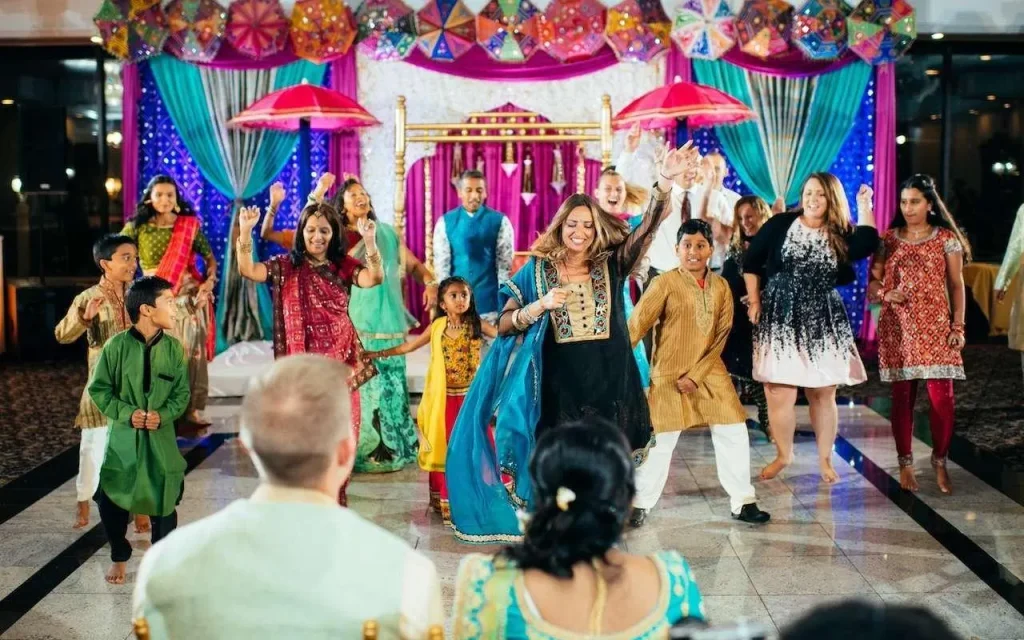
- Sangeet: An evening of song and dance, strongly associated with Punjabi and North Indian weddings. In the US it is now a common event for many South Asian couples, including those from other regions.
- Garba or other regional nights: Gujarati families often hold a garba evening with circle dancing.
The Main Ceremony: Hindu Wedding Rituals
Hindu weddings are the format most people picture, and the order differs by community. This table lists rituals common in many North Indian weddings.
| Ritual | What happens | Label |
| Baraat | The groom arrives in a procession, often on a horse or in a decorated car, with family dancing to dhol drums | Common practice (North India) |
| Milni | Relatives from both sides greet each other and exchange garlands or gifts | Common practice |
| Jaimala or varmala | The couple exchange flower garlands | Common practice |
| Kanyadaan | The bride’s parents give her hand in marriage | Tradition; some modern couples change or skip it |
| Mangal pheras | The couple circle the sacred fire, often seven times (saptapadi), with each step carrying a vow | Tradition; some communities use four rounds |
| Sindoor and mangalsutra | The groom applies red vermilion to the bride’s hair parting and places a sacred necklace on her | Regional custom |
| Vidaai | The bride’s family bids her farewell as she leaves with her new family | Common practice |
Ceremonies are led by a priest, often called a pandit, who recites Sanskrit mantras. Many couples now ask the priest to explain each step in English so guests understand what they are watching.
Regional and Religious Variation
South Indian Weddings
Tamil, Telugu, Kannada, and Malayali weddings differ noticeably from North Indian ones. Many are shorter, held in the morning, and focused on an auspicious time (muhurtham).
In a Tamil wedding, the groom ties the thali (a sacred necklace) around the bride’s neck, and a playful swing ceremony called oonjal is common. In Telugu weddings, the couple traditionally place a paste of cumin and jaggery on each other’s heads.
Many Kerala Hindu weddings are brief and understated, with the bride wearing a cream and gold kasavu saree.
Bengali, Gujarati, and Maharashtrian Weddings
Bengali weddings include shubho drishti, the first look between the couple, which takes place with their faces covered by betel leaves.
Gujarati weddings often feature a groom’s welcome ritual and a playful sari-folding or shoe-related custom, depending on the family. Maharashtrian weddings use a cloth curtain called an antarpat held between the couple while mangalashtak verses are chanted.
Sikh Weddings
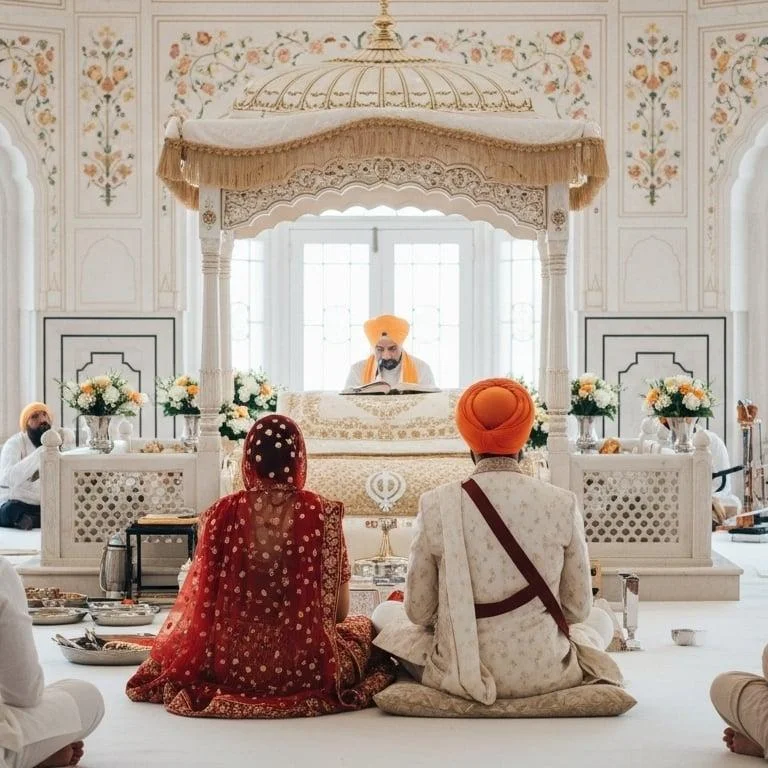
The Anand Karaj usually takes place in the morning at a gurdwara. The central moment is the laavan, four hymns during which the couple walk around the Guru Granth Sahib. Guests sit on the floor and cover their heads. No fire is used.
Muslim and Christian Weddings
A Muslim wedding typically includes the nikah, followed by a reception called a walima, hosted by the groom’s family. Many Indian Muslim families also hold mehndi and other pre-wedding events shared with local culture.
Indian Christian weddings take place in a church, followed by a reception, with local clothing and music varying by region.
Interfaith and Fusion Weddings
Many couples in the US combine traditions, such as a Hindu ceremony in the morning and a Western-style reception in the evening.
This is a modern trend and is widely accepted, but couples should talk with both families early about which rituals are non-negotiable.
How an Indian Wedding Works in the United States
Moving these traditions to a US venue brings practical questions.
Legal requirements. In the United States, a marriage needs a state-issued license and an authorized officiant, and rules vary by state. A pandit or granthi may or may not be legally authorized where you marry. Many couples sign the license with a legally recognized officiant separately, or confirm their priest’s status before booking.
Fire and venue rules. A havan or sacred fire is central to many Hindu ceremonies. Many hotels and banquet halls restrict open flames, and local fire codes apply. Ask the venue before signing a contract, and find out whether a fire marshal’s permit, a contained fire pit, or an outdoor setup is needed.
Baraat logistics. Dhol drumming and a horse procession may require permits for noise or street use, depending on the city.
Vendors. Look for a caterer who can handle vegetarian menus and regional dishes, a photographer who has shot multi-day South Asian weddings, and a decorator familiar with mandap setup.
What to Expect as a Guest
Clothing. Bright colors are welcome. Women often wear saris, lehengas, or salwar kameez, and men wear kurtas or sherwanis.
White is associated with mourning in Hindu culture, so guests commonly avoid all white. Many guests also avoid wearing a bright bridal red to the ceremony. Western formalwear is usually acceptable, but check the invitation for each event’s dress code.
Shoes. You may be asked to remove them before entering the mandap area or a gurdwara.
Timing. Events often start later than printed. A ceremony may run long because of the rituals, followed by a meal and dancing.
Food. Many Hindu weddings serve only vegetarian food, and some avoid alcohol. Ask the hosts if you have dietary needs.
Gifts. Cash in an envelope is a common gift. Amounts ending in one, such as $101, are considered auspicious because the extra dollar marks a fresh beginning. This is a custom, not a rule.
Photos. Ask before photographing during religious rituals, especially at a gurdwara.
Frequently Asked Questions
Traditionally, wedding celebrations can span several days. In the US, couples often condense them into two or three days, and the main ceremony itself commonly runs one to three hours.
No. A Hindu wedding is one type of Indian wedding. Sikh, Muslim, Christian, Jain, Parsi, and other communities marry with their own customs.
In many families, the bride’s side traditionally hosted and paid for much of the wedding. Today, many families split costs or the couple pays, and expectations vary widely.
Only if you also meet your state’s requirements, including a marriage license and an authorized officiant. Confirm the rules with your county clerk before the wedding.
Yes. Many families welcome it. A partner from another background may wear traditional clothing and join specific rituals, and guests are often invited to apply tilak or throw flower petals.
Conclusion
An Indian wedding is a set of community traditions rather than one script, so the best planning starts with a conversation about which events and rituals matter most to both families. Once those are settled, write a short guide for guests that explains the schedule, dress for each event, and what each ritual means.

Daniel Morgan is a writer and editor specializing in wedding traditions, cultural celebrations, vows, gifts, food, music, and the stories behind modern wedding customs. At MarryPlane, he explores how couples around the world celebrate marriage while explaining traditions in a respectful, accessible way for modern readers.