
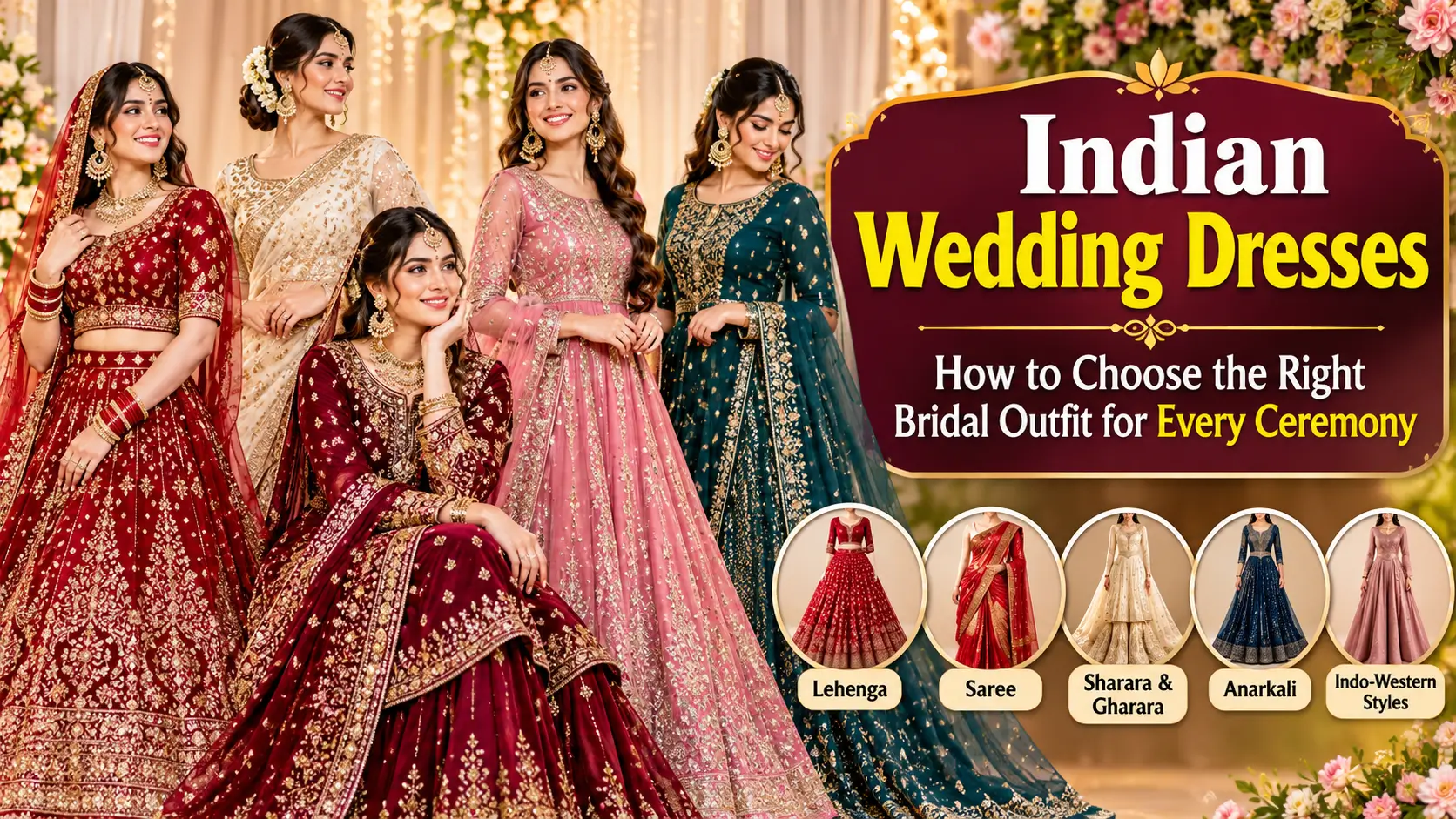
Indian wedding dresses are traditional and contemporary outfits worn for the ceremonies of an Indian wedding, and the best choice depends on your region, religion, ceremony, season and how you want to move. The main options are:
- Lehenga choli: a flared skirt, fitted blouse and dupatta; the most widely chosen bridal outfit, especially across North India.
- Saree: a draped length of fabric, such as a Banarasi, Kanjeevaram or Paithani, central to Bengali, South Indian and Maharashtrian weddings.
- Sharara or gharara: a wide-legged, flared bottom with a kurta or short top, common in Muslim and Awadhi bridal traditions.
- Anarkali or gown: a floor-length, flowing silhouette that suits receptions and smaller ceremonies.
- Indo-western styles: pre-draped sarees, cape lehengas and corset blouses that blend Indian craft with modern tailoring.
Red remains the most recognised bridal colour, but ivory, champagne, sage, blush and deep jewel tones are now widely worn, particularly for receptions and sangeets.
What Counts as an Indian Wedding Dress?
There is no single Indian wedding dress. India’s wedding clothing varies by region, language, faith and family custom, and a bride may wear three or four different outfits across a single wedding. A mehendi look may be light and floral, the main ceremony richly embroidered and heavy, and the reception sleek and modern.
That is why choosing well means starting with the ceremony and your cultural tradition, not with a trend. Once those are settled, silhouette, fabric and colour become much easier decisions.
The Main Types of Indian Wedding Dresses
Bridal Lehenga
The lehenga is a three-piece set: a full, floor-length skirt, a fitted blouse called a choli, and a dupatta, the long scarf draped over the head or shoulder. Picture a skirt in deep red raw silk or velvet, its hem heavy with gold zardozi thread work, paired with a structured blouse and a sheer net dupatta edged in matching embroidery.
Lehengas vary mainly in their skirt shape:
- A-line: fitted at the waist and gently widening; flattering on most body types and easy to walk in.
- Flared or circular: dramatic volume that swirls beautifully for photographs and dancing.
- Panelled (kalidar): many fabric panels sewn together for movement without bulk.
- Mermaid or fishtail: fitted through the hip and thigh, flaring at the knee; striking but less forgiving for sitting and dancing.
- Layered or ruffled: a softer, more romantic look, popular for receptions.
Bridal Saree
The saree is typically five to nine metres of fabric, draped around the body and over one shoulder. For many brides it carries the strongest sense of tradition and family heritage.
- Banarasi: woven silk with gold or silver brocade, associated with Uttar Pradesh and worn widely across North India.
- Kanjeevaram (Kanchipuram): thick, lustrous silk with contrasting borders, a cornerstone of South Indian bridal dressing, often in rich reds, greens and golds.
- Paithani and Nauvari: Maharashtrian silk sarees; the nauvari is a nine-yard drape worn in a trouser-like style.
- Bengali bridal sarees: commonly a red Banarasi, often worn with a separate white-and-red saree in certain rituals.
- Pre-draped sarees: stitched or pre-pleated versions that give the saree look with far less fuss, increasingly popular for receptions.
Sharara and Gharara
Both feature wide-legged bottoms worn with a long kurta or short top and a dupatta. A gharara fits closely around the knees before flaring sharply, often with a gathered, decorative joint. A sharara flares outward from the hips.
Muslim bridal traditions and Lucknowi and Hyderabadi styles strongly feature these outfits. Brides often choose ivory, deep red, maroon, or gold fabrics with delicate chikankari or zari embroidery.
Anarkali, Gown and Indo-Western Looks
An anarkali is a long, fitted-bodice kurta that flares into a full skirt, usually worn with churidar or fitted trousers. Indo-western looks sit between traditions: a saree gown, a lehenga with a cape or jacket, or a skirt with a sculpted corset blouse. These tend to suit receptions, cocktail events and brides who want to move freely.
Regional and Faith-Specific Bridal Wear
- Punjabi and Sikh brides: often a red or pink lehenga or salwar suit with a heavy dupatta and the traditional chooda bangles; Sikh brides frequently choose lighter fabrics for the Anand Karaj.
- Gujarati brides: a red and white panetar or a gharchola saree for the ceremony, often followed by a lehenga for the reception.
- Rajasthani brides: a poshak with bold gota patti work, mirror detail and vivid colour.
- Christian Indian brides: many wear a white gown or saree for the church ceremony, then change into a lehenga or saree for the reception.
- Parsi brides: a garo saree with intricate embroidery, often Chinese-inspired.
Current Trends in Indian Wedding Dresses
The points below come from bridal designer and retailer coverage published through 2026. Most of these sources are brands with something to sell, so treat them as a snapshot of what is being offered, not as neutral research. Where a trend appears across several of them, I say so.
Lighter, wearable lehengas.
Several 2026 trend reports describe a move away from very heavy outfits toward lighter skirts in fabrics such as organza, tissue and raw silk, with richness coming from fabric texture and detailing rather than sheer embellishment weight. The practical reason is simple: brides want to sit, dance and get through multi-day events comfortably.
Sculptural, statement blouses.
Corset-style fits, boned bodices, curved necklines and cape sleeves are repeatedly described as the hero element of 2026 bridal looks, sometimes drawing more attention than the skirt.
Beyond red, with red still strong.
Reports consistently list dusty rose, blush, ivory, champagne, sage or pistachio green, terracotta and deep sapphire, emerald or plum alongside classic red. The common finding is that red remains the most widely chosen ceremony colour, while softer or jewel shades are often reserved for the reception or sangeet.
Ombré and tonal colour.
Soft colour gradients and monochrome palettes appear in 2026 trend coverage, particularly for outdoor and golden-hour events.
Capes, veils and double dupattas.
Drawing on global bridal fashion, longer veils and layered dupattas add drama and a sense of ceremony, and can often be removed after the rituals.
Handcrafted embroidery and heirloom value.
Brands consistently emphasise techniques such as zardozi, gota patti, chikankari and hand embroidery, with brides investing in fewer, better pieces that can be restyled or passed down.
Multi-event wardrobes.
Instead of one outfit, brides are planning a cohesive set of looks across mehendi, sangeet, ceremony and reception.
Trends are a useful filter, not a rulebook. A lehenga you love in a classic cut will look right in photographs for decades; a trend you feel unsure about may not.
Choosing by Ceremony
Matching the outfit to the event is the most practical decision you can make.
- Mehendi: light, comfortable and colourful. Think a floral or pastel lehenga, sharara or short kurta set in cotton silk or georgette that is forgiving if henna smudges.
- Haldi: something you can happily get stained. Yellow, white or pastel cotton or lightweight silk, ideally short or ankle-length.
- Sangeet: built for dancing. A lehenga with generous flare, a sharara or a saree gown in a lighter fabric with a secure fit.
- Wedding ceremony: the most traditional and formal outfit, shaped by your family’s customs. Often red or a rich traditional colour, in heavier silk or velvet, with significant embroidery.
- Reception: where most brides try something more modern: a gown, a pre-draped saree, an ivory or jewel-toned lehenga, or a cape set.
Choosing by Season and Setting
Winter is the most popular wedding season in India and suits velvet, heavy raw silk and layered dupattas. For summer weddings and beach or destination events, choose organza, tissue, georgette, net and lighter silks, with lined but breathable construction. In humid climates, avoid stiff, multi-layered skirts under heavy lining.
Outdoor daytime ceremonies photograph well in softer shades and lighter embroidery. Evening and indoor events can carry deeper colours, more metallic work and heavier detailing.
Colour: How to Choose
- Red: culturally significant across many traditions and flattering on most skin tones, particularly in deeper shades such as maroon and wine.
- Pink and blush: softer than red and popular for daytime and South Indian and destination weddings.
- Ivory, champagne and gold: a modern, understated option, often chosen for receptions or by brides wanting minimalism with rich gold borders.
- Green and teal: emerald and sage work well with gold jewellery and suit warm and cool undertones in different shades.
- Blue and plum: midnight, sapphire and deep plum look striking for evening events.
A useful rule: hold fabric swatches against your face in daylight. Warm skin tones often glow in rust, gold, coral and olive; cool tones in wine, emerald, plum and silver-toned work; neutral undertones can wear most shades. Always check how the colour looks under flash and in low light.
Fabric and Embroidery Guide
- Raw silk: structured, matte and rich; holds shape well.
- Velvet: heavy, luxurious, best for winter.
- Organza and tissue: light, sheer and airy; excellent for summer and for brides wanting lightness.
- Net: often used for dupattas and overlays, sometimes with scalloped, embroidered edges.
- Banarasi and Kanjeevaram silk: woven brocade and zari that are heirloom-grade and typically very durable.
- Georgette and chiffon: fluid and comfortable, good for sharara sets and sangeet looks.
Embroidery types to recognise include zardozi (metallic thread work), gota patti (gold or silver appliqué), chikankari (delicate white-on-fabric Lucknowi work), mirror work, resham (silk thread) and sequin or crystal embellishment. Heavy embroidery adds weight, so ask how much a finished outfit weighs before you commit.
Fit and Body Considerations
- Waist and blouse: a well-fitted blouse is the foundation of a lehenga or saree, and brides repeatedly rank it as the most important element. Plan multiple fittings.
- Skirt volume: if you are petite, a very full skirt can overwhelm; a slimmer A-line or panelled style often balances better. If you are taller, you can carry dramatic volume and longer trains.
- Heavier or curvier figures: look for structured blouses with proper support, A-line skirts, and fabrics that drape rather than stiffen.
- Mobility: whatever the cut, test it. Sit, climb stairs, lift your arms and dance a few steps in it before the final fitting.
- Heels and hem length: have the hem tailored while wearing the shoes you will wear on the day.
How to Style an Indian Wedding Dress
A good bridal look is balanced. If the outfit is heavily embroidered, keep the jewellery refined; if the outfit is minimal, jewellery can carry more weight.
- Jewellery: choose one focal point, such as a heavy necklace or dramatic earrings, rather than competing pieces. Kundan, polki and temple jewellery are classic pairings; pearls and diamonds suit pastels and ivory.
- Dupatta draping: a head-covered dupatta, a double dupatta with one on the shoulder and one on the head, and a cape-style drape each create a different silhouette. Practise the pinning in advance.
- Footwear: comfort matters for long ceremonies; consider a block heel or embellished flat for the ceremony and a higher heel for the reception.
- Hair and makeup: an updo or low bun showcases necklines, earrings and a maang tikka, while soft waves and a veil suit contemporary looks. Makeup should be tested in the exact lighting of your venue.
Budget and Shopping Considerations
Prices vary enormously, from ready-to-wear and rental options through boutique pieces to bespoke designer couture. No single figure applies, so set a total wardrobe budget across all events first, and allocate the largest share to the main ceremony outfit.
- Start early. Made-to-order bridal pieces typically need several months, and many guides suggest beginning four to five months before the wedding or earlier for heavy embroidery.
- Plan the whole wardrobe. Outfits that share colour or embroidery motifs look cohesive across events.
- Consider restyling. A well-made lehenga can be re-worn with a different dupatta or blouse, or the dupatta can be reused with other outfits.
- Rental and resale. For events other than the main ceremony, renting can reduce cost and storage.
- Check the details. Ask about lining, weight, return policy, alteration allowances, delivery time and what is included before you pay.
Common Mistakes to Avoid
- Buying the outfit before confirming the ceremony traditions and colour expectations with your family.
- Choosing based on a photo without checking weight, fabric feel and fit.
- Skipping a full trial in the shoes, jewellery and hairstyle you will wear.
- Overloading with jewellery on an already richly embroidered outfit.
- Ignoring the climate and venue, such as heavy velvet in a hot outdoor setting.
- Following a trend you do not actually like, instead of choosing a colour and silhouette that feel like you.
- Leaving alterations too late.
What About Guests and Wedding Party Members?
Guests commonly wear sarees, lehengas, anarkalis, shararas, kurta sets or Indo-western outfits. Avoid wearing white or all-black in many traditions unless the invitation says otherwise, avoid red if the couple’s tradition associates it strongly with the bride, and check the dress code.
Bridesmaids and family members often coordinate in complementary colours so the bride stands out.
Photographers often suggest images such as a full-length shot of the skirt’s flare, a close-up of the embroidery, the dupatta in motion and the blouse detailing.
Frequently Asked Questions
What do Indian brides wear to get married?
It depends on region and faith. A red or deep-coloured lehenga is the most common choice in North India, a Kanjeevaram saree in the South, a Banarasi saree in Bengal, and sharara or gharara sets in many Muslim weddings. Many brides also wear a white gown for a church ceremony.
Is red still the colour for an Indian wedding dress?
Red remains the most widely worn and culturally significant bridal colour, but it is no longer the only option. Ivory, pastel, green and jewel shades are popular, often for receptions, and many brides now choose them for the main ceremony as well.
What is the difference between a lehenga and a saree?
A lehenga is a stitched, three-piece outfit made up of a skirt, blouse and dupatta. A saree is a single unstitched length of fabric draped around the body with a separate blouse, though pre-draped versions are now widely available.
How far in advance should I buy an Indian wedding dress?
For custom or heavily embroidered pieces, start at least four to five months before the wedding, and earlier for designer work. Ready-to-wear outfits are faster, but alterations still take time.
Can I wear a non-traditional colour or style to my wedding?
Yes. Many families welcome contemporary choices, but it helps to discuss ceremony traditions beforehand. A common compromise is wearing red or a traditional colour for the ceremony and a modern look for the reception.
Final Styling Advice
Choose the ceremony and tradition first, then the colour, then the silhouette. Prioritise a well-fitted blouse, a skirt or saree you can actually move in, and one clear focal point in your jewellery.
Plan your outfits as a connected wardrobe rather than separate purchases, leave plenty of time for fittings, and choose what feels like you, because that is what will still look right in the photographs years later.
Olivia Bennett is a wedding fashion and jewelry writer at MarryPlane, covering wedding dresses, guest attire, suits, shoes, veils, rings, and bridal accessories. She focuses on helping readers understand styles, materials, fit, and current wedding fashion while keeping her recommendations practical and timeless.