
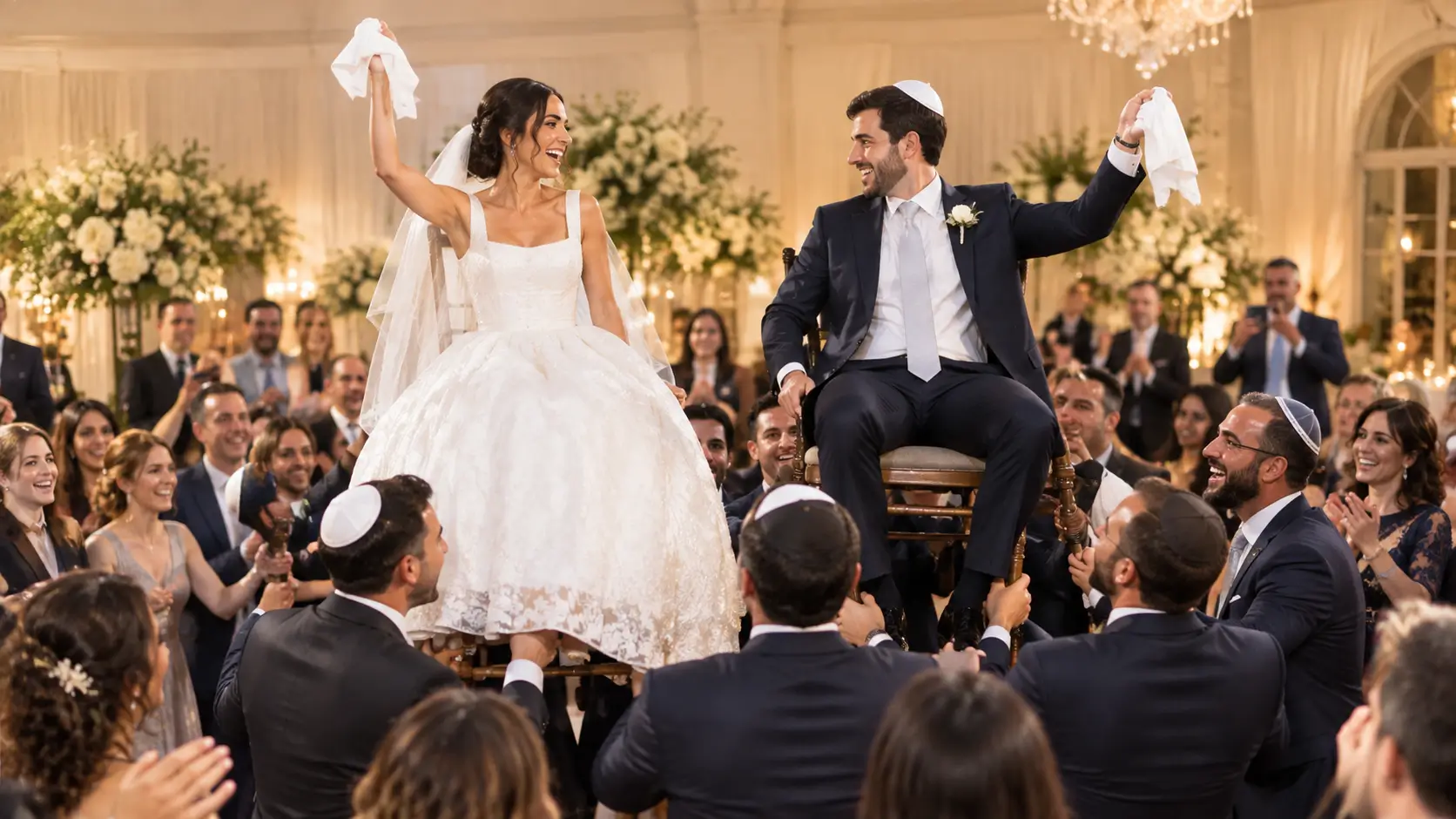
A Jewish wedding dance is a joyful part of the wedding celebration, bringing family and friends together through music, movement, and shared traditions.
Popular customs include the hora, a lively circle dance in which guests may lift the newlyweds on chairs. The dances, music, and level of religious observance vary between Jewish communities and individual couples.
Jewish wedding dancing can be both a celebration of the couple and an expression of community. From traditional klezmer music to modern pop songs, the reception often blends Jewish heritage with the couple’s personal style.
What Is a Jewish Wedding Dance?
A Jewish wedding dance is a dance performed during or after a Jewish wedding ceremony, most commonly at the reception. The best-known example is the hora, a circle dance that brings guests together to celebrate the newlyweds.
In many Jewish weddings in the United States, dancing is one of the reception’s main events. Guests may join hands, move in circles, clap, sing, and encourage the couple to participate. Some celebrations feature live klezmer musicians, while others use a DJ and a mix of Jewish, Israeli, and contemporary music.
Common practice: The hora is popular, but not every Jewish wedding includes it. The choice depends on family traditions, religious community, personal preference, and the overall style of the celebration.
The Hora: The Most Famous Jewish Wedding Dance

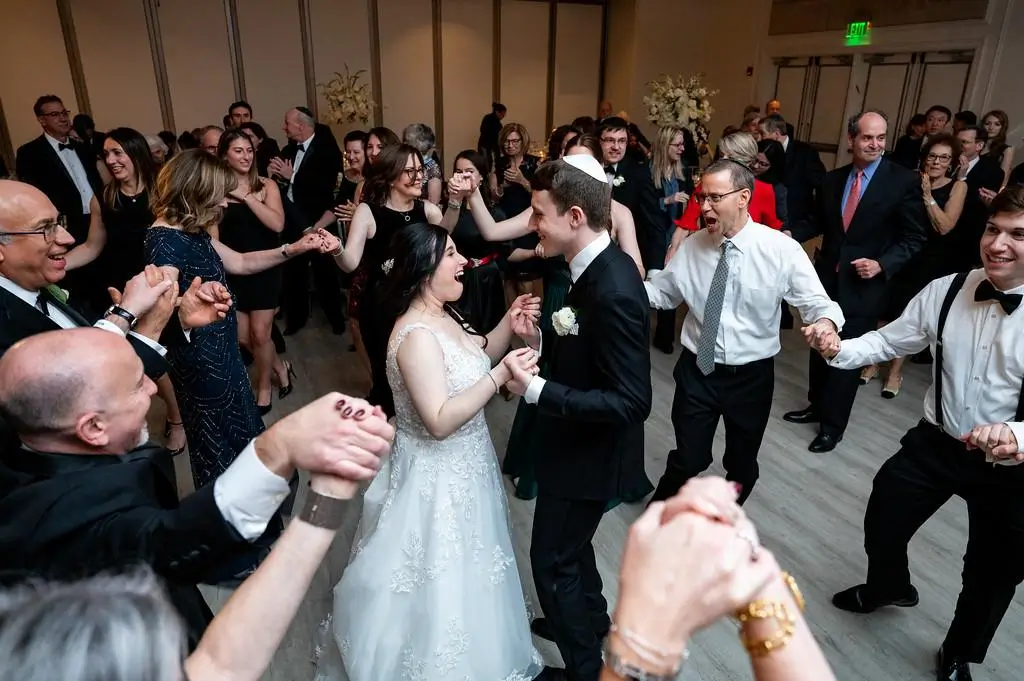
The hora, also spelled horah, is a lively group dance closely associated with Jewish wedding receptions. Guests form circles, hold hands or link arms, and dance together while the music builds.
How the hora works
The exact steps vary, but a typical hora follows this pattern:
- Guests form a circle. Friends and relatives join hands or hold one another’s hands and move around the dance floor.
- The circle gains energy. Dancers step rhythmically from side to side, move forward, and follow the group.
- The couple joins the celebration. The newlyweds may dance in the center of the circle.
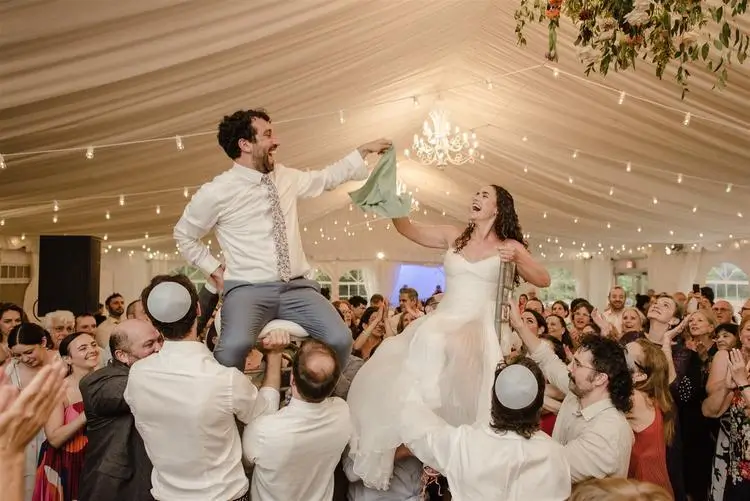
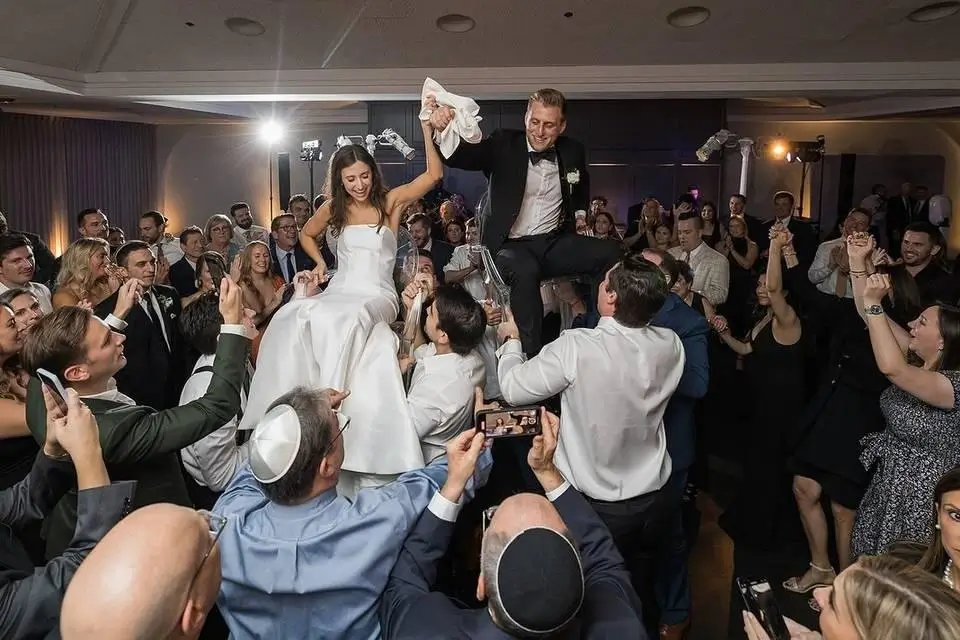
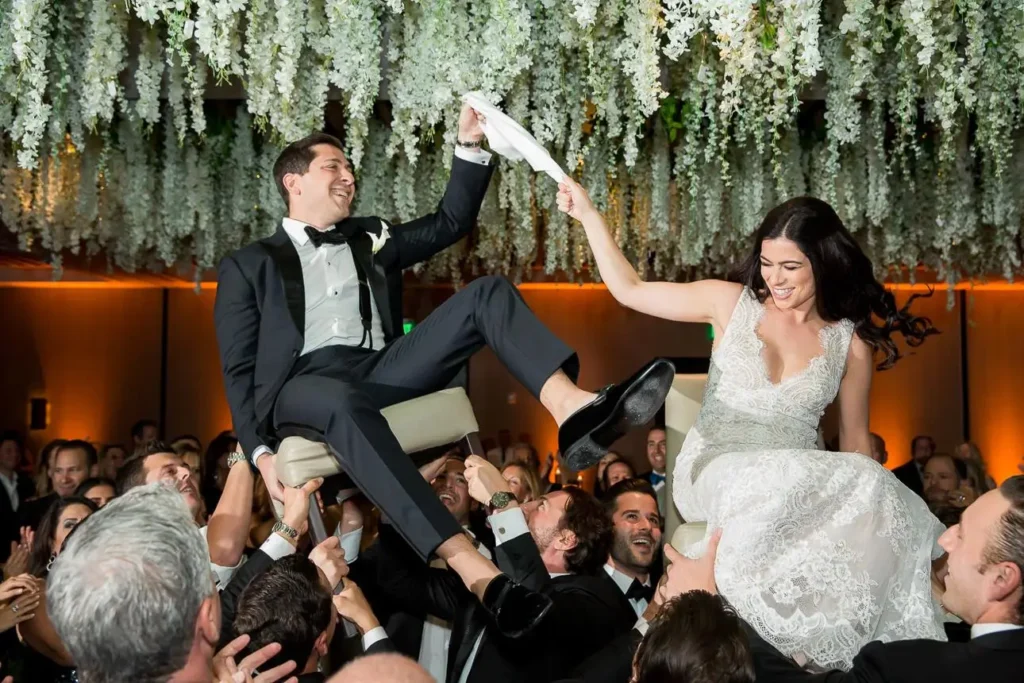
- The chair lifting may begin. Guests sometimes raise the bride and groom on sturdy chairs while they hold hands or a shared cloth.
- More guests join in. Smaller circles or linked-arm groups may form as the music continues.
Chair lifting is a recognizable part of many horas, but it is optional. Couples can enjoy the dance without being lifted, and guests should never pressure anyone to participate in a way that feels uncomfortable.
Why is the hora important at Jewish weddings?
The hora brings the wedding guests together in a shared celebration. Rather than focusing only on the couple, it invites the wider community to take part in their happiness.
Jewish wedding customs also include mitzvah tanz, a traditional dance performed to honor the bride and groom. In some more traditional communities, designated dancers or family members dance with the newlyweds as an expression of joy and respect. These customs are related to the broader Jewish tradition of celebrating a marriage, although the mitzvah tanz is not simply another name for every hora.
The History and Meaning of Jewish Wedding Dancing
Dance has a long history in Jewish religious and communal life. Biblical passages describe dancing as an expression of celebration, gratitude, and religious joy. Over time, Jewish communities developed different dances influenced by their regional surroundings and cultural experiences.
The modern Israeli hora has a more specific history than Jewish wedding dancing as a whole. It developed from Eastern European and Balkan circle-dance traditions and became associated with Jewish communal life in Palestine during the early 20th century. The dance later became widely recognizable at Jewish celebrations, including weddings and bar and bat mitzvahs.
The hora’s meaning today is often expressed through three ideas:
- Community: Family and friends participate together rather than watching from the sidelines.
- Joy: Energetic music and collective movement celebrate the marriage.
- Connection: The circle creates a shared space for people from different generations and backgrounds.
These are common interpretations, not a single religious explanation that every Jewish community follows.
Popular Jewish Wedding Dance Songs
Music helps establish the mood of a Jewish wedding dance. Some couples choose traditional Jewish or Israeli melodies, while others mix these with contemporary songs.
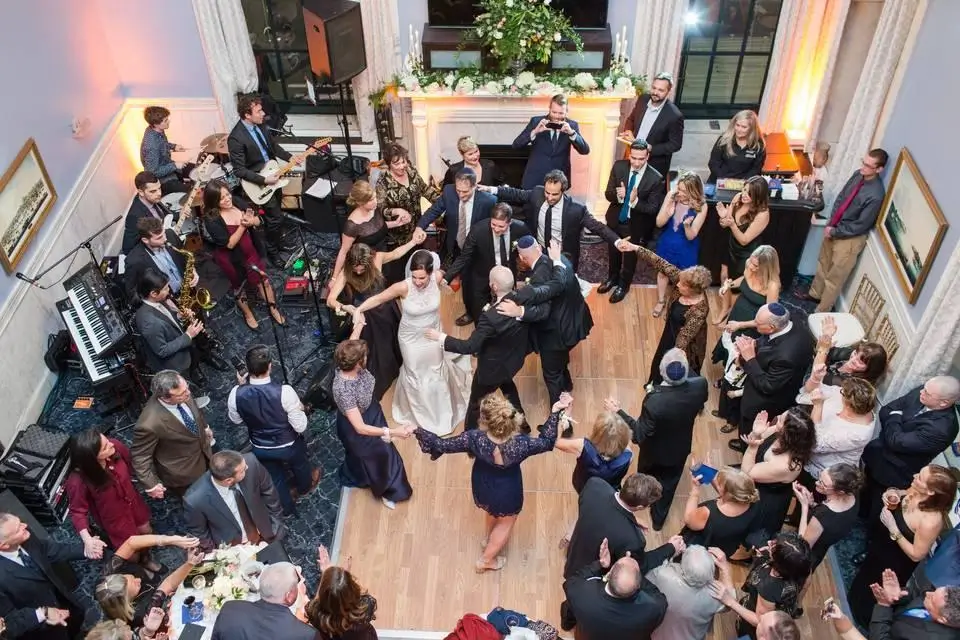

Here are several songs and musical styles commonly associated with Jewish wedding celebrations.
| Song or style | What to expect |
| Hava Nagila | A famous Hebrew celebratory song frequently associated with the hora. |
| Siman Tov u’Mazal Tov | A traditional congratulatory song often heard at Jewish celebrations. |
| Od Yishama | A traditional Jewish wedding song celebrating joy and gladness. |
| Klezmer music | A lively musical tradition associated with Ashkenazi Jewish culture, often featuring clarinet, violin, and accordion. |
| Israeli folk music | Rhythmic songs that can accompany circle dances and group participation. |
| Contemporary pop | Modern music selected to reflect the couple’s tastes and energize the reception. |
Song selection varies by family, community, and personal preference. Not every Jewish wedding uses the same playlist, and a DJ or band can blend traditional melodies with the couple’s favorite music.
Is Hava Nagila the Jewish wedding dance song?
Hava Nagila is one of the best-known songs played during Jewish celebrations, and it is frequently used for the hora. However, it is a song, not the name of the dance itself. Couples can dance the hora to other traditional or contemporary music.
Other Jewish Wedding Dances and Traditions
The hora is not the only form of dancing found at Jewish weddings. Depending on the community and family customs, guests may see several other traditions.
Mitzvah tanz
The mitzvah tanz is a traditional dance performed in honor of the bride or groom. In some Orthodox and Hasidic communities, it is an important part of wedding festivities. The exact format differs: a designated dancer may entertain the bride, or relatives and community members may dance with the groom.
In some settings, a handkerchief or another intermediary is used when a dancer and the bride are not meant to have direct physical contact. This practice is not universal, and the details depend on the community’s customs.
Circle and line dances
Some Jewish wedding celebrations include other circle dances, linked-arm dancing, or line formations. Certain traditional dances are associated with particular Jewish communities or regional musical traditions.
These dances may appear alongside the hora, especially at celebrations where family heritage and traditional music play a central role.
Modern reception dancing
Many Jewish couples in the United States combine Jewish traditions with a conventional wedding reception. The schedule might include a first dance, parent dances, a hora, and open dancing to pop, rock, hip-hop, or other favorite genres.
The balance is a personal choice. A couple may choose an elaborate traditional celebration, a short hora followed by modern music, or no hora at all.
How Jewish Wedding Dancing Varies by Community
Jewish wedding traditions are not identical across denominations, family backgrounds, or levels of religious observance. Understanding these differences helps couples plan a celebration that respects their customs.
Orthodox and Hasidic weddings
Some Orthodox and Hasidic communities maintain separate dancing people of all genders, in keeping with their interpretations of Jewish religious practice. A reception may feature traditional Jewish music, circle dances, and a mitzvah tanz.
Practices differ among Orthodox communities, so couples should confirm specific expectations with their rabbi or wedding planner.
Conservative and Reform weddings
Conservative and Reform Jewish weddings may feature mixed-gender dancing, a hora involving all guests, and a blend of traditional and contemporary music. Many couples adapt inherited customs to reflect their own values and family relationships.
These are broad patterns, not strict rules. Individual congregations and couples make different choices.
Ashkenazi and Sephardic traditions
Ashkenazi Jewish communities, historically associated with Central and Eastern Europe, have traditions influenced by Yiddish culture and klezmer music.
Sephardic Jewish communities have their own musical and celebratory traditions shaped by histories in Spain, the Mediterranean, North Africa, and other regions. Mizrahi Jewish communities also bring distinctive musical traditions from the Middle East and beyond.
A Jewish wedding dance may reflect one or several of these backgrounds. The hora is widely recognized, but it does not represent the full range of Jewish dance traditions.
What to Expect at a Jewish Wedding Dance as a Guest
If you are attending your first Jewish wedding in the United States, you do not need dance experience to join the celebration.
Here is how to participate comfortably:
- Follow the crowd. If guests form a circle, join the outside and follow their steps.
- Hold hands if comfortable. You can participate without holding hands if that feels better.
- Expect lively music. The tempo may increase, and guests may clap, sing, or cheer.
- Watch for chair lifting. Stay clear of the lifting area unless you are invited to help and can do so safely.
- Respect the couple’s preferences. Some newlyweds love being lifted; others prefer to stay on the floor.
- Follow the venue’s guidance. If the wedding has separate dancing areas or other community-specific customs, respect the arrangements.
You can enjoy the dance even if you do not know the words to the songs. Smiling, clapping, and celebrating with the couple are perfectly appropriate ways to take part.
How to Plan a Hora for Your Wedding
Couples who want to include a Jewish wedding dance can make a few simple decisions before the reception.
- Discuss the tradition with your families. Ask which songs, dances, or customs matter most to them.
- Coordinate with your DJ or band. Choose the music and explain whether you want a traditional hora, a shorter version, or additional dances.
- Choose the timing. The hora can take place early in the reception or later, depending on the schedule and family preferences.
- Plan for safe movement. Make sure the dance floor has enough space. If you want chair lifting, arrange sturdy chairs and capable helpers who understand the risks.
- Consider every guest. Keep participation voluntary and provide ways for guests with limited mobility to enjoy the celebration.
- Clarify religious customs. If your wedding follows particular community practices, consult your rabbi about appropriate music, dancing arrangements, and traditional elements.
A short, well-coordinated dance can be just as meaningful as an extended celebration. The goal is to honor the couple and create a joyful experience for the people gathered around them.
Frequently Asked Questions
The best-known Jewish wedding dance is the hora, also spelled horah. It is a group circle dance often performed at wedding receptions.
Chair lifting is a celebratory custom associated with many horas. Guests raise the newlyweds while others dance around them, expressing happiness and communal support. It is optional rather than a requirement at every Jewish wedding.
Hava Nagila is a famous choice, but Siman Tov u’Mazal Tov, Od Yishama, klezmer music, and contemporary songs may also be played.
No. The hora is popular, especially at Jewish weddings in the United States, but it is not universal. Traditions depend on the couple, their families, and their religious or cultural backgrounds.
Yes, when the couple’s celebration welcomes mixed participation. Guests generally do not need to know the steps in advance. They can follow the circle, clap along, or simply enjoy watching.
Conclusion
A Jewish wedding dance celebrates more than the newlyweds; it brings their families and community together through music and shared joy. If you are planning a Jewish wedding, talk with your family and DJ about the hora, meaningful songs, and the customs you want to include.

Daniel Morgan is a writer and editor specializing in wedding traditions, cultural celebrations, vows, gifts, food, music, and the stories behind modern wedding customs. At MarryPlane, he explores how couples around the world celebrate marriage while explaining traditions in a respectful, accessible way for modern readers.