
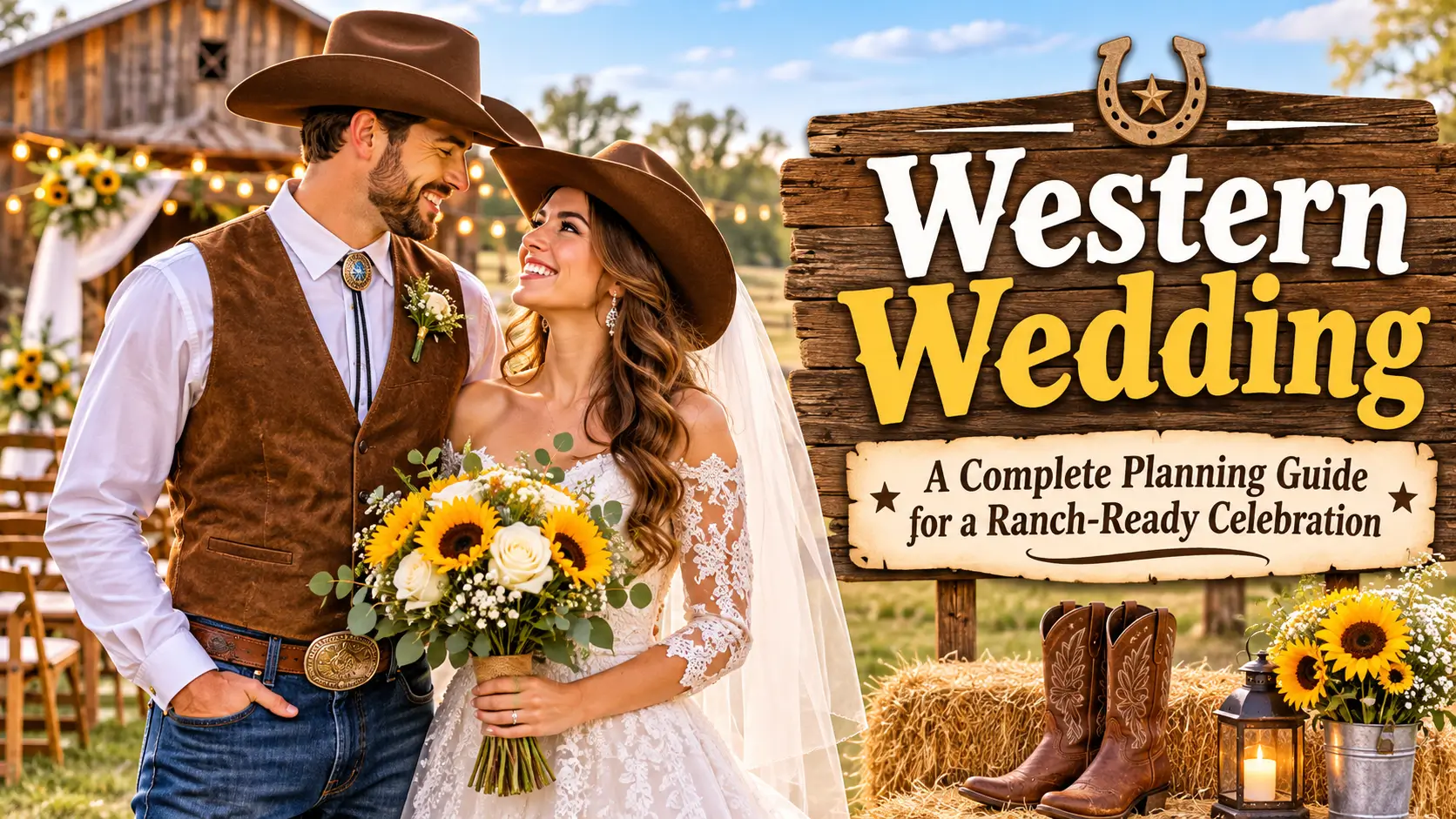
A western wedding combines a relaxed outdoor ceremony, a ranch or barn venue, and details like boots, wood and leather decor, comfort food, and country music. Start by choosing your style level, book a venue that fits your guest count and season, hire vendors who know outdoor logistics, and plan attire, food, and guest comfort around weather and travel distance.
- Choose your style — authentic ranch, rustic elegant, or modern western
- Book a ranch, barn, or outdoor venue and confirm permits, power, and rain backup
- Build a budget and timeline around season, sunset, and travel
- Plan attire that works on grass, gravel, and dirt
- Design decor, food, cake, and music that fit the setting
- Finalize guest comfort, transportation, and day-of logistics
What Is a Western Wedding? Finding Your Style
A western wedding is not one single look. Pick a clear direction and repeat it across venue, attire, stationery, and reception, instead of mixing every rustic idea found online.
The Three Most Workable Styles
- Authentic ranch: Working ranch or farm, open-air ceremony, wooden benches or covered hay bales, farm tables, wildflowers. Best if you want the landscape to do most of the decorating.
- Rustic elegant: Renovated barn or lodge with polished finishes — linen runners, candles with lanterns, leather accents, plated dinner, and better shelter for guests.
- Modern western: Desert property, mountain lodge, or contemporary barn with a restrained palette, bolo ties, fringe details, and turquoise or copper accents.
Decision Guide: Which Style Fits You?
- How formal should guests feel? If cocktail attire and heels must work, choose rustic elegant or modern western with paved or indoor floors.
- How much weather risk can you handle? An authentic ranch needs the strongest backup plan and largest rental contingency.
- What does the venue include? Wood tables, string lights, and a covered reception space save major rental cost compared with a raw field.
Write your style in one sentence — for example, “Rustic elegant western in a renovated barn with sage, cream, and leather accents” — and give it to every vendor.
Step-by-Step Process to Plan a Western Wedding
Step 1: Set Budget, Guest Count, and Date
Decide budget, maximum guest count, and two or three dates before touring venues. Protect funding first for venue, photography, and food. Ranch prices vary widely in inclusions: one covers tables and staff, another is rental-only. Avoid peak-heat dates without shade, water, and cover, and check travel and lodging for remote venues.
Step 2: Choose and Vet the Venue
Tour venues in person at ceremony time. Confirm capacity, kitchen access, electricity, water, restrooms, sound limits, alcohol rules, and curfew. Ask about permits, fire rules, and animal policies. Get the rain plan in writing.
Step 3: Book Vendors Who Know Outdoor Weddings
Book coordinator, caterer, photographer, band or DJ, florist, and rentals in that order. Ask about outdoor experience, travel fees, power needs, and weather plans. Experienced vendors anticipate wind, dust, and harsh sun. Venue preferred lists matter — those vendors know load-in and curfews.
Step 4: Plan Attire That Works Outdoors
Choose couple, party, and guest attire early so footwear and fabric match the terrain. Order boots early and break them in. Long trains, stilettos, and heavy fabrics fail quickly in heat and on uneven ground, so put ground conditions on your wedding website and invitation insert. Full details are in the attire section below.
Step 5: Design Ceremony and Reception Layout
Map seating, altar, aisle surface, cocktail flow, dinner layout, dance floor, and lighting as one plan. Angle seating so sun is not in guests’ eyes, and place water and programs at the entrance. Use weighted decor and lanterns instead of open flames in wind, and sound-check at ceremony time so vows are heard outdoors.
Step 6: Confirm Guest Comfort and Transport
Finalize parking, shuttles, signage, pathway lighting, bug control, and heating or cooling. Add signs from the main road, sunscreen and bug spray in hot months, and blankets or heaters in cool months. If alcohol is served and lodging is off site, arrange shuttles. Check cell service — if weak, print directions and shuttle times.
Western Wedding Venue Options Compared
- Working ranch: Most authentic backdrop and room for large counts. Needs the most rentals and weather planning, and travel is often longest.
- Renovated barn: Strong western character with shelter, restrooms, and power. Books earliest in peak season and may restrict nails, flame, and confetti.
- Farm with western styling: Easier catering and guest access. Theme comes from styling more than the building.
- Mountain or desert lodge: Dramatic scenery, indoor backup, sometimes on-site lodging. Communicate altitude, heat, or distance clearly.
- Family land: Personal and flexible. Tents, power, restrooms, lighting, permits, insurance, and cleanup often make it less simple than expected.
Permits, Rules, and Insurance
- Permits for gatherings, amplified sound, and tents
- Alcohol rules, licensed bartenders, and liability insurance
- Fire restrictions on sparklers, fireworks, bonfires, and candles
- Noise ordinances, curfews, parking, and animal policies
Get answers in your contract, not only on a tour.
Attire for a Western Wedding
For the Couple
- Dresses: A-line and fit-and-flare styles with lace, fringe, or embroidery suit the theme without becoming a costume. Choose a bustle that lifts the train off dirt and breathable fabric for summer.
- Suits: Tan, chocolate, navy, or charcoal with boots and a bolo tie is classic. Jeans work only for a very casual ranch wedding with a consistent, intentional dress code.
- Boots: Buy leather boots early, wear them at home for weeks, and check grip on barn floors. Keep a backup pair if mud is forecast.
- Hats: Great for portraits and sun protection. Decide whether to wear one during vows — it can shade your partner’s face — and plan where to set it down.
For the Wedding Party and Guests
Coordinate color and formality, not identical outfits. Bridesmaids in sage, dusty blue, rust, blush, or cream with boots or block heels, and groomsmen in matching pants, vests or jackets, boots, and one tie style, look cohesive. Add denim, shawl, or leather layers for evening.
State the guest code plainly: “Western cocktail — boots welcome, block heels or wedges recommended for grass and gravel” or “Ranch casual — sundresses, sport coats, and boots welcome.”
Decor, Flowers, and Stationery
Use materials that belong in the setting: wood, leather, metal, rope, denim, and natural textiles. Repeat two or three across the day in a tight color palette.
- Ceremony: Wooden arbor, barrels at the aisle entrance, wildflowers in jars or ceramic vessels, and a rug or planks defining the aisle.
- Reception: Farm tables or linen rounds, wood chargers, lanterns, and low centerpieces guests can see over. Leather place cards and wood table numbers complete the look.
- Flowers: Sunflowers, dahlias, roses, eucalyptus, pampas, and dried grasses work well. Discuss heat tolerance with your florist and keep arrangements shaded and watered before the ceremony.
- Stationery and signage: Invitation formality should match the real event so guests dress correctly. Make wood or kraft signage large and readable after dark.
- Lighting: String lights and lanterns are a safety need, not only decor. Test the space lit for dinner and dimmed for dancing.
Keep horseshoes and antlers to one or two focal spots.
Food, Cake, and Drinks
- Cocktail hour: Iced tea, lemonade, water stations, and handheld appetizers. Shade and seating matter as much as the menu.
- Dinner: Plated barbecue-inspired menus, family-style comfort food, or buffet stations with grilled meats, roasted vegetables, cornbread, and salads. Choose based on guest count, kitchen facilities, and keeping food at safe temperatures outdoors.
- Dietary needs: Provide a clear vegetarian option and label allergens, especially at buffets.
- Cake: Naked or semi-naked cake, buttercream with fresh flowers, or a cake on a wood stand fits well. Pie and cobbler are strong additions. Keep cake shaded or indoors until cutting — buttercream softens fast in heat.
- Bar: Confirm licensed service, ice, and water all night. Short lines matter more than a clever signature drink name.
Music and Entertainment
- Ceremony: Acoustic guitar, fiddle, strings, or a solo singer suits outdoor acoustics. Confirm amplification — wind carries voices away.
- Cocktail hour and dinner: Country classics, folk, bluegrass, and acoustic covers at conversation volume.
- Reception: A live country or variety band can lead line dancing and creates strong energy. A DJ needs less space and power and offers wider range. Mix country with pop and classics so all guests dance.
- Timing: Schedule a line dancing or two-step moment early in open dancing, and plan the last song around curfew.
Western Wedding Timeline
Adapt this sample to sunset, which drives outdoor ceremony and portrait timing.
| Time | Event | Notes |
| 10:00 a.m. | Getting ready begins | Earlier for large parties |
| 1:00 p.m. | Photographer arrives | Details gathered in one place |
| 2:30 p.m. | First look and portraits | Shade if sun is harsh |
| 3:30 p.m. | Party and family photos | Shortens post-ceremony photos |
| 4:30 p.m. | Guests arrive | Water and parking help ready |
| 5:00 p.m. | Ceremony | Softer late-afternoon light |
| 5:30 p.m. | Cocktail hour | Golden-hour portraits |
| 6:30 p.m. | Dinner | Confirm sunset portrait break |
| 7:45 p.m. | Toasts and cake | Keep speeches timed |
| 8:15 p.m. | Dancing begins | Confirm curfew with music vendor |
| 10:00 p.m. | Last song and send-off | Shuttles in effect |
Planning Timeline Checklist
- 9–12 months before: Budget, guest count, style, venue, caterer, photographer, music
- 7–9 months before: Main attire, florist, rentals, officiant, hotel block, shuttles
- 5–7 months before: Party attire and boots, cake, ceremony music, stationery
- 3–5 months before: Tastings, decor plan, registry
- 1–3 months before: Invitations with dress code and directions, marriage license window, permits and insurance
- Final month: Headcount, seating, vendor timeline, weather plan
- Wedding week: Attire pickup, shuttle confirmation, emergency kit
Budget Guidance for a Western Wedding
A western wedding is not automatically inexpensive. A ranch can cut some costs and add others, so compare total cost by category.
| Category | What Drives Cost | Planning Tip |
| Venue and rentals | Inclusions, tent, power, restrooms | Compare total, not rental fee alone |
| Catering and bar | Guest count, service style, licensed staff | Guest count is the largest lever |
| Attire | Boots, hats, alterations | Order boots early |
| Photo and video | Hours, second shooter, travel | Protect golden-hour coverage |
| Flowers and decor | Season, lighting, signage | Reuse ceremony flowers at reception |
| Music | Band size versus DJ, outdoor sound | Confirm sound is included in quotes |
| Guest logistics | Shuttles, heaters, fans, blankets | Budget as hospitality, not an extra |
Prices vary significantly by location, season, guest count, and vendor experience, so build final numbers from local quotes. Peak Saturdays, remote venues needing full rentals, and live bands raise totals. Shoulder-season dates, a smaller guest count, and strong inclusions lower them. Hold contingency for weather rentals.
Wedding Day Checklist
- Rings, marriage license, vows, and final payments in labeled envelopes
- Boots, hats, attire, backup shoes, and wrinkle release
- Sunscreen, bug spray, water, and snacks for the wedding party
- Programs, signage, seating chart, and guest book in setup order
- Lantern batteries, tape, and printed vendor contacts and shuttle schedule
- Rain items: clear umbrellas, towels, and a set indoor flip time
- Comfortable shoes for late-night dancing
Common Mistakes to Avoid
- Theme over comfort: Uncovered hay bales, no shade, and no water feel miserable. Add cushions, shade, and drinks.
- Ignoring the ground: Warn guests about grass, gravel, and dirt in every communication.
- Forgetting darkness: Time the ceremony to sunset and light pathways for safe exits.
- Assuming power and rentals: Get a written inventory of power, tables, restrooms, and kitchen capacity.
- Careless flame: Candles, sparklers, and bonfires are fire risks in dry, windy conditions and may be banned.
- Overdoing props: Edit to a few strong, repeated elements.
- No weather plan: Name who decides on moving indoors and when.
- No coordinator at a DIY venue: Raw spaces need a professional running load-in and teardown.
Realistic Examples to Borrow
- Fall barn: Outdoor ceremony, covered patio cocktail hour with lawn games, family-style dinner inside, live band mixing country and pop, pie with cake, shuttles to a hotel block.
- Spring ranch: Ceremony under trees for shade, wildflowers, acoustic guitar, buffet dinner, string lights over a firm dance floor, blankets after sunset.
- Modern desert: Lodge ceremony at golden hour, cream, clay, and black palette, bolo ties, plated indoor dinner, DJ with a line dancing set, lights-only send-off under fire rules.
FAQs
Q: What should guests wear to a western wedding?
Follow the stated dress code. Western cocktail means dresses, jumpsuits, or suits, with boots, block heels, or wedges welcome. Ranch casual is relaxed but polished — no shorts, athletic wear, or white. Choose footwear for grass and dirt unless paved surfaces are confirmed.
Q: When is the best season for a western wedding?
Spring and fall are most popular in most regions for milder temperatures that suit ceremonies, attire, flowers, and cake. Summer works with shade, a later ceremony, and cooling and hydration. Winter barns work with heating and shorter outdoor photos. Check local rain, heat, and fire patterns.
Q: Can we have a western wedding without boots and hats?
Yes. Venue, wood and leather decor, wildflowers, comfort food, and country or folk music carry the theme on their own. Boots and hats are optional accents, not requirements.
Q: How do we handle bad weather at a ranch or barn wedding?
Book a venue with indoor space, a covered pavilion, or a tent reserved in advance, and set a decision time with your coordinator. Communicate changes on your wedding website, protect sound equipment, cake, and paper goods first, and get plan details and fees in writing.
Q: Do we need shuttles for a rural venue?
Shuttles are strongly recommended when lodging is off site, roads are dark, parking is limited, or alcohol is served. At minimum, provide printed directions, parking guidance, and a clear last-shuttle time.
Conclusion and Practical Next Steps
Success comes down to a clear style, a venue vetted for logistics, outdoor timing, and guest comfort planned as carefully as decor. This week: write your one-sentence style, set budget and guest count, and tour two venues with the permit, power, restroom, and rain-plan questions above. Book venue and core vendors next.

Daniel Morgan is a writer and editor specializing in wedding traditions, cultural celebrations, vows, gifts, food, music, and the stories behind modern wedding customs. At MarryPlane, he explores how couples around the world celebrate marriage while explaining traditions in a respectful, accessible way for modern readers.