
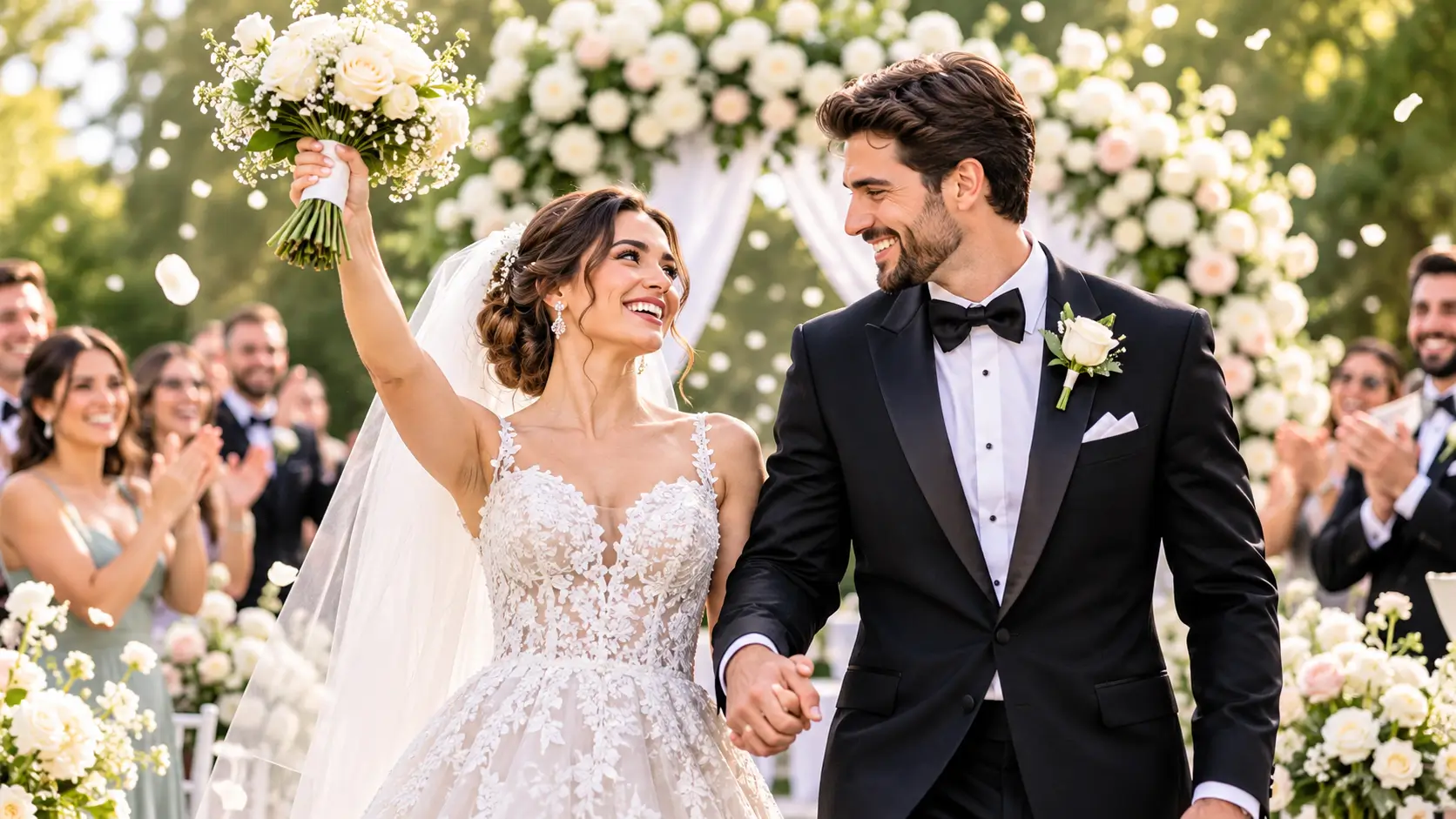
A wedding day is the day a couple celebrates their marriage through a ceremony, reception, or both. In the United States, it often includes getting ready, exchanging vows, taking photographs, celebrating with family and friends, and enjoying a reception. The schedule and traditions depend on the couple’s culture, preferences, and wedding plans.
For many couples, the wedding day is a celebration of their commitment and the beginning of married life. It can be an intimate gathering, a traditional religious ceremony, or a large celebration with hundreds of guests.
What Happens on a Wedding Day?
Although every celebration is different, a traditional American wedding day often follows this general order:
- Getting ready: The couple, wedding party, and sometimes close family members prepare for the ceremony.
- Pre-wedding photographs: The photographer captures portraits, attire, rings, flowers, and special moments.
- Wedding ceremony: The couple exchanges vows and rings and is formally married.
- Cocktail hour: Guests enjoy drinks and appetizers while the couple takes photographs or greets loved ones.
- Reception: Guests celebrate with dinner, speeches, music, and dancing.
- Special moments: The couple may cut the cake, share a first dance, or participate in family traditions.
- Wedding send-off: The celebration ends with a final dance, a departure, or another planned farewell.
These activities are common rather than mandatory. Couples can change the order, add cultural traditions, or skip activities that do not suit their celebration.
The Meaning and Importance of a Wedding Day
A wedding day represents the public celebration of a couple’s decision to build a life together. For couples who have a religious or cultural ceremony, it may also carry spiritual, family, or community significance.
The meaning can differ depending on the couple’s beliefs:
- Romantic meaning: A celebration of love, commitment, and partnership.
- Family meaning: An opportunity to bring relatives and loved ones together.
- Religious meaning: A sacred ceremony that recognizes marriage according to a faith tradition.
- Cultural meaning: A celebration that honors family customs, heritage, and community.
- Personal meaning: A chance to express the couple’s personalities, values, and shared experiences.
For some couples, the wedding day is a large formal event. Others prefer a courthouse ceremony, a small gathering, or an outdoor celebration with only their closest friends and family.
There is no single correct way to celebrate.
A Typical Wedding Day Timeline
A wedding timeline helps couples organize their activities, coordinate vendors, and avoid unnecessary delays.
Here is an example of a wedding day schedule for a couple planning a 4:00 p.m. ceremony. The times are illustrative, not fixed requirements.
| Time | Wedding day activity |
| 8:00 a.m. | Breakfast and preparation |
| 9:00 a.m. | Hair and makeup begin |
| 12:00 p.m. | Photographer arrives |
| 1:00 p.m. | Getting dressed and detail photographs |
| 2:00 p.m. | First look and couple portraits |
| 2:45 p.m. | Wedding party and family photographs |
| 3:30 p.m. | Guests begin arriving |
| 4:00 p.m. | Wedding ceremony |
| 4:30 p.m. | Cocktail hour |
| 5:30 p.m. | Reception entrance |
| 6:00 p.m. | Dinner service |
| 7:00 p.m. | Toasts and speeches |
| 7:30 p.m. | First dance and family dances |
| 8:00 p.m. | Open dancing |
| 9:00 p.m. | Cake cutting and dessert |
| 10:00 p.m. | Final dance and send-off |
The schedule can change depending on the venue, guest count, ceremony length, photography arrangements, and reception plans. A first look, for example, allows couples to take some photographs before the ceremony instead of using the entire cocktail hour.
Wedding planning resources such as Shutterfly and Minted also recommend coordinating the schedule with photographers, caterers, and other vendors before the wedding.
Important Moments and Traditions on a Wedding Day
Some wedding activities have become popular in the United States, but couples do not need to include every tradition.
1. Getting Ready
The preparation period is often one of the busiest parts of the day. Couples may get dressed separately, spend time with their wedding parties, exchange gifts, or share a quiet moment with family members.
Common activities include:
- Hair and makeup appointments.
- Putting on wedding attire and accessories.
- Photographing wedding rings and bouquets.
- Reading personal letters.
- Sharing breakfast or lunch with the wedding party.
2. The Wedding Ceremony
The ceremony is the central event for couples who want to formally exchange marriage vows.
A typical ceremony may include:
- Processional, when the wedding party enters.
- Welcome from the officiant.
- Readings or religious blessings.
- Exchange of wedding vows.
- Exchange of rings.
- Pronouncement of marriage.
- First kiss as a married couple.
- Recessional, when the couple and wedding party leave.
A religious ceremony may include additional prayers, readings, rituals, or blessings.
3. Wedding Photography
Photographs preserve moments that couples may not have time to fully appreciate during the celebration.
Popular wedding photographs include:
- Couple portraits.
- Wedding party photographs.
- Family group pictures.
- Ceremony highlights.
- Candid guest moments.
- Reception and dancing photographs.
Couples should prepare a family photo list in advance so the photographer knows which combinations are important.
4. Cocktail Hour
Cocktail hour usually takes place between the ceremony and reception dinner.
Guests can enjoy refreshments, socialize, and sometimes explore the venue. Meanwhile, the couple may finish family photographs or take additional portraits.
This period also gives the venue team time to prepare the reception space when the ceremony and reception use the same location.
5. Wedding Reception
The reception is the celebratory part of the wedding day. It may take place at a ballroom, restaurant, garden, hotel, private property, or another event venue.
Popular reception activities include:
- Newlywed entrance.
- First dance.
- Dinner and drinks.
- Speeches from family and friends.
- Parent dances.
- Cake cutting.
- Dancing and entertainment.
- Final farewell.
Some couples also include a photo booth, cultural performances, a live band, or late-night snacks.
Wedding Day Traditions in Different Cultures
Wedding customs vary across communities, religions, and families. The following examples illustrate some traditions that couples may incorporate.
- Christian weddings: Depending on the denomination and couple’s preferences, ceremonies may include scripture readings, prayers, vows, rings, and a blessing.
- Hindu weddings: Some ceremonies include the mandap, saptapadi (seven steps), and other rituals. Practices differ among regional and family traditions.
- Jewish weddings: Couples may marry beneath a chuppah, a wedding canopy. Some ceremonies include the ketubah (marriage contract), blessings, and breaking a glass.
- Chinese weddings: Some families include a tea ceremony in which the couple serves tea to elders as a gesture of respect and gratitude. Customs vary across Chinese communities.
Interfaith couples may combine elements from both backgrounds or create a ceremony that reflects their shared values.
These traditions are not universal requirements. Families and couples decide which practices are meaningful to them.
How to Make Your Wedding Day Less Stressful
Even a carefully planned celebration can involve unexpected changes. A few practical decisions can make the experience more comfortable.
1. Prepare a written schedule. Share the final timeline with your wedding planner, photographer, venue, and wedding party.
2. Assign someone to handle questions. Choose a trusted person or coordinator to communicate with vendors and solve small problems.
3. Eat before the ceremony. A proper breakfast and lunch can help you maintain your energy throughout the day.
4. Leave extra time between activities. Allow for transportation, outfit changes, photographs, and unexpected delays.
5. Prepare an emergency kit. Include safety pins, tissues, stain remover, pain-free blister protection, makeup essentials, and other useful items.
6. Keep personal belongings organized. Decide who will look after gifts, cards, important documents, and personal items after the reception.
7. Make time for each other. Take a few minutes together during the celebration. You do not have to spend every moment greeting guests or following a schedule.
What Should Guests Expect on a Wedding Day?
Wedding guests generally attend the ceremony, congratulate the couple, and participate in the reception if invited.
A few etiquette guidelines can help guests feel comfortable:
- Arrive early enough to find your seat before the ceremony begins.
- Follow the dress code stated on the invitation.
- Avoid wearing white or another color specifically reserved by the couple.
- Silence your phone during the ceremony.
- Follow photography instructions from the couple or venue.
- Be respectful during religious and cultural rituals.
- Congratulate the newlyweds and enjoy the celebration.
Guests should also check the invitation for details about transportation, parking, reception arrangements, and whether children are included.
Do You Need a Marriage License Before Your Wedding Day?
Fact: In the United States, couples generally need a valid marriage license before their legal marriage ceremony. However, marriage requirements are established by state law, so the application process, waiting periods, expiration dates, officiant requirements, and witness rules can differ.
For example, North Carolina requires couples to obtain a marriage license before the ceremony and have the ceremony conducted by a recognized officiant. New York also has specific state requirements governing marriage licenses and authorized officiants.
Before the wedding, couples should:
- Contact the appropriate county clerk or marriage-license office.
- Check identification and application requirements.
- Confirm whether a waiting period applies.
- Check how long the license remains valid.
- Understand who must sign the paperwork after the ceremony.
Do not assume that a license obtained in one state can be used for a ceremony in another. Confirm the requirements with the relevant state or local office.
Frequently Asked Questions About Wedding Day
1. What is the most important part of a wedding day?
For couples having a marriage ceremony, exchanging vows and legally completing the marriage process are central moments. However, the personal importance of each activity depends on the couple’s beliefs and priorities.
2. How long does a typical wedding day last?
A wedding celebration may last several hours, with preparation beginning in the morning and the reception continuing into the evening. The exact duration depends on the ceremony, venue, and reception schedule.
3. What time should guests arrive at a wedding?
Guests should follow the invitation time and aim to arrive approximately 15–30 minutes beforehand. This gives them time to park, find their seats, and settle in before the ceremony.
4. What should a bride and groom do on their wedding day?
Couples should follow their schedule, spend time with their loved ones, participate in their chosen ceremony and celebrations, and make time to enjoy the occasion together.
5. What is the difference between a wedding day and a wedding anniversary?
A wedding day is the original date on which a couple gets married. A wedding anniversary is the yearly celebration of that date in the years that follow.
Conclusion
Your wedding day does not have to follow a perfect schedule or include every popular tradition. What matters most is creating a celebration that reflects your relationship and allows you to share the occasion with the people who matter to you. Start by choosing your ceremony time, then build a realistic schedule around the moments you want to remember.

Olivia Bennett is a wedding fashion and jewelry writer at MarryPlane, covering wedding dresses, guest attire, suits, shoes, veils, rings, and bridal accessories. She focuses on helping readers understand styles, materials, fit, and current wedding fashion while keeping her recommendations practical and timeless.