
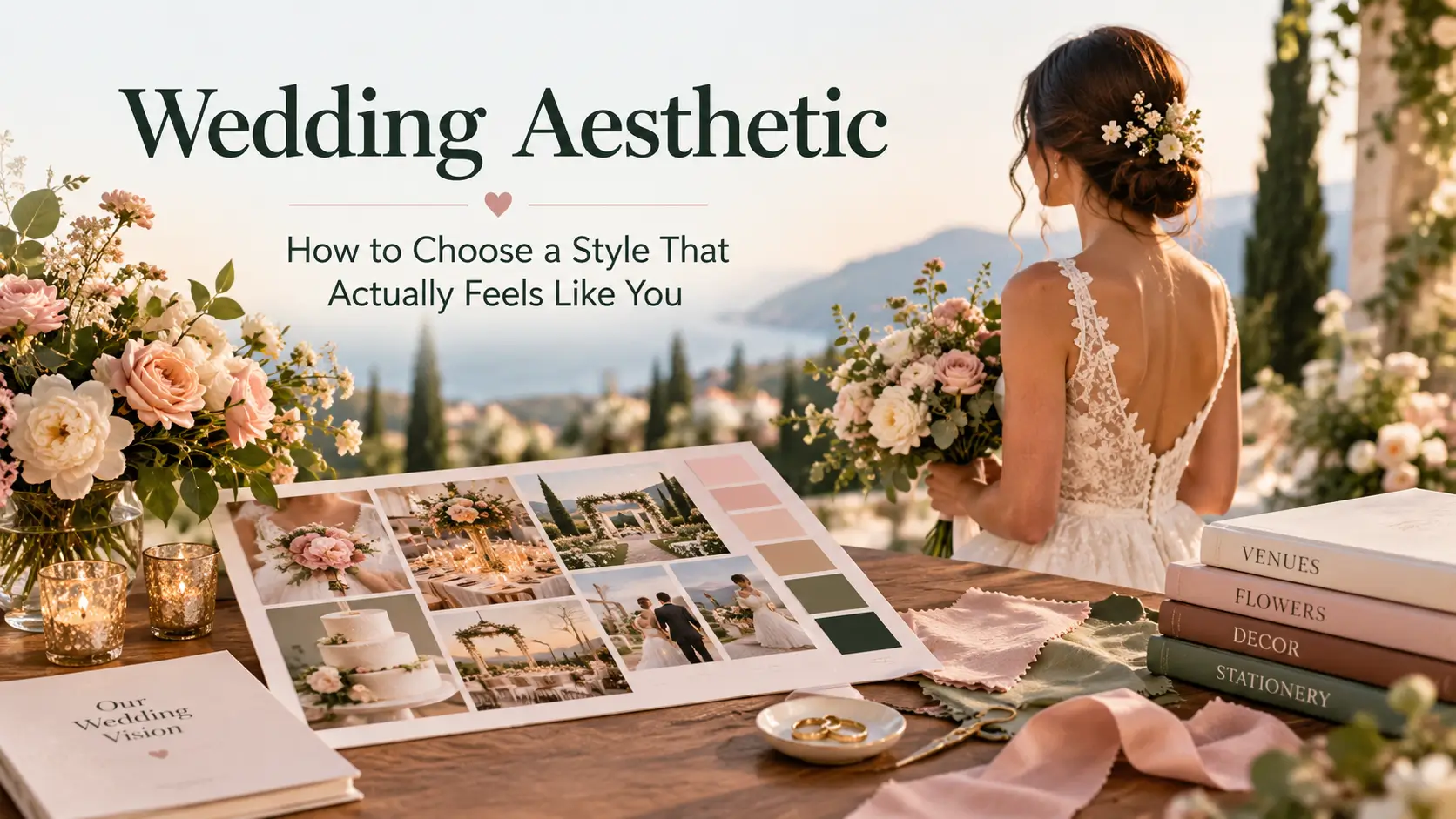
A wedding aesthetic is the overall look, mood, and feeling of your wedding day the colors, textures, fashion, decor, stationery, lighting, and setting that make every element feel connected. Choosing one clear aesthetic early helps you decide faster, spend with intention, and create a cohesive celebration in person and in photographs.
What Is a Wedding Aesthetic?
Your wedding aesthetic is the visual and emotional language of your day: soft and romantic or clean and architectural, warm and earthy or polished and glamorous, relaxed or formal?
That feeling comes from repeated choices, not a single centerpiece. Linen, candlelight, and loose florals point in one direction; sleek surfaces, structured florals, and sharp typography point in another. When those signals agree, guests feel a clear atmosphere on arrival.
A strong aesthetic does three practical jobs:
- It filters ideas, so you choose what fits instead of saving everything
- It aligns vendors, giving your florist, photographer, planner, and stationer the same direction
- It creates consistency, so your invitation, ceremony, reception, and photos tell one story
Use the label as a communication tool, adapted to your venue, season, culture, budget, and personalities — not as a rigid rule.
Wedding Aesthetic vs. Theme vs. Color Palette
These terms overlap, yet they do different work. Confusing them leads to weddings with plenty of decor but no clear direction.
Aesthetic: The Overall Feeling
An aesthetic describes mood, texture, formality, and design language. Romantic, modern minimalist, and garden are aesthetics. They guide dress silhouettes, furniture finishes, floral style, and evening lighting.
Theme: A Specific Subject or Motif
A theme is a more literal subject, such as travel, a favorite era, or a coastal location. A theme can sit inside an aesthetic: vintage travel can look luxurious and polished, or relaxed and rustic. Themes work best as an accent — a few thoughtful references feel personal, while a motif repeated on every surface feels forced.
Color Palette: One Part of the Picture
Colors support an aesthetic, but colors alone do not create one. Blush and gold can look romantic in a ballroom with cascading roses, modern in a gallery with sculptural florals, or boho in a field with pampas and rattan. Texture and setting change what the same colors mean.
| Element | What It Controls | Example |
| Aesthetic | Mood, texture, formality, design language | Modern minimalist |
| Theme | A specific subject or motif used as an accent | Architecture and sculptural art |
| Color palette | Main and supporting colors | Ivory, stone, black, muted sage |
| Venue | Physical setting and existing character | A bright gallery with clean lines |
Start with the aesthetic, add a theme only if it genuinely reflects you, then build the palette to serve both.
Popular Wedding Aesthetics and Their Defining Elements
Most couples blend two neighboring styles, such as romantic garden or modern luxury.
Romantic
Soft, intimate, and timeless. Blush, ivory, champagne, and dusty rose; chiffon, tulle, silk ribbon, and aged gold; loose garden roses, trailing greenery, taper candles, and layered linens. Best in ballrooms, historic estates, and vineyards.
Modern Minimalist
Clean lines, restraint, and negative space, where quality shows more than quantity. White, ivory, black, and stone; stone, glass, acrylic, and crisp linen; sculptural or single-variety florals and uncluttered tables. Best in galleries, lofts, and modern hotels.
Boho
Free, earthy, and layered, with a relaxed, gathered atmosphere. Terracotta, sand, rust, and cream; rattan, wood, dried grasses, and woven textiles; pampas, wildflowers, lounge seating, and patterned rugs. Best in deserts, beaches, ranches, and open land.
Vintage
Design drawn from one specific era, most often the 1920s through the 1970s, reinterpreted for today. Muted jewel tones or faded pastels; lace, velvet, brass, and cut glass; antique vessels, retro typography, and classic cars. Best in historic homes, theaters, and old hotels.
Garden
Lush greenery and seasonal blooms, with the feeling of celebrating inside nature, even indoors. Greens, white, and cream; natural wood, stone, and linen; abundant foliage, floral arches, and open-air dining. Best in botanical gardens, greenhouses, courtyards, and tented lawns.
Luxury
Polish, scale, and attentive detail, without relying only on expensive objects. Ivory and gold, black and white, or deep jewel tones; velvet, marble, and crystal; full floral installations, dramatic lighting, and formal table service. Best in ballrooms, grand hotels, and estates.
Rustic
Warm, welcoming, and grounded in natural, unpolished materials, using craftsmanship to avoid looking unfinished. Warm browns, cream, and sage; reclaimed wood, stone, and leather; wildflowers, wooden signage, string lights, and farm tables. Best in barns, farms, lodges, and mountain venues.
Other directions worth exploring include classic and timeless, coastal, industrial, and whimsical — each works best when built from the same method below.
How to Find Your Wedding Aesthetic
Follow these steps in order, using real constraints to narrow your choices.
- Start with words, not images. Write three to five words for how the day should feel — warm, calm, joyful, elegant, unfussy — then agree on the shared words with your partner.
- Collect images broadly for one week. Save interiors, fashion, travel, gardens, and artwork, not only weddings. Patterns outside wedding content reveal your real taste.
- Edit ruthlessly. Delete duplicates and images you like only because they look expensive or popular. Keep 15 to 20 with a clear shared mood, then name the pattern.
- Check your everyday style. If you live in clean, calm spaces and wear structured clothing, heavily layered boho design will likely feel like a costume.
- Let the venue vote. Shortlist venues that already support your direction. Working with a space costs less and looks better than fighting it.
- Factor in season and light. Spring gardens, summer coastlines, autumn vineyards, and winter candlelit rooms favor different colors, fabrics, and flowers. Seasonal flowers give better value.
- Choose a primary and a secondary aesthetic. Primary romantic with secondary garden gives a clear lead plus flexibility. Two equal competing styles create confusion.
How to Refine Your Aesthetic Into Real Decisions
A mood board matters only if it changes what you buy, book, and wear.
Build a Mood Board That Vendors Can Use
- Include 10 to 15 images covering color, texture, florals, attire, tables, stationery, and lighting
- Caption what you love in each image, such as bouquet shape rather than exact flowers
- Add a short do-not-use list — exclusions prevent the most common misunderstandings
- Share the same board with every vendor and update it in one place
Test the Venue Fit Honestly
Visit at the same time of day as your ceremony and reception. Note wall colors, flooring, chairs, fixtures, and the outdoor backdrop. List what you will keep, what you can cover, and what you must work around — then adjust the decor plan to fit.
Keep Consistency Across the Whole Day
- Attire: Match formality and silhouette — sleek crepe and tailoring for modern minimalist, soft lace and flowing lines for romantic or garden, natural fabrics for boho or rustic
- Decor: Repeat core materials and colors across ceremony, cocktail hour, and reception, with the same candle style, linen family, and floral language
- Stationery: Let the invitation set expectations first — typography, paper, and color that match the day — then carry those choices into menus, place cards, and signage
- Photography: Choose a photographer whose editing supports your aesthetic, since bright and airy, true-to-color, and dark and moody editing change how the same decor appears forever
Consistency means repeating a small set of choices — two or three colors and materials, one floral style, one typography family — until the day feels unified. Treat service style and cake design as design elements, too.
Wedding Aesthetic Checklist
Revisit this checklist before each major purchase or booking.
- Three to five feeling words agreed with your partner
- Primary aesthetic and one secondary aesthetic named
- Mood board with 10 to 15 captioned images shared with all vendors
- Color palette with main, supporting, and accent colors defined
- Core materials and textures listed
- Venue strengths and fixed features documented after a visit
- Attire direction set for the couple and wedding party, including formality
- Floral style described by shape and density, not only flower names
- Stationery typography, paper, and color matched to the design
- Table design planned, including linens, candles, and centerpiece height
- Lighting plan confirmed for ceremony, dinner, and dancing
- Photographer editing style checked against the aesthetic
- Cake, signage, and lounge details briefed in the same design language
- Cultural, religious, and family traditions intentionally included
- Final review two months before the wedding to catch off-direction purchases
How Your Wedding Aesthetic Affects Your Budget
Your aesthetic influences cost through materials, labor, floral density, and how much you need to transform your venue. Costs vary widely by region, season, guest count, and vendor, so treat any quote as specific to your date and location, not as a standard price.
- Venue fit saves the most money. A garden wedding in an actual garden needs far less added decor than creating a garden inside a blank industrial hall.
- Minimalist does not automatically mean cheap. Restrained design depends on flawless execution and high-quality materials, because every visible item carries more weight.
- Luxury and lush styles scale with guest count. Full florals, upgraded linens, and specialty lighting multiply across every table, so per-table choices drive the total.
- Repetition lowers cost and raises impact. Reusing ceremony florals at the reception and limiting your palette reduce rental variety and waste.
- Labor is a real line item. Installations, hanging decor, and room flips require crew time and sometimes extra venue hours. Ask what setup and teardown includes before signing.
- Protect a small contingency. Set aside part of the decor budget for extra candles, a backdrop to cover an unwanted feature, or weather adjustments.
Get itemized quotes and cut elements guests will not notice before cutting what defines your aesthetic.
Common Wedding Aesthetic Mistakes to Avoid
- Copying a viral wedding exactly. Those images reflect another couple’s venue, budget, season, and photographer. Borrow the principles, then rebuild with your constraints.
- Choosing the aesthetic after the venue and dress. Late changes create expensive conflicts. Set it early and let major purchases follow.
- Mixing too many styles. Romantic, rustic, glamorous, and minimalist elements in one room compete. Name a primary style and let everything else support it.
- Ignoring fixed venue features. Strong carpet colors, heavy wood, or ultra-modern architecture will appear in photos. Design with those features.
- Overusing a literal theme. A motif on invitations, favors, cake, signage, and tables turns a personal touch into a gimmick. Use it in two or three places.
- Forgetting lighting. Decor under harsh or dim lighting loses its effect. Discuss candles and uplighting early, including venue rules.
- Letting small purchases drift. Favors, shoes, and stationery bought without the checklist pull the design apart. Check each against your mood board.
- Prioritizing photos over guests. A tablescape that blocks conversation, or a ceremony facing guests into harsh sun, fails in real life.
Wedding Aesthetic Decision Guide
If you feel stuck between two directions, follow the pattern that matches your taste and your space.
| If You Love… | And Your Venue Is… | Start With |
| Soft light, flowers, candlelit dinners | An estate, ballroom, or vineyard | Romantic |
| Clean spaces, art, simple well-made things | A gallery, loft, or modern hotel | Modern minimalist |
| Nature, texture, a relaxed party | Land, desert, beach, or ranch | Boho |
| History, heirlooms, a specific past era | A historic home or old hotel | Vintage |
| Being outdoors, seasonal blooms | A garden, greenhouse, or courtyard | Garden |
| Formal service, drama, polished detail | A ballroom or grand estate | Luxury |
| Wood, warmth, an unpretentious welcome | A barn, farm, or lodge | Rustic |
Still torn? Picture each option at your actual venue, in your season, at your realistic budget. The option that still excites you after those constraints is your answer.
Real-Style Examples: One Venue, Three Aesthetics
A historic estate with gardens shows how direction changes everything while the building stays the same.
Romantic garden: A lawn ceremony under a loose floral arch, long tables with ivory linen, gold-rimmed glassware, taper candles, and overflowing centerpieces. Soft lace, serif stationery, and a string quartet complete it.
Modern minimalist: A stone terrace ceremony with single-variety white florals in clear vessels and black chairs. Clean-lined tables, matte black flatware, single-stem centerpieces, and bold sans-serif stationery.
Vintage luxury: A ballroom dinner with velvet linens, cut-glass stemware, brass candelabras, and a jazz band. Letterpress invitations, an heirloom veil, a classic car exit, and a tiered piped cake.
Guests would describe three completely different weddings. That difference is the aesthetic at work.
Frequently Asked Questions
Q: When should we choose our wedding aesthetic?
After you set your budget and shortlist venues, and before you book design-focused vendors or buy attire and stationery. The venue shapes what will work, so decide with a real space in mind, then lock the direction before major purchases.
Q: Can we combine two wedding aesthetics?
Yes. Neighboring combinations work well, such as romantic garden or modern luxury. Name one as primary and one as secondary, keep a single palette and material list, and let the primary style win when a decision forces a choice.
Q: Does our wedding aesthetic have to match our venue exactly?
It needs to work with your venue, not duplicate it. Contrast can succeed when handled deliberately, such as soft romantic decor in an industrial space. Large conflicts require extra decor and budget, so address them before signing contracts.
Q: How do we communicate our aesthetic to vendors?
Share one captioned mood board, your feeling words, your palette, and a short list of elements to avoid. Show shapes, textures, and density rather than asking for a copy of a specific design, and confirm each vendor’s interpretation in writing.
Q: What if our families prefer a different style?
Listen for the tradition underneath the preference, and include meaningful elements — a religious ritual, an heirloom, a cultural custom — inside your design. Early communication resolves most disagreements while keeping the day cohesive.
Conclusion
A clear wedding aesthetic turns hundreds of decisions into one connected, personal celebration. Define the feeling first, test it against venue, season, and budget, and repeat a small set of colors, materials, and shapes across attire, decor, stationery, and photography.
Your next step: sit down with your partner this week, agree on three to five feeling words, and build your first 15-image mood board together.

Daniel Morgan is a writer and editor specializing in wedding traditions, cultural celebrations, vows, gifts, food, music, and the stories behind modern wedding customs. At MarryPlane, he explores how couples around the world celebrate marriage while explaining traditions in a respectful, accessible way for modern readers.