
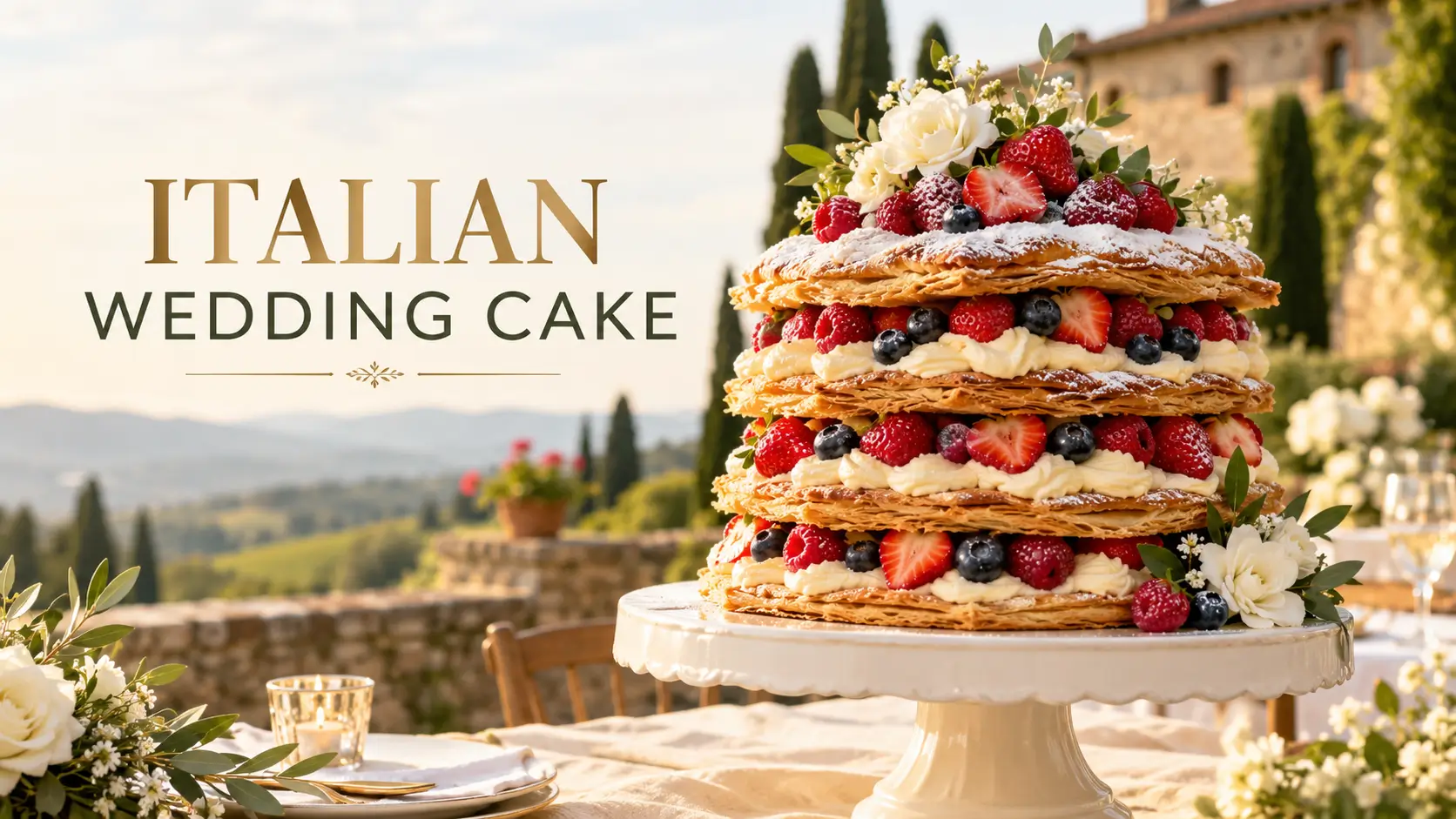
An Italian wedding cake can be a traditional Italian millefoglie, a layered sponge cake, a creamy ricotta cake, or a beautiful modern wedding cake inspired by Italian flavors.
The best choice depends on your preferred taste, wedding size, serving style, and reception setting.
For an authentic Italian celebration, consider a millefoglie filled with pastry cream, fresh berries, and whipped cream, or choose a classic tiered cake decorated with fresh flowers and seasonal fruit.
What Is an Italian Wedding Cake?
An Italian wedding cake is a cake or dessert served at an Italian wedding reception. Unlike the traditional American-style wedding cake, which often features stacked tiers covered in buttercream or fondant, Italian wedding cakes can include delicate pastry layers, creamy fillings, fresh fruit, and simple, elegant decorations.
There is no single cake that represents every Italian wedding. Traditions differ by region, family, and personal preference.
Popular options include:
- Millefoglie: Crisp layers of puff pastry filled with pastry cream and often topped with berries.
- Classic Italian sponge cake: Soft sponge layered with pastry cream, whipped cream, or fruit.
- Ricotta cake: A moist cake featuring ricotta cheese, with variations that include citrus, chocolate, or fruit.
- Cassata Siciliana: A Sicilian specialty featuring sponge cake, sweetened ricotta, and traditional decorative elements.
- Modern Italian-inspired wedding cake: A tiered cake with Italian flavors such as lemon, pistachio, hazelnut, or mascarpone.
5 Popular Types of Italian Wedding Cakes
1. Millefoglie Wedding Cake
Best for: Couples who want a traditional Italian dessert with a fresh, elegant presentation.
Millefoglie consists of crisp puff pastry layers separated by pastry cream, sometimes combined with whipped cream and fresh berries. It is often assembled or decorated at the reception, creating a memorable dessert moment.
Planning tip: Ask your baker how the pastry will stay crisp and whether the cake will be assembled shortly before serving.
2. Italian Sponge Cake
Best for: Couples who prefer a classic cake that can be adapted to different wedding styles.
Italian sponge cake, often called pan di Spagna, can be layered with pastry cream, whipped cream, fruit, or other fillings. It works well as a round cake, a tall tiered design, or a sheet cake for larger receptions.
Planning tip: Confirm whether the chosen filling requires refrigeration and how long the cake can safely remain on display.
3. Italian Ricotta Cake
Best for: Couples who enjoy a softer, less heavily decorated dessert.
Ricotta cake has a tender texture and can feature lemon zest, orange, chocolate, or other complementary flavors. Recipes vary, and some versions are closer to a simple dessert cake than a traditional decorated wedding cake.
Planning tip: Arrange a tasting to check sweetness, texture, and how well the recipe works for wedding-sized portions.
4. Cassata Siciliana
Best for: Couples who want to celebrate Sicilian heritage or serve a distinctive regional dessert.
Traditional Sicilian cassata combines sponge cake with sweetened ricotta and often includes candied fruit, marzipan, and decorative icing. It has a distinctive appearance and a rich, sweet flavor.
Planning tip: Ask a specialist baker about the traditional preparation and whether the decoration and filling suit your reception conditions.
5. Modern Italian-Inspired Wedding Cake
Best for: Couples who want a contemporary design with Mediterranean flavors.
A modern tiered cake can feature lemon sponge, mascarpone-style filling, pistachio, hazelnut, almond, or chocolate. Olive branches, citrus, fresh flowers, and understated finishes can reinforce an Italian-inspired aesthetic.
Planning tip: Confirm that any fresh greenery or flowers used on the cake are food-safe and suitable for direct contact with food.
Italian Wedding Cake Flavors to Consider
The flavor is just as important as the cake’s appearance. Choose combinations that suit the season, your guests, and the style of your reception.
| Cake flavor | Filling or pairing | Best suited to |
| Lemon | Vanilla pastry cream or mascarpone-style cream | Spring and summer weddings |
| Vanilla sponge | Pastry cream and fresh berries | Classic celebrations |
| Pistachio | White chocolate or complementary cream | Modern Italian-inspired weddings |
| Chocolate and hazelnut | Chocolate cream or hazelnut filling | Rich, indulgent desserts |
| Almond | Citrus cream or fruit | Mediterranean-inspired receptions |
| Ricotta and orange | Sweet ricotta and orange zest | Regional Italian-style menus |
| Strawberry | Whipped cream or vanilla cream | Romantic, garden-style weddings |
These combinations are starting points rather than fixed traditional recipes. Ask your baker to explain the ingredients and preparation method, particularly when you want an authentic regional specialty.
How to Choose the Right Flavor
- Consider the wedding menu. After a rich meal, a lighter lemon or berry cake may appeal to guests. Chocolate and hazelnut can work well when you want a more indulgent dessert.
- Match the season. Citrus and berries suit warm-weather celebrations, while chocolate, hazelnut, and almond can complement autumn or winter menus.
- Arrange a tasting. Sample the actual sponge, filling, and frosting combination rather than choosing from flavor names alone.
- Check dietary requirements. Ask about nuts, dairy, gluten, eggs, and possible cross-contact with allergens.
- Confirm the serving temperature. Cream-filled cakes may need refrigeration, which can affect the timing of outdoor displays.
Italian Wedding Cake Decoration Ideas
Italian wedding cakes often look beautiful with restrained decoration, natural textures, and seasonal ingredients. Choose details that complement your venue rather than competing with the rest of the reception.
Tuscan-inspired greenery
Use olive branches, restrained greenery, ivory frosting, and a simple silhouette to complement a countryside villa or vineyard wedding. Any greenery touching the cake must be confirmed safe for food use.
Amalfi Coast citrus
Decorate a white or pale-yellow cake with lemons, lemon leaves, and delicate white flowers. This look pairs naturally with coastal venues and summer receptions.
Fresh berries and pastry layers
Let the texture of a millefoglie become the main decoration. Berries, a light dusting of powdered sugar, and a few suitable edible flowers can create an inviting presentation.
Elegant ivory and gold
Use clean ivory tiers, subtle metallic details, and carefully placed accents for a formal ballroom or luxury hotel reception.
Should You Choose a Naked Cake or a Fully Frosted Cake?
A naked or semi-naked cake shows some of its sponge and filling. It suits rustic, garden, and relaxed Mediterranean weddings, but exposed cake can dry out more quickly.
A fully frosted cake offers a smoother finish and more room for detailed decoration. It is often a practical choice for formal celebrations, although the frosting and filling must still suit the venue’s temperature.
For either style, discuss display conditions, transportation, and refrigeration with your baker.
How to Plan an Italian Wedding Cake
Use this sequence to move from inspiration to a cake that is ready for your reception.
Step 1: Choose the Style and Tradition
Decide whether you want an authentic regional Italian dessert or a contemporary wedding cake with Italian-inspired flavors.
- Choose millefoglie for crisp pastry and creamy layers.
- Choose cassata Siciliana to highlight Sicilian dessert traditions.
- Choose sponge cake for a flexible, classic format.
- Choose a tiered Italian-inspired cake for a traditional wedding-cake cutting moment.
Why it matters: The style determines the recipe, decoration, serving method, and the type of baker you need.
Step 2: Estimate the Number of Servings
Confirm how many guests will be offered cake. Your total may depend on whether the cake is the only dessert or part of a larger dessert table.
Ask your baker to recommend a cake size based on the serving portions they use. A millefoglie may be shaped and portioned differently from a conventional tiered cake.
Watch out for: Do not estimate servings from the cake’s height or appearance alone. The baker’s portion guide is more reliable.
Step 3: Set Your Budget
Request an itemized quote covering the cake itself and any additional services.
Ask whether the quote includes:
- Cake tasting and design consultation
- Ingredients and filling choices
- Decoration and fresh flowers
- Delivery to the venue
- Setup and display
- Cake stand rental, if applicable
- Cutting or serving fees, if charged by the venue
Prices vary by location, ingredient quality, complexity, serving count, and vendor. Millefoglie may require additional preparation or careful timing, while elaborate tiered cakes can involve substantial decoration and structural work.
Practical tip: Compare quotes using the same guest count, flavor, decoration, delivery requirements, and serving assumptions.
Step 4: Book the Right Baker
Look for a baker who has experience with the specific cake you want. Someone who specializes in decorated tiered cakes may not be the best choice for a traditional millefoglie or cassata.
Ask to see photographs of comparable work and confirm that the baker can reproduce the texture and presentation you expect.
Before booking, clarify the deposit, cancellation terms, final guest-count deadline, delivery arrangements, and responsibility for setup.
Step 5: Arrange a Cake Tasting
Taste the flavors you are seriously considering. For a layered cake, sample the sponge or pastry and filling together.
During the tasting, assess:
- Sweetness and balance
- Texture and freshness
- Flavor compatibility with the reception menu
- Portion size
- Appearance and finish
If you are serving a traditional regional dessert, ask the baker how closely their version follows the traditional recipe.
Step 6: Confirm the Design and Logistics
Share inspiration photos, your reception color palette, and the venue’s setup details.
Confirm the final design, dimensions, delivery time, cake table location, refrigeration arrangements, and who will handle the cake cutting.
For millefoglie, ask whether assembly at the venue is possible or preferable. Crisp pastry can soften after contact with cream, so preparation timing matters.
Step 7: Finalize Dietary and Venue Requirements
Provide the venue and baker with the final ingredient and allergen information. Confirm any restrictions on outside food, refrigeration, flowers, cake stands, or on-site assembly.
If guests have allergies or dietary requirements, discuss suitable alternatives and how they will be stored and served separately.
Step 8: Confirm the Cake Before the Wedding
A few weeks before the reception, reconfirm the guest count, delivery address, contact person, schedule, and final design. Follow the baker’s deadline for any final changes.
On the wedding day, assign one person—usually the planner or venue coordinator—to confirm delivery, placement, and serving arrangements.
Italian Wedding Cake Planning Timeline
The exact schedule depends on your baker and wedding date, but this is a useful starting point.
| Timing | Task |
| 3–6 months before | Research cake styles, set a budget, and contact suitable bakers |
| 2–4 months before | Arrange tastings, choose flavors, and book the baker |
| 4–8 weeks before | Finalize the design, guest estimate, and venue logistics |
| 2–3 weeks before | Confirm dietary needs, delivery details, and serving arrangements |
| 1 week before | Reconfirm the final order, contact person, and schedule |
| Wedding day | Check delivery, setup, storage, and service |
Popular wedding dates and specialist bakers may require earlier booking. Follow your baker’s actual reservation and final-order deadlines.
Italian Wedding Cake Budget: What Affects the Price?
Instead of relying on a single average price, evaluate the factors that determine your quote.
| Cost factor | How it affects the budget |
| Number of servings | Larger cakes generally require more ingredients and labor |
| Cake type | Pastry-based specialties may require different preparation and handling |
| Ingredients | Premium chocolate, pistachios, fresh berries, and specialty ingredients can increase costs |
| Decoration | Handcrafted details and elaborate floral arrangements add labor |
| Structure | Multiple tiers may require additional supports and assembly |
| Delivery and setup | Distance, venue access, and installation needs can affect the quote |
| Additional desserts | A dessert table may reduce the number of cake portions needed per guest |
Ways to Manage the Cake Budget
- Choose a simple design and use seasonal fruit for decoration.
- Limit the number of tiers if a smaller cake meets your needs.
- Ask whether a decorated display cake and separately prepared portions make sense for your reception.
- Offer a smaller ceremonial cake alongside other Italian desserts.
- Compare complete quotes rather than selecting the baker with the lowest starting price.
A smaller cutting cake with additional desserts can be an attractive option, particularly when you want to serve several Italian specialties.
Italian Wedding Cake vs. Traditional American Wedding Cake
The main difference is not simply the appearance. It is the range of desserts and serving traditions associated with each style.
| Feature | Italian wedding cake or dessert | Traditional American-style wedding cake |
| Common formats | Millefoglie, sponge cake, regional specialties, modern tiers | Usually a decorated round or tiered cake |
| Texture | May include crisp pastry, soft sponge, or ricotta | Often soft cake with buttercream or another frosting |
| Filling | Pastry cream, fruit, ricotta, whipped cream, or other fillings | Buttercream, ganache, fruit filling, or other options |
| Decoration | Often fruit, flowers, powdered sugar, or restrained finishes | May include elaborate piping, fondant, or floral details |
| Serving | Depends on the dessert and regional tradition | Often follows a ceremonial cake-cutting moment |
These are broad tendencies, not strict rules. Italian weddings can feature elaborate tiered cakes, and American weddings can include millefoglie or other European desserts.
In Italian Wedding Cake Traditions
Italian wedding celebrations vary across regions and families. Some couples serve a traditional regional dessert, while others choose a contemporary tiered cake or a selection of sweets.
The millefoglie is a popular choice for Italian-inspired weddings because its crisp pastry and creamy layers offer a different experience from conventional sponge cakes. Its final assembly or decoration can also create a visual moment at the reception.
In Sicily, cassata Siciliana provides a regional connection through its ricotta filling and distinctive decorations. Other families may prefer a familiar sponge cake or a dessert that reflects their own heritage.
There is no universal rule requiring every Italian wedding to serve one specific cake. If authenticity matters to you, ask family members about their traditions and work with a baker familiar with the relevant regional recipe.
Common Italian Wedding Cake Mistakes to Avoid
- Choosing appearance over taste: A beautiful cake should also taste good and suit your menu. Always arrange a tasting when possible.
- Ignoring refrigeration: Cream, ricotta, and some fresh-fruit fillings need suitable temperature control.
- Ordering too few portions: Confirm the serving count with the baker rather than estimating from photographs.
- Overlooking the venue’s restrictions: Check delivery access, setup time, refrigeration, and outside-cake policies.
- Adding unsafe decorations: Flowers, leaves, and decorative plants are not automatically safe for food contact.
- Choosing the wrong baker: Experience with a conventional tiered cake does not guarantee expertise in millefoglie or cassata.
- Leaving delivery details until the last minute: Confirm who receives the cake, where it goes, and who is responsible for setup.
Italian Wedding Cake Checklist
Use this checklist when planning your dessert.
Wedding cake checklist
- Choose the cake style and regional tradition
- Estimate the number of servings
- Set a budget and request itemized quotes
- Book a baker experienced with the chosen dessert
- Complete a tasting and confirm flavors
- Approve the design and decorations
- Check allergies and dietary requirements
- Confirm delivery, setup, and refrigeration
- Coordinate the cake-cutting and serving schedule
- Reconfirm the order before the wedding
Frequently Asked Questions
There is no single cake used at every Italian wedding. Millefoglie is a popular choice, while sponge cakes and regional specialties such as Sicilian cassata are also options.
Millefoglie typically consists of crisp puff pastry layered with pastry cream. Some versions include whipped cream, fresh berries, or other fruit, with powdered sugar or additional decorations on top.
It can be. Italian wedding desserts may feature puff pastry, ricotta, pastry cream, and fresh fruit, while American-style wedding cakes commonly use sponge or butter cake with frosting. Both traditions offer many variations.
The price depends on the serving count, ingredients, design, baker, delivery, and location. Request an itemized quote for your exact requirements rather than relying on a general price estimate.
Yes, especially for a small celebration. A home baker can prepare a sponge cake or ricotta cake with appropriate equipment and food-safety practices.
Millefoglie can also be made at home, but it requires careful timing to preserve the pastry’s crispness. For a large wedding or a complex tiered design, professional help may be more practical.
Your Next Step
Choose the Italian wedding cake style that best matches your celebration, then arrange a tasting with a baker experienced in that dessert.
Confirm the serving count, complete price, delivery arrangements, and refrigeration requirements before approving the final design. With those details settled, you can enjoy a cake that reflects your taste and the Italian traditions you want to celebrate.

Olivia Bennett is a wedding fashion and jewelry writer at MarryPlane, covering wedding dresses, guest attire, suits, shoes, veils, rings, and bridal accessories. She focuses on helping readers understand styles, materials, fit, and current wedding fashion while keeping her recommendations practical and timeless.