
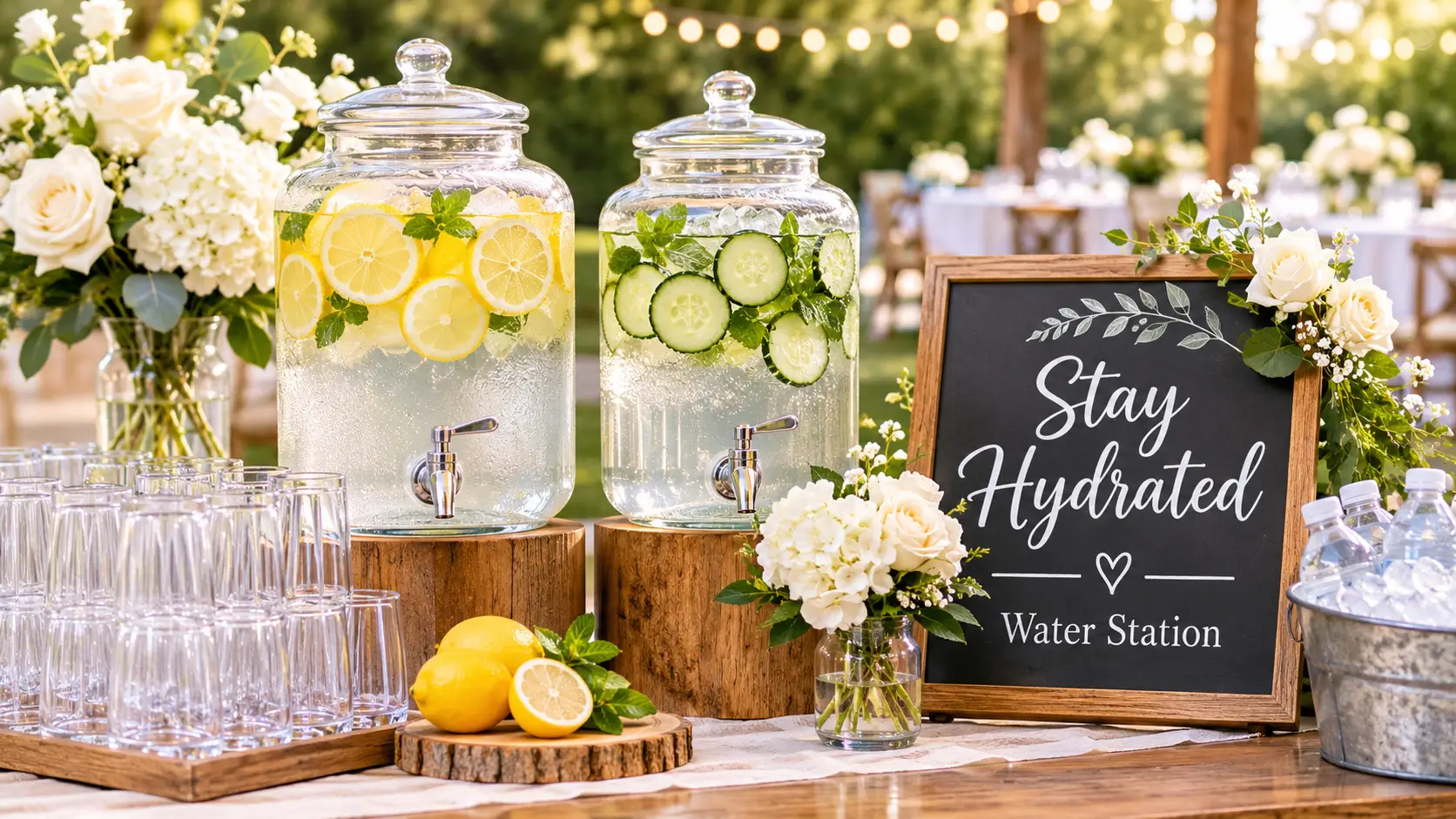
Water at your wedding is more important than many couples realize. Guests need easy access to drinking water throughout the celebration, from the ceremony and cocktail hour to dinner and dancing.
The best approach is to offer chilled water at multiple convenient locations, provide attractive serving options, and make sure someone is responsible for refilling supplies.
Water may not be the most exciting part of your wedding menu, but thoughtful water service can make a noticeable difference to your guests’ comfort. A beautiful water station can also complement your wedding decor without requiring an elaborate setup.
Why Is Water Important at Your Wedding?
Water is an essential part of wedding hospitality. Guests may spend several hours at your celebration, sometimes outdoors in warm weather or on a crowded dance floor.
Providing drinking water helps guests stay comfortable, especially when they are:
- Attending an outdoor ceremony in warm weather.
- Dancing for extended periods.
- Enjoying alcoholic beverages.
- Waiting between the ceremony and reception.
- Traveling between different wedding locations.
- Attending a long celebration with multiple activities.
Common practice: Many American wedding venues offer water during dinner service. However, couples should not assume that water will automatically be available everywhere.
The Knot has also highlighted guest frustration when water is available only at the bar. A separate water station or regular table service gives guests another convenient option.
How to Serve Water at Your Wedding
There are several ways to provide water, depending on your venue, wedding style, guest count, and budget.
1. Water Stations
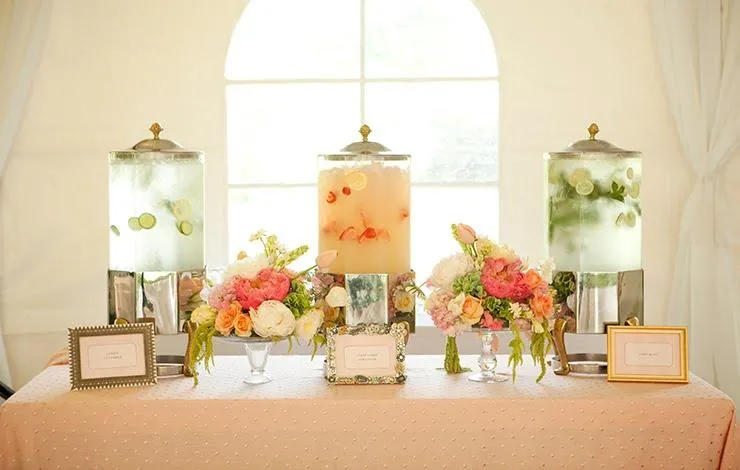
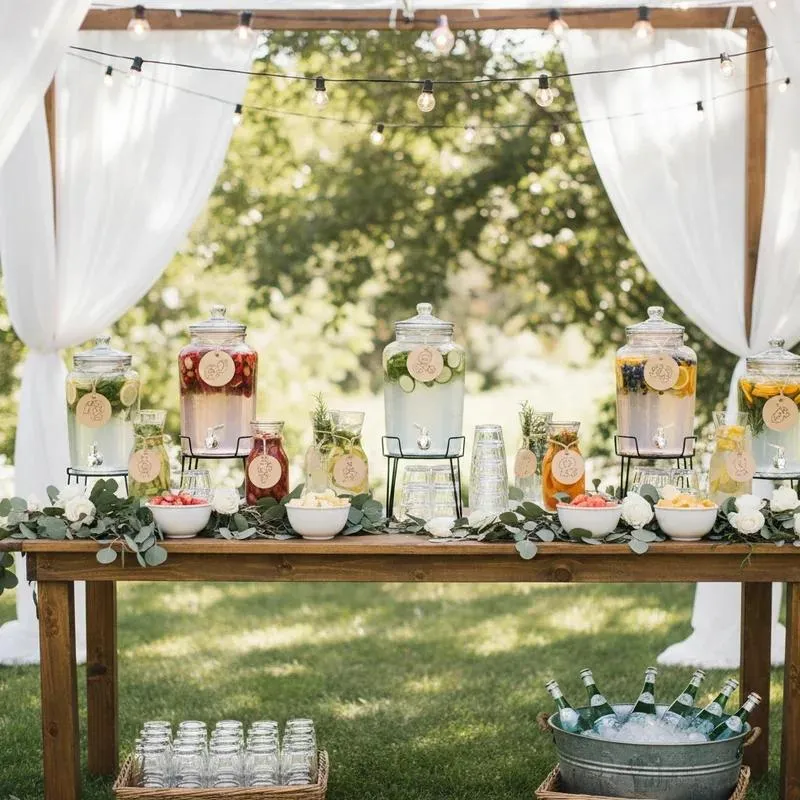
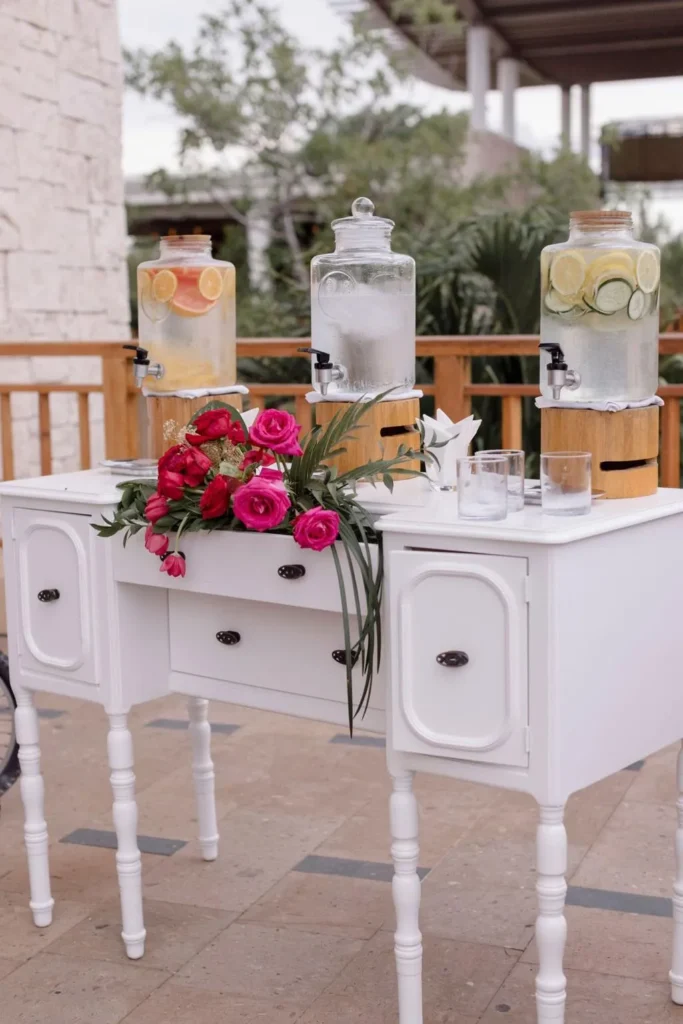

A wedding water station is a convenient self-service area where guests can refill their glasses whenever they want.
You can create one using:
- Glass beverage dispensers with taps.
- Chilled drinking water.
- Fresh lemon or lime slices.
- Cucumber slices or mint leaves.
- Drinking glasses or reusable cups.
- Cocktail napkins.
- A small decorative water station sign.
Place the station somewhere guests can easily find it, such as near the reception entrance, cocktail area, or dining space.
For larger weddings, consider multiple stations to prevent queues.
2. Bottled Water
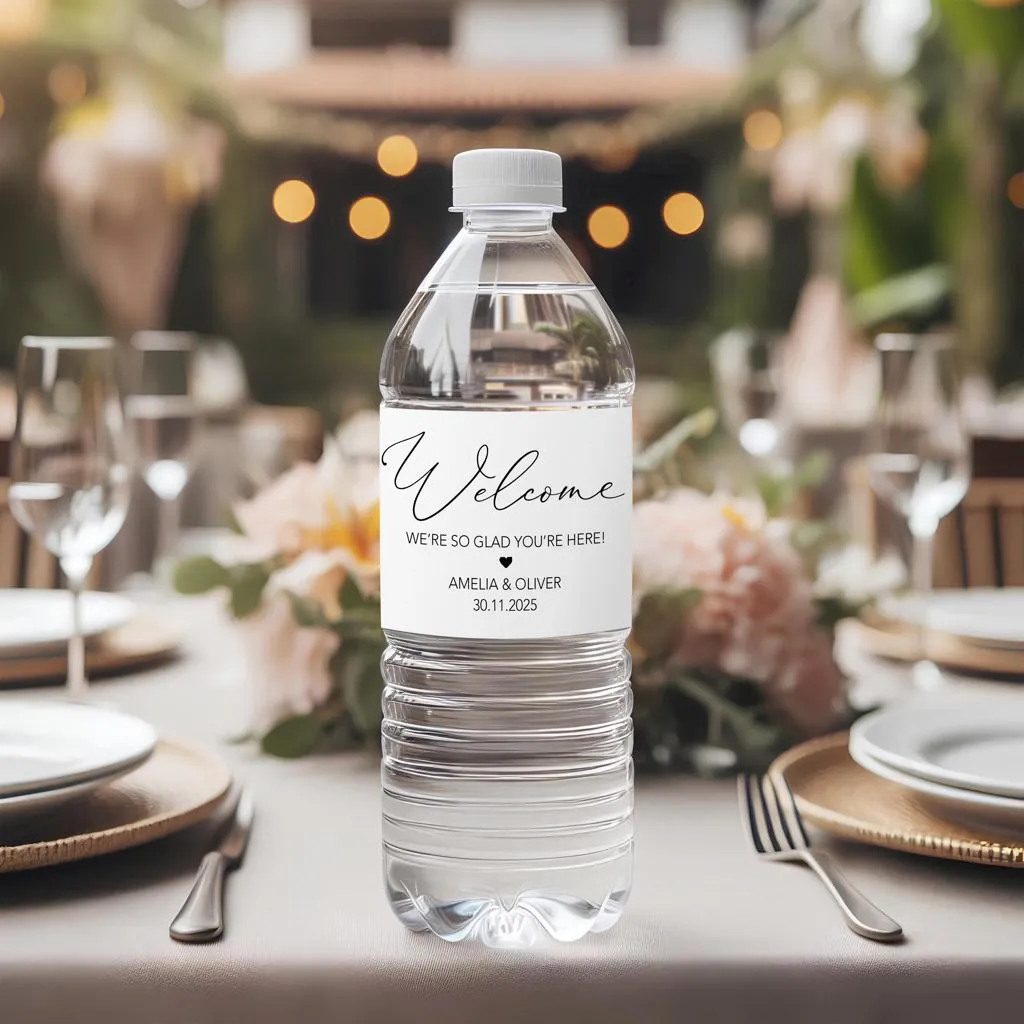
Bottled water is a practical choice for weddings where guests move between different areas.
You can provide individual bottles:
- At the ceremony entrance.
- On reception tables.
- Near the dance floor.
- In outdoor seating areas.
- In welcome bags for out-of-town guests.
Personalized water bottle labels can coordinate with your wedding colors, names, or wedding date.
However, custom labels are optional. Plain, chilled, sealed bottles can look equally appropriate when arranged neatly.
For outdoor celebrations, keep extra bottles in coolers rather than leaving the entire supply exposed to sunlight.
3. Water Served at Guest Tables
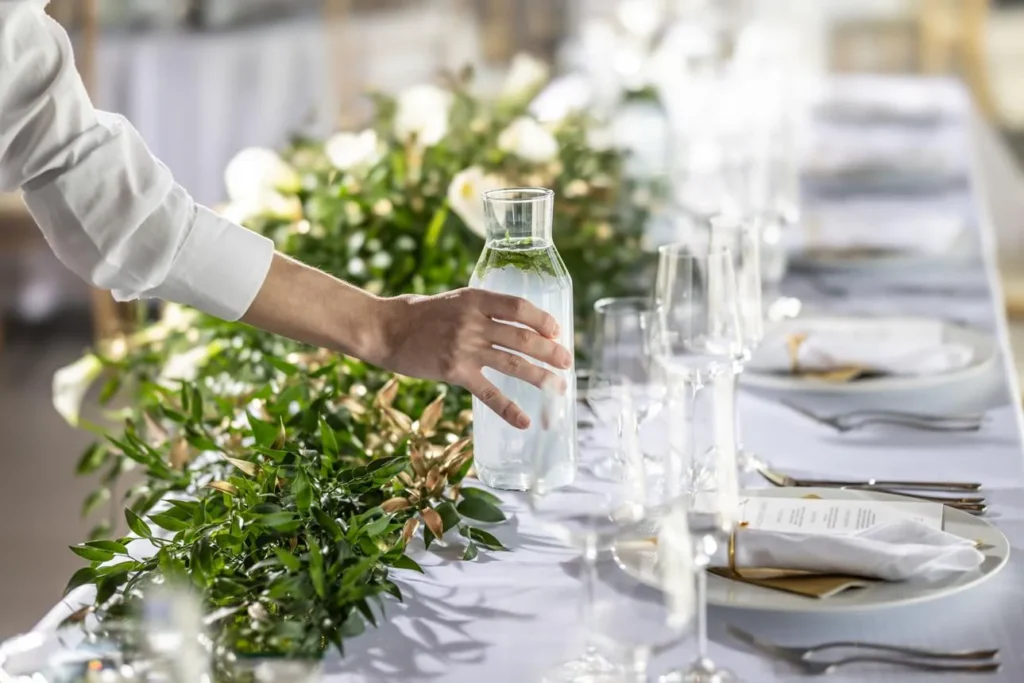
For a formal wedding reception, water carafes or individual water bottles can be placed directly on dining tables.
This arrangement works particularly well for seated dinners because guests do not need to leave their seats to find a drink.
Ask your caterer whether servers will:
- Place water glasses before guests arrive.
- Refill glasses throughout dinner.
- Provide additional water during speeches.
- Clear empty bottles and glasses.
- Keep carafes clean and replenished.
A combination of table service and a separate water station offers convenience throughout the reception.
4. Infused Water
Infused water adds a decorative touch without requiring complicated drink preparation.
Popular combinations include:
| Flavor | Ingredients |
| Lemon and mint | Fresh lemon slices and mint |
| Cucumber water | Cucumber slices |
| Strawberry water | Fresh strawberries |
| Orange and rosemary | Orange slices and rosemary |
| Lime and mint | Lime slices and fresh mint |
| Berry water | Strawberries, blueberries, and raspberries |
These combinations are especially attractive for garden weddings, summer receptions, and outdoor celebrations.
Practical tip: Prepare infused water in clean containers, keep it chilled, and follow food-safety practices for fresh ingredients. Replace fruit and herbs as needed rather than leaving them sitting out throughout a long event.
Where Should You Place Water at Your Wedding?
The best location depends on how guests move through your venue.
Consider providing water at these locations:
| Wedding location | Recommended water setup |
| Ceremony entrance | Chilled bottled water |
| Outdoor ceremony | Shaded water station |
| Cocktail hour | Infused water dispensers |
| Reception tables | Water glasses or carafes |
| Dance floor | Convenient water station |
| Outdoor lounge | Bottled water and coolers |
| Getting-ready rooms | Individual water bottles |
You do not necessarily need a separate station for every location.
Focus on the areas where guests are likely to spend the most time. Make sure water remains accessible when the bar is closed or guests are waiting for the next part of the celebration.
How Much Water Should You Provide?
The amount of water needed depends on several factors:
- Number of guests.
- Length of the celebration.
- Indoor or outdoor venue.
- Temperature and humidity.
- Availability of other beverages.
- Amount of dancing and physical activity.
- Whether vendors and staff need separate supplies.
There is no single reliable quantity that works for every wedding.
For example, a short indoor reception in cooler weather will have different needs from an outdoor summer wedding lasting several hours.
Ask your caterer to estimate the required quantity based on your event schedule and expected attendance. Include vendors, staff, and the wedding party in the planning.
Also arrange backup supplies so the station can be replenished if consumption is higher than expected.
Wedding Water Station Ideas to Match Your Theme
Your water station does not need to look like a basic refreshment table. A few thoughtful details can make it feel like part of the overall wedding design.
Here are some ideas:
Romantic garden wedding: Use clear glass dispensers, fresh flowers, greenery, and lemon-infused water.
Rustic wedding: Choose wooden serving tables, simple glass jars, and natural decorations.
Modern wedding: Use minimalist signage, matching glass bottles, and a clean neutral color palette.
Beach wedding: Provide chilled bottled water in shaded coolers and use simple coastal-inspired signage.
Luxury wedding: Arrange glass carafes, polished serving trays, fresh garnishes, and elegant drinkware.
The goal is to make the station attractive while keeping it easy to use.
Common Mistakes to Avoid When Providing Wedding Water
Even a beautiful water station can become inconvenient if the practical details are overlooked.
Avoid these common mistakes:
- Keeping water only at the bar: Guests should not have to stand in a long bar queue just to get drinking water.
- Forgetting the ceremony: Guests may arrive early and wait outside before the ceremony begins.
- Underestimating demand: Warm weather, long receptions, and dancing can increase water consumption.
- Ignoring refills: Assign someone to monitor dispensers and replace empty bottles.
- Leaving water in direct sunlight: Keep drinking water shaded and properly chilled when possible.
- Using difficult dispensers: Choose containers with accessible taps that guests can operate easily.
- Forgetting cups and napkins: A water station needs more than water. Provide clean drinking cups and a convenient place for used ones.
- Overlooking venue restrictions: Confirm whether outside beverages, glass containers, and self-service stations are permitted.
Hyatt’s event wellbeing guidance also recommends covered or sealed water arrangements and hygienic dispensing practices.
Questions to Ask Your Wedding Caterer About Water
Before finalizing your catering arrangements, clarify exactly what water service includes.
Ask these questions:
- Is drinking water included in the catering package?
- Is tap water available at the venue?
- Can we provide bottled or filtered water?
- Will water be served at every guest table?
- Are water stations included in the package?
- Who will refill dispensers during the reception?
- Are glasses, cups, ice, and dispensers provided?
- Can we serve lemon, cucumber, or mint-infused water?
- Are there additional charges for water service?
- Can we place water stations outside the reception area?
Get the answers in writing so there is no confusion on the wedding day.
FAQs About Water at Your Wedding
Should you provide free water at your wedding?
Yes. Providing accessible drinking water is a thoughtful hospitality practice. Guests should have a convenient way to get water without purchasing an alcoholic or specialty beverage.
Is a water station necessary at a wedding?
A water station is not essential for every wedding, but it can be very useful. It is particularly helpful for outdoor celebrations, large receptions, and events with long dancing periods.
Can you serve flavored water at a wedding?
Yes. Lemon, cucumber, strawberry, orange, and mint are popular options. Keep infused water chilled and follow appropriate food-handling practices.
Should water be placed on wedding tables?
It is a practical option, especially for formal seated dinners. Water glasses, bottles, or carafes allow guests to enjoy their meal without leaving the table.
Who is responsible for providing water at a wedding?
The responsibility usually depends on the venue and catering agreement. Some venues include water service, while others require couples to arrange bottled water or additional beverage stations.
Conclusion
Water at your wedding should be easy to find, pleasant to drink, and available throughout the celebration. A combination of table service, chilled bottles, and attractive water stations can keep guests comfortable without making your beverage arrangements complicated. Before the wedding, confirm the water supply, serving locations, and refill responsibilities with your caterer.

Emily Carter is a wedding planning writer and editor at MarryPlane. She covers wedding timelines, budgets, venues, invitations, vendors, ceremony planning, and practical details that help couples feel prepared for their big day. Emily focuses on clear, realistic advice that makes wedding planning easier without taking away from the excitement of the celebration.