

A simple wedding cake can look elegant, timeless, and beautiful without elaborate decorations or an expensive design.
Choose a classic white buttercream cake, a smooth minimalist finish, fresh flowers, seasonal berries, or a small two-tier design to suit your wedding style. The best choice depends on your guest count, budget, venue, serving needs, and how much decoration you want.
For a beautiful, understated wedding cake, follow these five steps:
- Choose your design: Decide between a single-tier cake, a two-tier cake, or a small cutting cake.
- Select the flavor: Consider vanilla, chocolate, lemon, red velvet, or another flavor you enjoy.
- Set your budget: Compare bakery quotes based on size, ingredients, decoration, and delivery.
- Coordinate the details: Match the cake’s colors and decorations to your wedding theme.
- Plan serving and delivery: Confirm portions, refrigeration needs, setup, and cake-cutting arrangements.
What Is a Simple Wedding Cake?
A simple wedding cake is a wedding dessert with clean styling, restrained decoration, and a focus on flavor rather than elaborate embellishments. It can feature one tier or several tiers, depending on the celebration.
Common characteristics include smooth buttercream, white or ivory frosting, minimal piping, fresh flowers, delicate fruit decorations, and understated cake toppers.
Simple does not have to mean plain or inexpensive. A carefully finished cake with balanced proportions, attractive textures, and quality ingredients can look just as sophisticated as a more elaborate design.
12 Simple Wedding Cake Ideas for an Elegant Celebration
These designs work for different wedding styles, from intimate backyard gatherings to formal receptions.
1. Classic White Buttercream Wedding Cake

A white buttercream cake is one of the most versatile choices for a wedding. Its clean appearance suits traditional ceremonies, modern receptions, garden weddings, and intimate celebrations.
- Design: Smooth white frosting with minimal detailing.
- Best flavors: Vanilla, almond, lemon, or chocolate.
- Decoration: A small floral accent, delicate piping, or a simple cake topper.
- Best for: Couples who want a timeless design that will not compete with other decorations.
Ask your baker for a smooth or lightly textured buttercream finish. A few subtle details can make the cake look finished without making it overly decorative.
2. Minimalist Single-Tier Wedding Cake
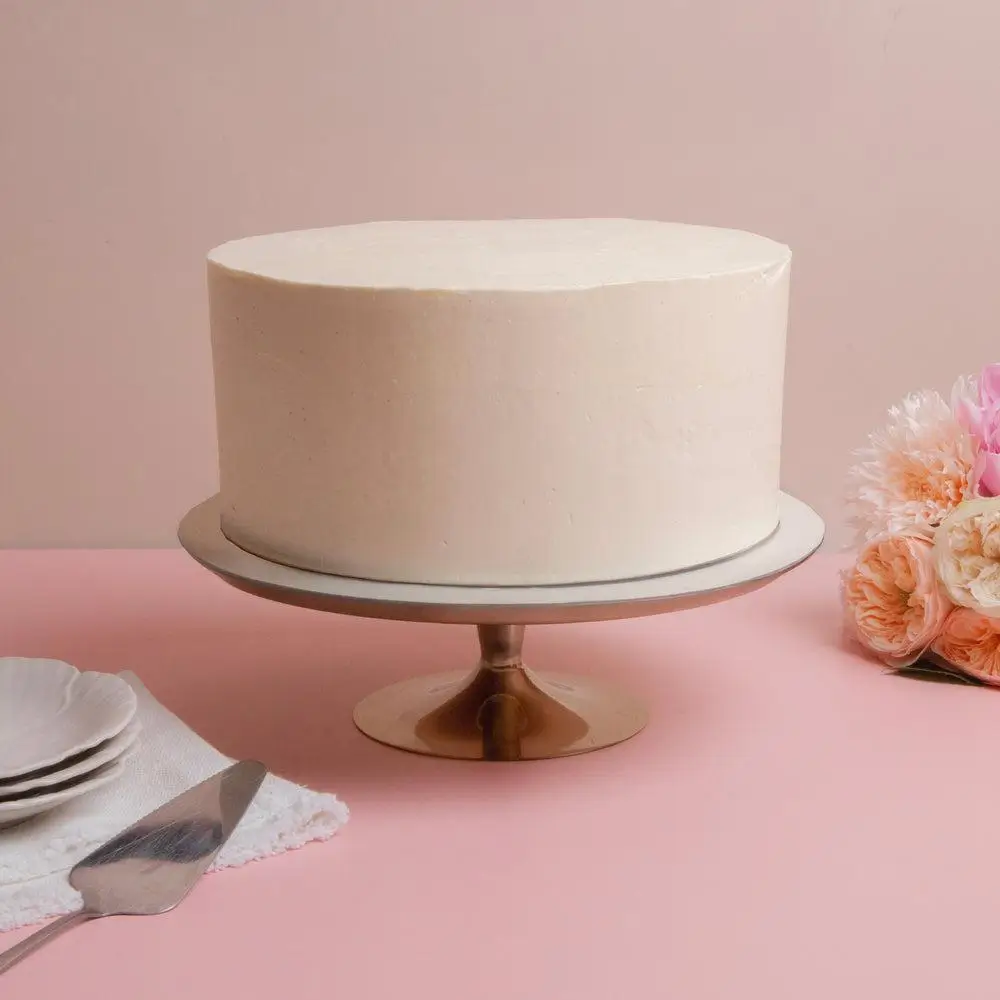
A single-tier cake is ideal for an elopement, courthouse wedding, small reception, or private celebration. Its compact shape creates a refined centerpiece without requiring a tall cake.
Choose a round cake with clean edges and one small decorative feature, such as a fresh flower, a satin-inspired fondant detail, or a personalized topper.
Planning tip: Ask your baker how many portions the selected cake will provide. A small cake may be perfect for the cake-cutting photographs but insufficient for serving every guest.
3. Simple Two-Tier Wedding Cake
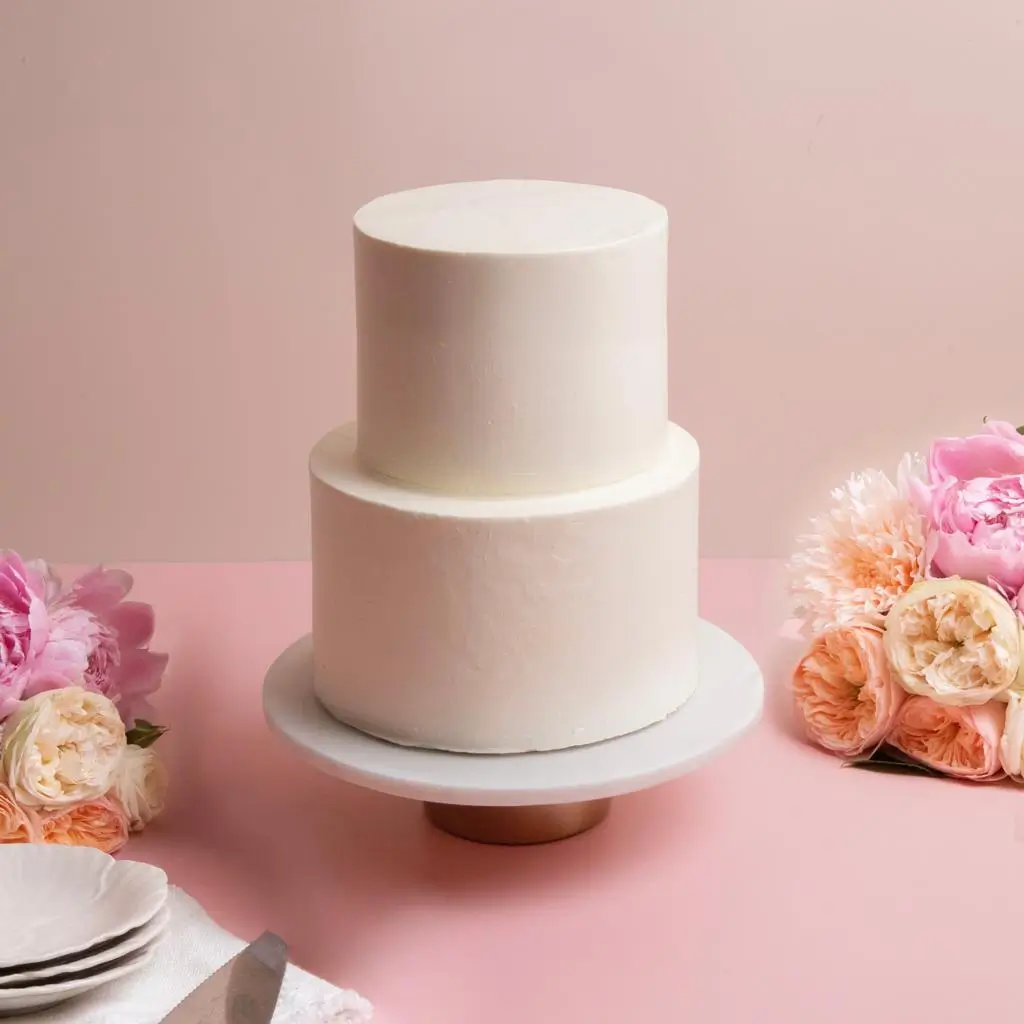
A two-tier cake provides height and a traditional wedding-cake appearance without the complexity of a large, multi-tier design.
Choose two round tiers with matching white or ivory frosting. A narrow ribbon around each tier or a small floral arrangement can add interest.
This option suits couples who want a traditional centerpiece for a modest-sized reception.
Before ordering: Confirm the baker’s portion estimate for each tier and the serving size used in that estimate. Tier dimensions and cake height affect the number of servings.
4. Wedding Cake With Fresh Flowers

Fresh flowers introduce color, texture, and a romantic touch without requiring elaborate frosting work.
White roses, carefully selected greenery, and seasonal blooms can complement a classic wedding palette. For a more contemporary look, choose a single floral cluster rather than covering the entire cake.
However, not every flower is safe to place on a cake. Some flowers are toxic, and pesticides or other contaminants can pose additional risks.
Ask your florist and baker to coordinate the arrangement. Use flowers confirmed suitable for food-contact settings, with a safe barrier where necessary, and never assume a decorative flower is edible.
5. Naked Wedding Cake

A naked cake has little or no frosting on its sides, allowing the cake layers and filling to remain visible. It creates a relaxed, natural appearance that suits rustic, garden, and outdoor weddings.
Fresh berries, seasonal fruit, or a small amount of greenery can complete the design.
Best for: Couples who prefer an informal aesthetic and visible cake textures.
Watch out for: Exposed cake layers can dry out more quickly than fully frosted cakes. Ask your baker about storage, display time, and temperature, particularly for warm-weather receptions.
6. Semi-Naked Wedding Cake
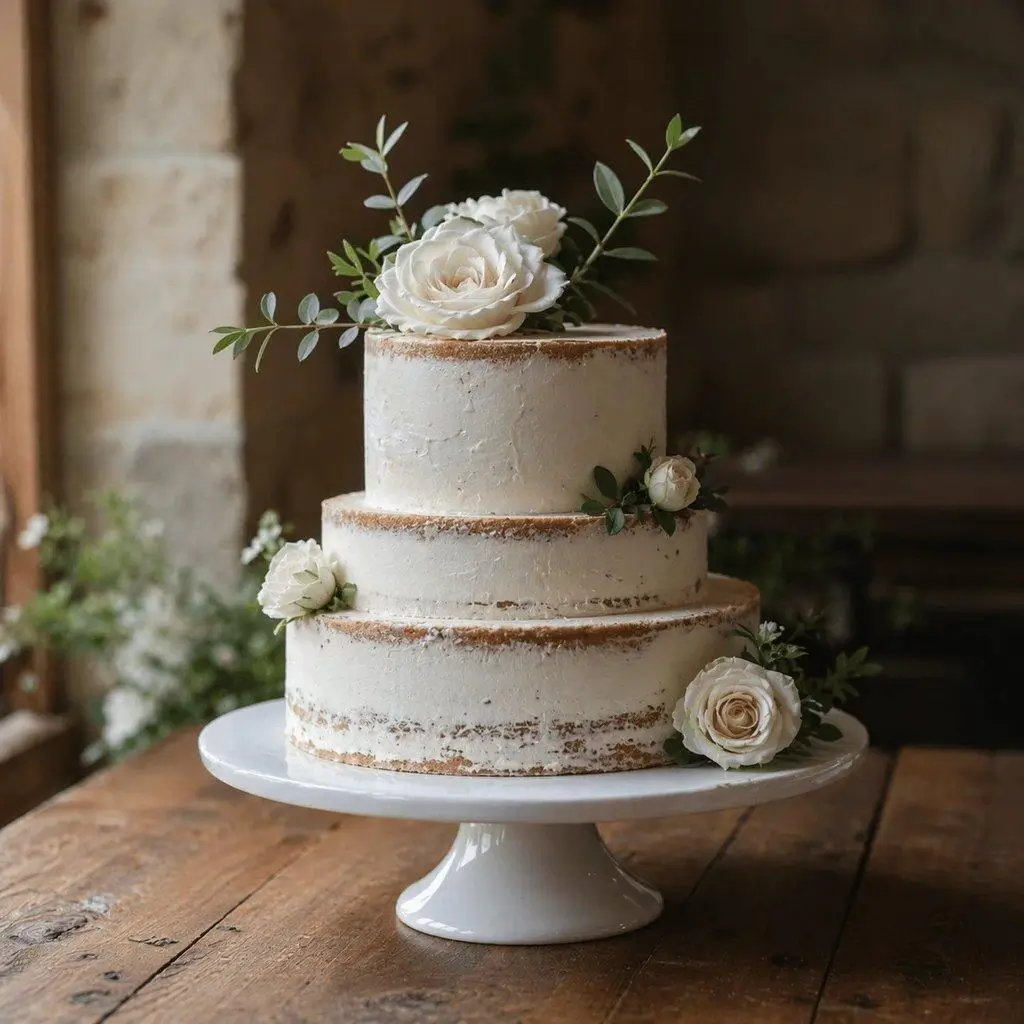
A semi-naked cake offers a middle ground between a fully frosted cake and a completely naked design. A thin coating of buttercream covers most of the sponge while allowing some texture to show through.
This style works well with neutral wedding palettes, wooden cake stands, soft greenery, and natural table decorations.
It is a useful option if you want a rustic appearance that feels slightly more polished than a fully exposed cake.
7. Simple Lemon Wedding Cake

A lemon cake offers a fresh flavor that works particularly well for spring and summer weddings.
Pair lemon sponge with lemon curd, vanilla buttercream, or a complementary fruit filling. Keep the exterior white or ivory for a clean finish.
A few suitable edible decorations can suggest the flavor without turning the cake into a themed display.
Planning tip: Ask your baker to explain how the filling affects storage and refrigeration. Lemon curd and other perishable fillings may need more careful temperature control than some standard buttercream cakes.
8. Simple Chocolate Wedding Cake

Chocolate is a good choice for couples who want a richer flavor or prefer a darker, more contemporary cake.
A smooth chocolate ganache finish looks sophisticated on its own. Alternatively, choose chocolate sponge with vanilla buttercream for a lighter exterior and a chocolate center.
Keep the decoration restrained with a small floral accent, a clean cake stand, or subtle chocolate detailing.
9. Wedding Cake With Fresh Berries
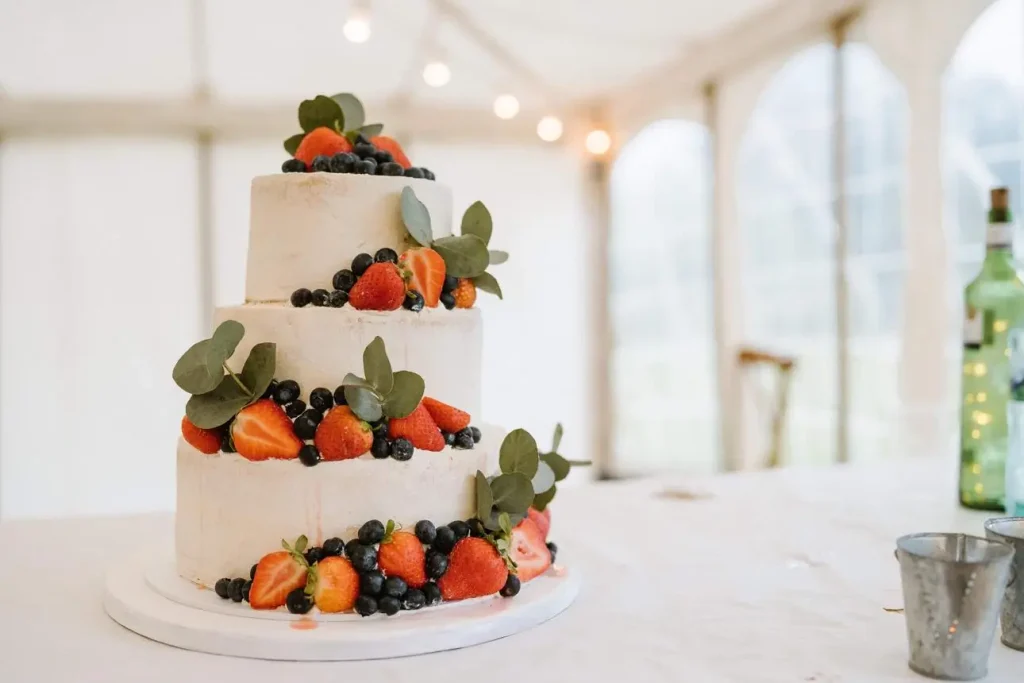
Fresh berries add natural color and a seasonal appearance. Strawberries, raspberries, and blueberries work particularly well with vanilla, chocolate, and lemon cake.
For a balanced design, arrange the berries in one small cluster on top or along one edge rather than covering the entire cake.
Remember that fresh fruit can release moisture and may require refrigeration. Ask your baker when the fruit should be added and how long the cake can safely remain on display.
10. Vintage-Inspired Simple Wedding Cake

Vintage-inspired cakes use decorative piping, scalloped borders, and delicate details to create a romantic look.
You do not need an elaborate design to achieve this style. Choose one or two piping details, such as a shell border or a small piped motif, and keep the rest of the cake simple.
This approach works especially well for romantic, traditional, and vintage-inspired weddings.
11. Modern Square Wedding Cake

A square wedding cake offers a clean geometric alternative to traditional round tiers. Its sharp edges and simple silhouette suit modern venues and contemporary wedding styling.
Choose white fondant or neatly finished buttercream, with minimal decoration. A subtle metallic accent or a single flower can add contrast.
Discuss serving sizes with your baker because square cakes may be portioned differently from round cakes.
12. Small Wedding Cake With a Personalized Topper

A personalized topper makes a simple cake feel meaningful without adding extensive decoration.
Options include the couple’s initials, a small wooden topper, a classic figurine, or a discreet date detail.
Choose a topper that suits the cake’s scale. An oversized accessory can make a small cake look crowded, while a well-proportioned piece creates a balanced focal point.
How to Choose the Right Simple Wedding Cake
The best design depends on the celebration, rather than how many decorations the cake has.
| Wedding style | Recommended cake | Why it works |
| Courthouse or elopement | Single-tier cake | Compact and elegant |
| Small intimate reception | One or two tiers | Traditional appearance without excessive scale |
| Formal wedding | Smooth white tiered cake | Classic and versatile |
| Rustic outdoor wedding | Naked or semi-naked cake | Natural texture and relaxed styling |
| Modern wedding | Square or minimalist cake | Clean lines and contemporary appearance |
| Romantic garden wedding | White cake with flowers | Soft, natural decoration |
| Summer wedding | Lemon cake with seasonal fruit | Fresh flavor and seasonal presentation |
| Chocolate-themed dessert table | Chocolate ganache cake | Rich flavor and understated styling |
Before deciding, consider your venue’s display conditions, guest count, preferred flavor, and whether the cake will serve as the main dessert or accompany other sweets.
How Much Does a Simple Wedding Cake Cost?
The price of a simple wedding cake depends on its size, number of tiers, ingredients, decoration, baker, location, delivery requirements, and setup.
A small, simply decorated cake will generally require less work than a large custom cake with intricate piping or multiple decorative elements. However, a minimalist finish does not automatically mean the cake will be inexpensive.
Use the following table to compare options without relying on a fixed price that may not apply to your location.
| Cake option | Main cost considerations |
| Single-tier cake | Diameter, height, flavor, and finishing |
| Two-tier cake | Tier sizes, support structure, and assembly |
| Three-tier cake | Additional cake, structural support, and delivery |
| Naked cake | Filling, fruit, freshness, and finishing |
| Buttercream cake | Frosting quality, finish, and piping |
| Fondant cake | Fondant coverage, shaping, and finish |
| Cake with fresh flowers | Flower selection, preparation, and placement |
| Custom-flavor cake | Ingredients, fillings, and additional preparation |
How to Keep Your Wedding Cake Budget Under Control
- Choose a restrained design. Limit intricate piping, sugar flowers, and elaborate sculpted details.
- Order the right amount. Give the baker your confirmed guest count and explain whether other desserts will be available.
- Compare complete quotes. Ask whether the price includes delivery, setup, cake stands, structural supports, and any applicable fees.
- Consider a cutting cake. A smaller decorated cake can be paired with separately prepared sheet cake if the baker can provide a suitable serving and presentation arrangement.
- Avoid unnecessary tiers. A cake should suit the number of guests and the display space, not simply the size of the wedding venue.
For an accurate comparison, request quotes from at least two or three local bakeries using the same guest count, flavor choices, design reference, and delivery requirements.
How Big Should a Simple Wedding Cake Be?
Cake size should be based on the number of servings you need, not solely on the number of guests attending the reception.
A baker can recommend the dimensions and number of tiers based on the portions they typically cut from each cake.
Before placing an order, consider:
- Guest count: How many people are expected to receive cake?
- Other desserts: Will guests also have cupcakes, pastries, cookies, or a dessert buffet?
- Serving style: Will the cake be served as a small dessert portion or a larger slice?
- Display needs: Do you want a tall centerpiece, or would a compact cake better suit the table?
- Dietary requirements: Will you need separate portions for guests with specific dietary needs?
Do not assume a two-tier or three-tier cake will feed a particular number of people. Cake dimensions, height, and portion sizes vary, so confirm the serving estimate with your baker.
How to Order a Simple Wedding Cake
Planning ahead makes it easier to get the design you want while avoiding last-minute changes.
Step 1: Set Your Guest Count and Budget
Start with the number of guests you expect to serve and the amount you are comfortable spending.
Decide whether the cake will be the main dessert or part of a larger dessert selection. This affects the quantity you need to order.
Why it matters: A clear serving target helps your baker recommend an appropriate cake size before you spend money on design details.
Step 2: Select a Cake Style
Choose one or two reference images that represent your preferred look. You might select a smooth white cake, a semi-naked design, or a minimalist tiered cake.
Explain which details matter most to you, such as frosting texture, color, shape, or floral decoration.
Watch out for: Sending multiple images with conflicting styles can make it difficult for the baker to understand your expectations. Identify one primary reference and mention any details you want to borrow from other designs.
Step 3: Choose Flavors and Fillings
Select a flavor that suits your preferences and the reception menu.
Popular combinations include:
- Vanilla sponge with vanilla buttercream.
- Chocolate cake with chocolate ganache.
- Lemon cake with a complementary filling.
- Red velvet cake with cream cheese frosting.
- Almond cake with vanilla buttercream.
Ask about tasting appointments, ingredient substitutions, allergens, and filling options. If you are serving several tiers, ask whether different tiers can have different flavors.
Step 4: Confirm the Decoration
Tell the baker whether you want fresh flowers, fruit, simple piping, a topper, or no decoration at all.
Provide your wedding color palette and any relevant photographs of the cake table or floral arrangements.
Why it matters: Coordinating the cake with the reception design creates a more intentional appearance without requiring extra ornamentation.
Step 5: Confirm Delivery and Storage
Discuss the delivery time, venue access, setup requirements, display location, and temperature conditions.
Buttercream, ganache, cream-based fillings, and fresh fruit can respond differently to heat and humidity. Follow the baker’s storage guidance and applicable food-safety recommendations.
If the reception is outdoors, arrange a shaded display area away from direct sunlight and other heat sources.
Step 6: Finalize the Order in Writing
Review the quote and written agreement before paying a deposit.
Confirm:
- Cake size and estimated servings.
- Flavor and filling for each tier.
- Frosting style and decoration.
- Delivery date, time, and location.
- Setup and cake-stand arrangements.
- Total price, deposit, and payment deadlines.
- Cancellation or change policies.
- Allergen information and storage instructions.
Keep the final design reference and order confirmation together so you and the baker can check the details before the wedding.
Simple DIY Wedding Cake: What to Know Before Baking
A homemade wedding cake can be a personal and budget-conscious option, especially for a small celebration. However, a multi-tier cake requires more planning than an ordinary birthday cake.
If you want to bake your own, keep the design manageable.
Start with a realistic design. A single-tier cake or a small, simply decorated two-tier cake is easier to handle than a tall, elaborate structure.
Test the recipe first. Bake the chosen recipe before the wedding and check its texture, flavor, frosting, and ability to hold its shape.
Prepare your supplies. Depending on the design, you may need cake pans, a mixer, a cooling rack, a turntable, an offset spatula, a cake board, piping bags, and suitable supports for stacked tiers.
Allow enough time. Baking, cooling, filling, frosting, and decorating can take longer than expected. Plan a schedule that leaves room for mistakes and necessary chilling.
Transport the cake safely. Use a sturdy cake board and an appropriately sized box. For stacked cakes, follow a reliable support and assembly method, or transport the tiers separately and assemble them at the venue if appropriate.
Protect food safety. Store perishable fillings and frosting at the required temperature. Do not leave a cake containing temperature-sensitive ingredients on display longer than recommended.
If the cake must be tall, transported a long distance, or displayed in warm conditions, hiring a professional baker may be the more practical choice.
Common Simple Wedding Cake Mistakes to Avoid
Even an understated cake needs careful planning. Avoid these common problems.
- Choosing appearance over servings: A beautiful small cake may not provide enough portions for all your guests.
- Ignoring the weather: Outdoor heat can affect buttercream, ganache, fruit, and certain fillings.
- Adding too many decorative elements: Combining flowers, fruit, metallic details, elaborate piping, and a large topper can undermine a minimalist design.
- Forgetting the cake stand: The stand affects the cake’s height, stability, and overall presentation.
- Leaving delivery until the last minute: Confirm access, setup timing, and refrigeration needs well before the wedding.
- Assuming all flowers are safe: Check the suitability of every flower used near the cake.
- Overlooking dietary needs: Discuss allergens and any required alternatives with the baker in advance.
- Failing to confirm the final design: Review the written order and make sure the baker has the correct reference images and specifications.
Frequently Asked Questions
Classic white buttercream cakes are a versatile choice because they suit many wedding themes. Smooth finishes, subtle piping, fresh flowers, and small tiered designs are all popular options for an understated look.
Yes. Clean edges, balanced proportions, a refined cake stand, and carefully chosen decorations can create a luxurious appearance without elaborate embellishments. Quality ingredients and skilled finishing can make a noticeable difference.
Buttercream provides a soft, natural finish and can be smooth or lightly textured. Fondant creates a more uniform surface and sharp edges. Your baker can recommend the better option based on your design, venue conditions, and preferred flavor.
Contact bakeries several months before the wedding when possible, particularly for peak-season dates or custom designs. Smaller or less complex orders may be accommodated on shorter notice, depending on availability. Confirm the bakery’s booking deadline and payment schedule directly.
Yes. A small decorated cake can be used for the cake-cutting moment, with additional servings supplied through a sheet cake, cupcakes, or another dessert. Confirm the arrangement with your baker so every guest can be served appropriately.
Final Thoughts
A simple wedding cake can be a beautiful centerpiece without elaborate decoration or unnecessary expense. Start by choosing a design that matches your wedding style, select flavors you genuinely enjoy, and confirm the number of servings you need.
Your next step: Save two or three cake designs you like, estimate your guest count, and request bakery quotes using the same specifications. This will help you compare options and choose a cake that fits both your celebration and your budget.
Emily Carter is a wedding planning writer and editor at MarryPlane. She covers wedding timelines, budgets, venues, invitations, vendors, ceremony planning, and practical details that help couples feel prepared for their big day. Emily focuses on clear, realistic advice that makes wedding planning easier without taking away from the excitement of the celebration.