

A naked wedding cake is a wedding cake with little or no frosting covering its sides, leaving the cake layers and filling visible.
It offers a natural, rustic appearance that works beautifully for garden weddings, outdoor receptions, boho celebrations, and elegant minimalist themes.
To choose the right design, decide how many guests you need to serve, select complementary cake and filling flavors, choose a decoration style, and confirm storage and delivery arrangements with your baker.
What Is a Naked Wedding Cake?

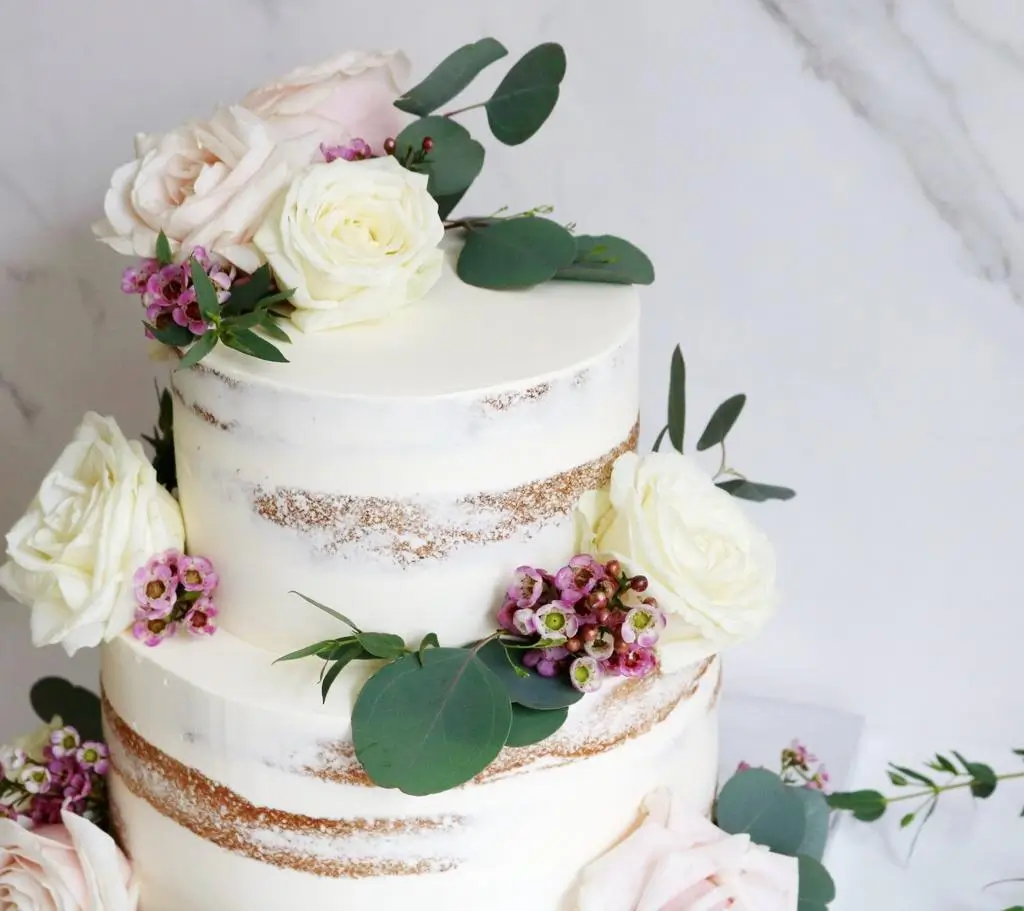
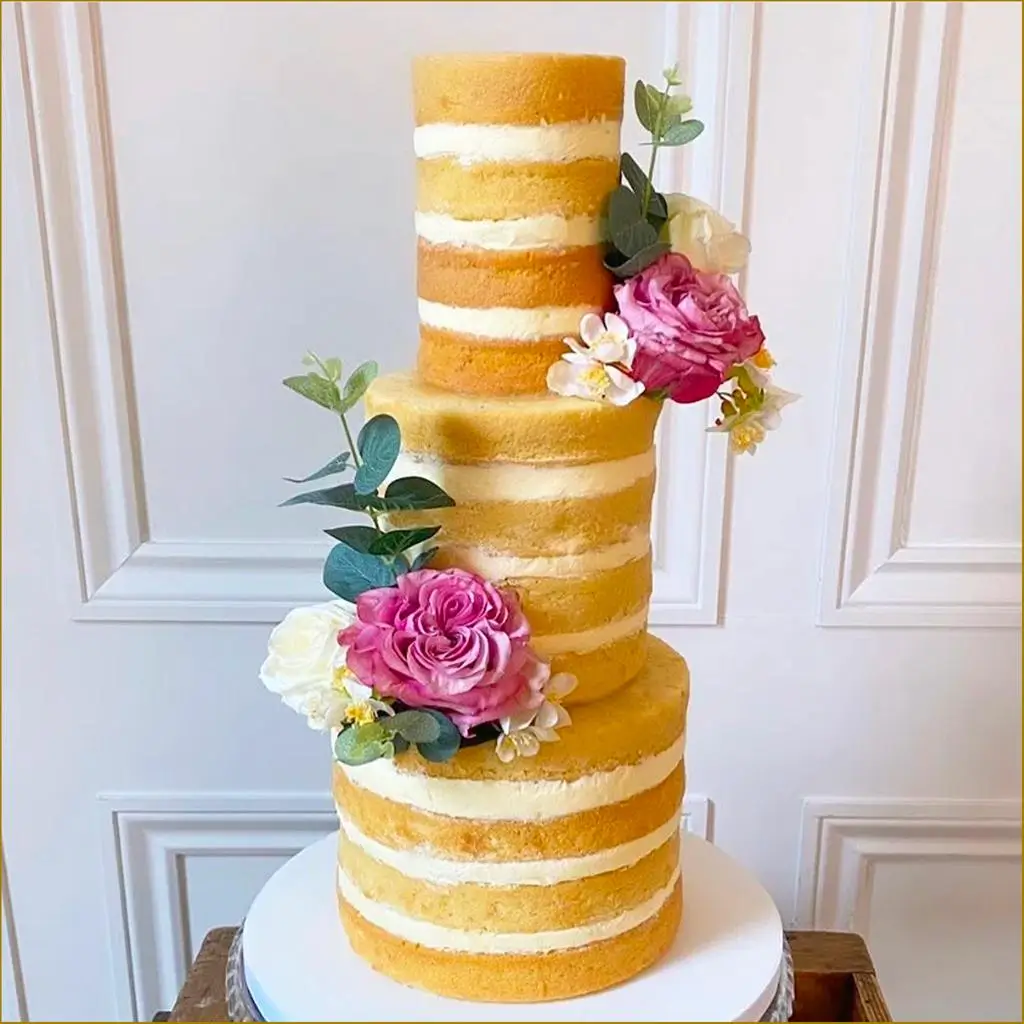
A naked wedding cake features exposed sponge cake layers with filling between them and little or no frosting on the outside. Unlike a traditional fully frosted cake, its sides reveal the cake’s natural color and texture.
There are three common styles:
- Fully naked cake: The sides have virtually no frosting, so the sponge layers and filling remain visible.
- Semi-naked cake: A thin coating of buttercream partially covers the sides while allowing the cake layers to show through.
- Nearly naked cake: A very light, delicate coating of frosting creates a soft, refined finish without completely hiding the sponge.
Although these styles look simple, they still require careful baking, even stacking, and thoughtful decoration. Their understated appearance makes the quality of the cake, filling, and finishing especially important.
12 Naked Wedding Cake Ideas for Every Wedding Style
The best naked wedding cake design should complement your venue, wedding colors, season, and overall atmosphere. Use these ideas to find a look that suits your celebration.
1. Rustic Naked Wedding Cake

A rustic naked cake combines exposed sponge layers with fresh berries, greenery, or seasonal flowers. A wooden cake stand and a simple display table can reinforce the natural aesthetic.
Best for: Barn weddings, countryside celebrations, outdoor receptions, and rustic-chic venues.
Styling tip: Keep decorations concentrated around the cake’s tiers rather than covering every exposed edge. This preserves the cake’s natural appearance.
2. Semi-Naked Wedding Cake With White Buttercream
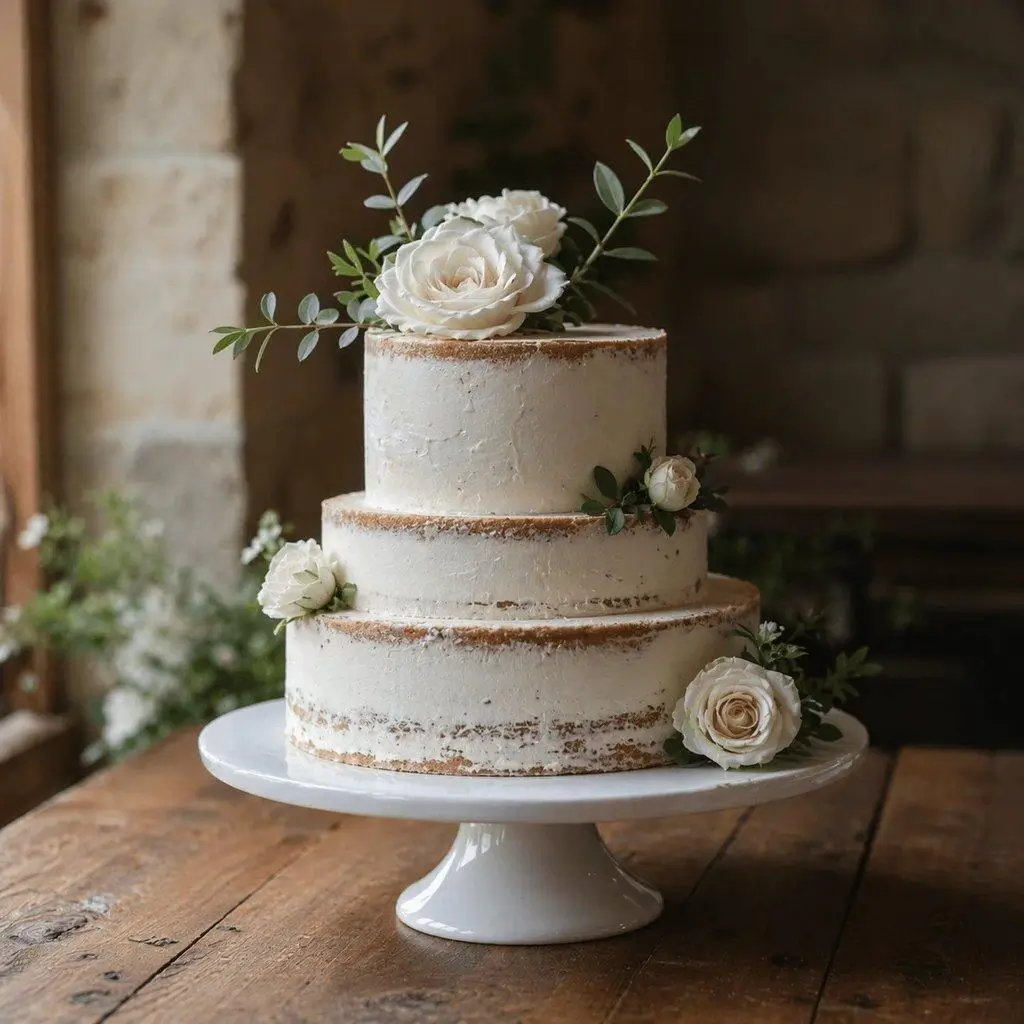
A semi-naked cake offers a balance between rustic texture and traditional bridal elegance. A thin layer of white buttercream softens the sponge’s appearance while keeping the individual layers visible.
Best for: Classic weddings, garden ceremonies, romantic receptions, and neutral color palettes.
Styling tip: Ask your baker for consistent frosting coverage across all tiers. Uneven patches can make a deliberately understated design look unfinished.
3. Naked Wedding Cake With Fresh Berries

Strawberries, raspberries, blueberries, and blackberries bring natural color to a naked wedding cake. Their bright shades contrast beautifully with vanilla sponge and pale buttercream.
Best for: Summer weddings, garden parties, berry-themed desserts, and relaxed celebrations.
Styling tip: Choose fresh, firm fruit and arrange it shortly before display. Wash and thoroughly dry the berries before decorating, and avoid placing wet fruit directly against exposed sponge.
4. Naked Wedding Cake With Fresh Flowers
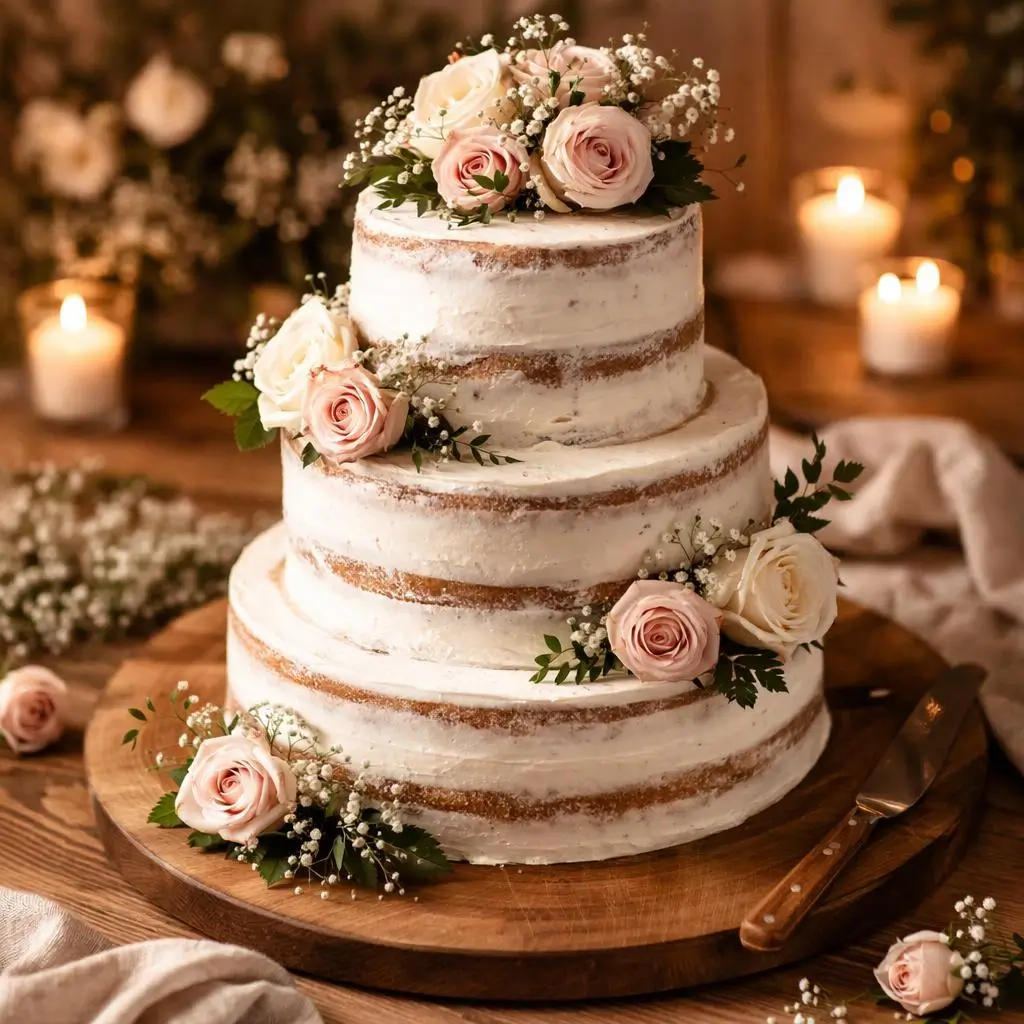
Fresh flowers can transform a simple cake into a romantic centerpiece. White roses, blush garden roses, and suitable greenery complement the cake’s exposed layers without making the design feel crowded.
Best for: Romantic, garden, vintage-inspired, and floral weddings.
Styling tip: Work with your florist and baker to confirm that every flower used on the cake is suitable for food-contact decoration. Many ornamental flowers are toxic or treated with pesticides, so never assume a flower is safe simply because it looks edible.
5. Chocolate Naked Wedding Cake

A richer-looking naked wedding cake can be made with chocolate sponge, which adds a deep color. Pair it with chocolate ganache, chocolate buttercream, and fresh berries for an appealing finish.
Best for: Autumn and winter weddings, chocolate-loving couples, and modern celebrations.
Styling tip: Use a filling with enough structure to support the tiers. Soft ganache or loose fillings can squeeze out between layers, especially in warm conditions.
6. Naked Wedding Cake With Lemon and Berries
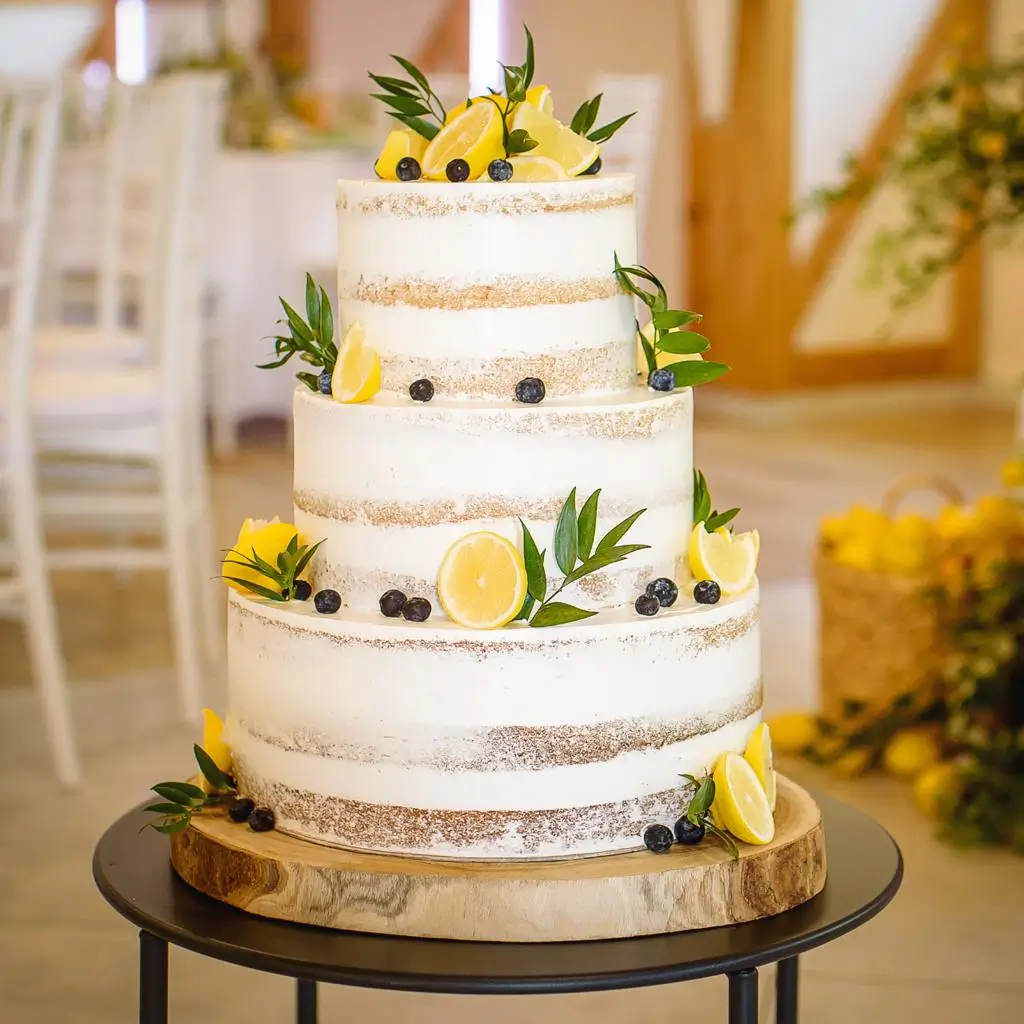
Lemon cake paired with vanilla buttercream, lemon curd, or fresh berries creates a bright, refreshing flavor combination.
Best for: Spring weddings, summer garden receptions, and daytime celebrations.
Styling tip: Lemon curd needs appropriate refrigeration and should be contained by a stable filling border when used between cake layers.
7. Naked Wedding Cake With Dried Flowers
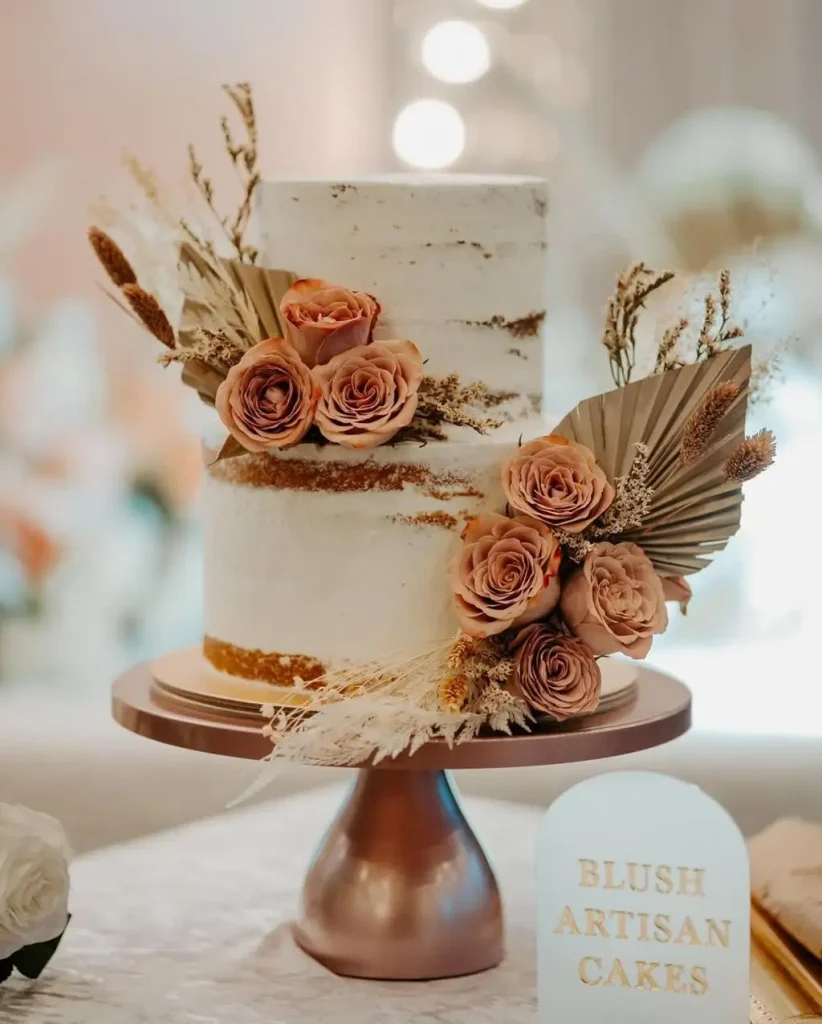
Dried flowers and neutral decorations create a textured, bohemian look. Cream, beige, muted pink, and terracotta tones pair well with natural cake colors.
Best for: Boho weddings, desert-inspired celebrations, and earthy color palettes.
Styling tip: Keep dried flowers, grasses, and other non-food-safe materials from directly touching edible portions. Use suitable barriers and have your baker arrange the decorations safely.
8. Naked Wedding Cake With Gold Accents
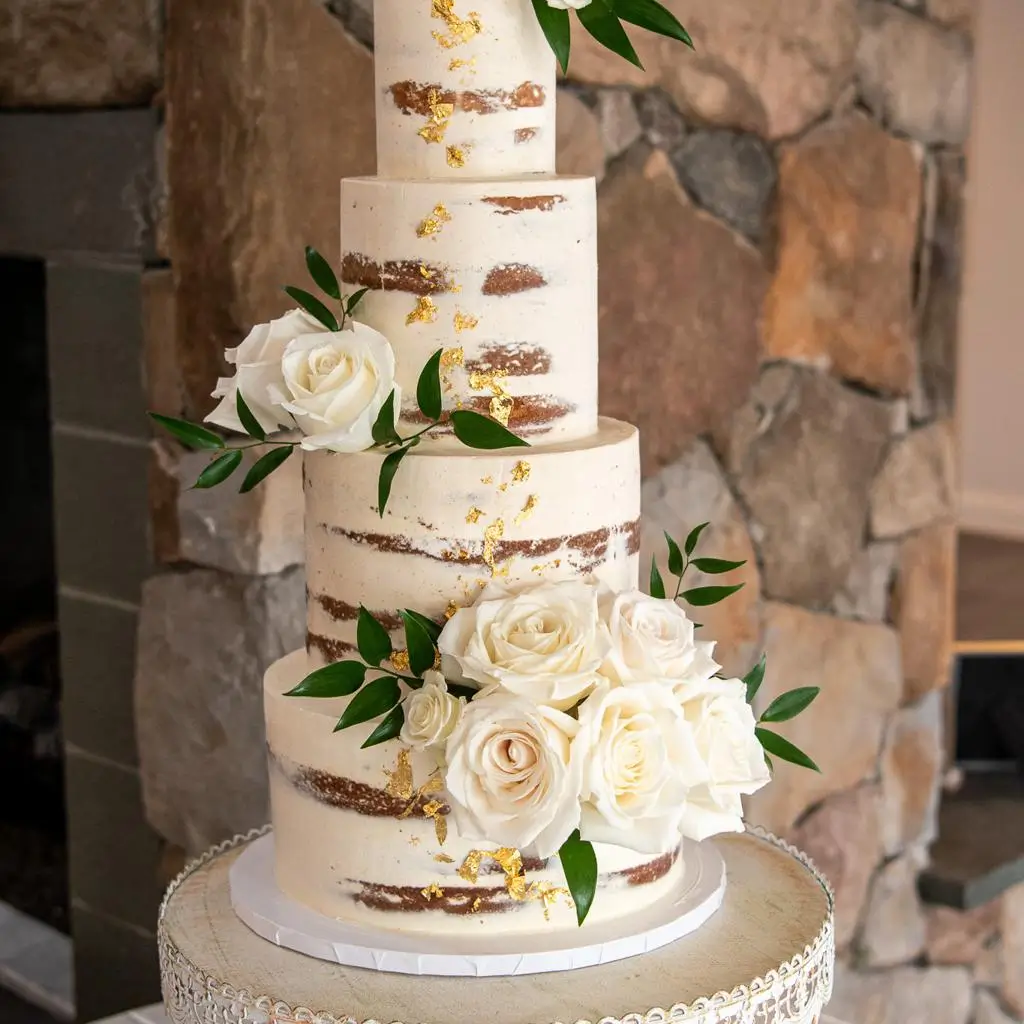
Edible gold leaf, subtle metallic details, or a refined cake topper can make a naked cake feel luxurious without hiding its natural texture.
Best for: Formal weddings, modern celebrations, and glamorous reception styling.
Styling tip: Use only products explicitly labeled as edible when decorating the cake with metallic finishes. Decorative gold-colored products are not necessarily safe to eat.
9. Naked Wedding Cake With Fresh Figs
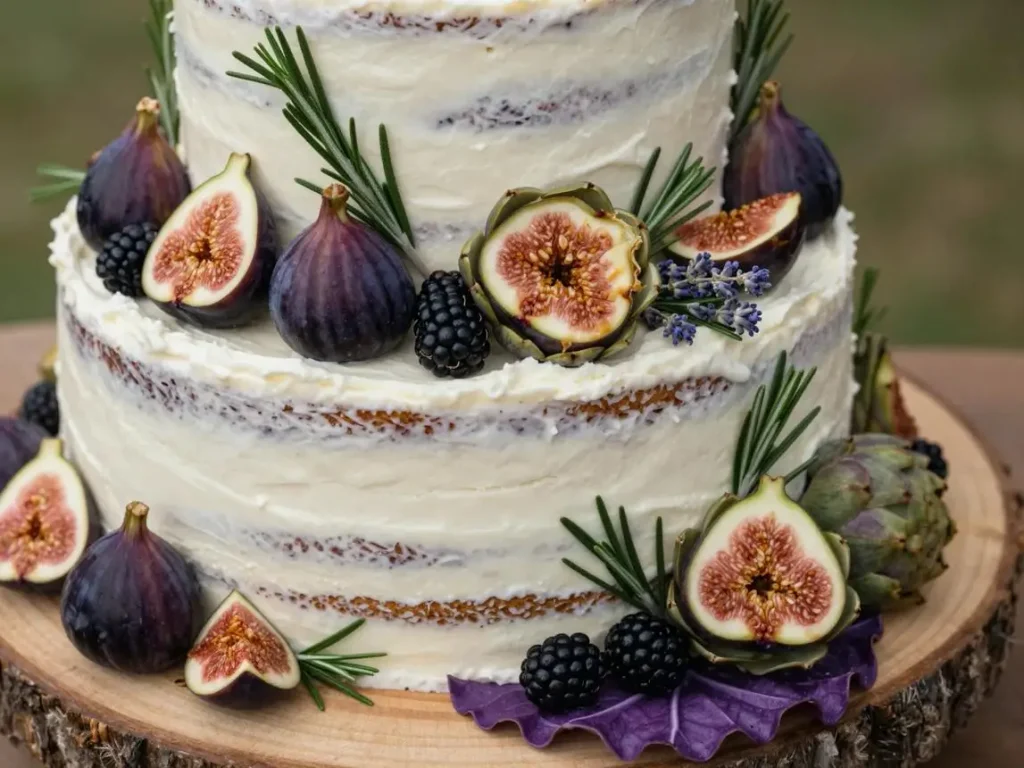
Fresh figs provide a sophisticated look with muted green, purple, and pink tones. They pair well with vanilla, almond, honey, and complementary fruit flavors.
Best for: Autumn weddings, Mediterranean-inspired celebrations, and intimate receptions.
Styling tip: Choose ripe but firm figs and add them close to serving time. Cut fruit releases moisture, so avoid leaving it against exposed cake for extended periods.
10. Single-Tier Naked Wedding Cake

A single-tier cake can be just as beautiful as a large centerpiece. It works particularly well for smaller weddings and celebrations where the couple wants a simple cake-cutting moment.
Best for: Elopements, micro-weddings, intimate receptions, and small guest lists.
Styling tip: Confirm the cake’s serving yield with your baker. A small decorative cake may not provide enough portions for every guest.
11. Naked Wedding Cake With Multiple Tiers
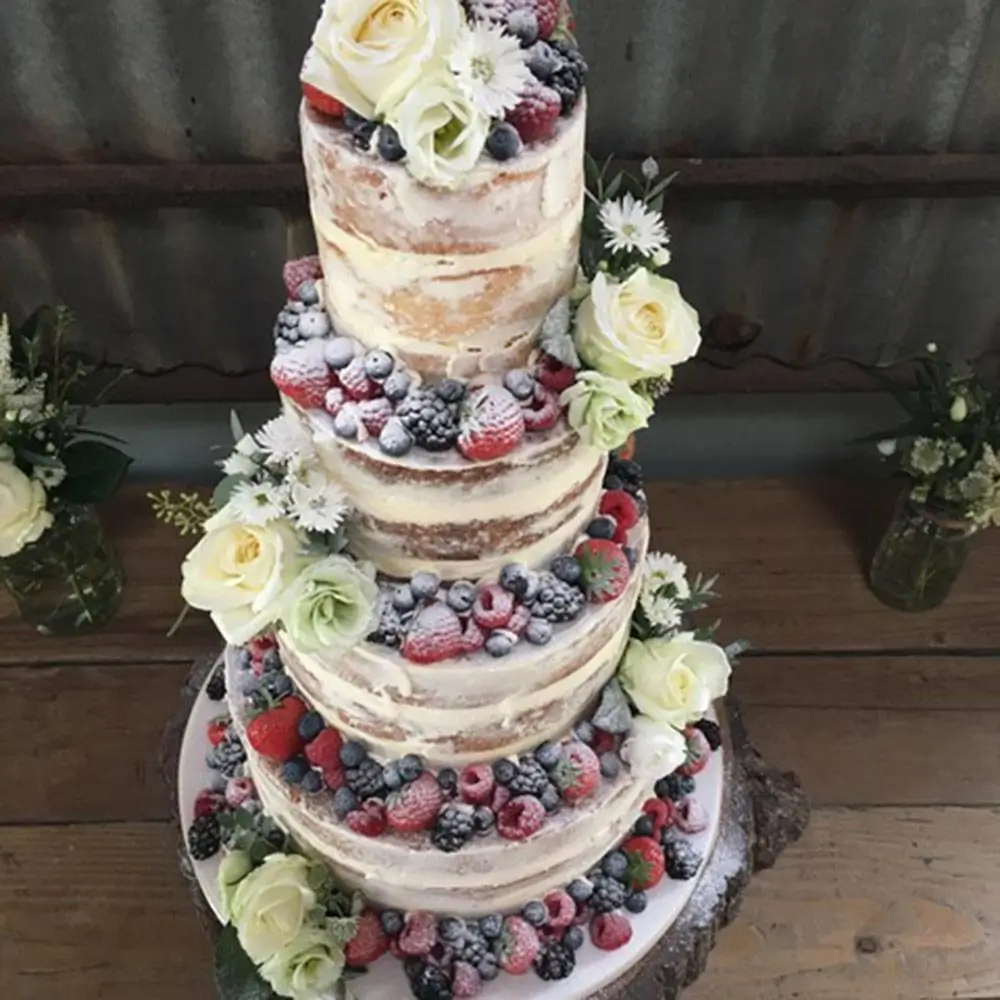
A tiered naked cake creates a dramatic centerpiece while retaining a natural finish. Each tier can have the same flavor or a different combination.
Best for: Larger receptions, formal cake-cutting ceremonies, and statement dessert displays.
Styling tip: Ask your baker about internal supports, tier separation, transportation, and assembly. Tall cakes require proper structural support even when the design looks simple.
12. Minimalist Naked Wedding Cake
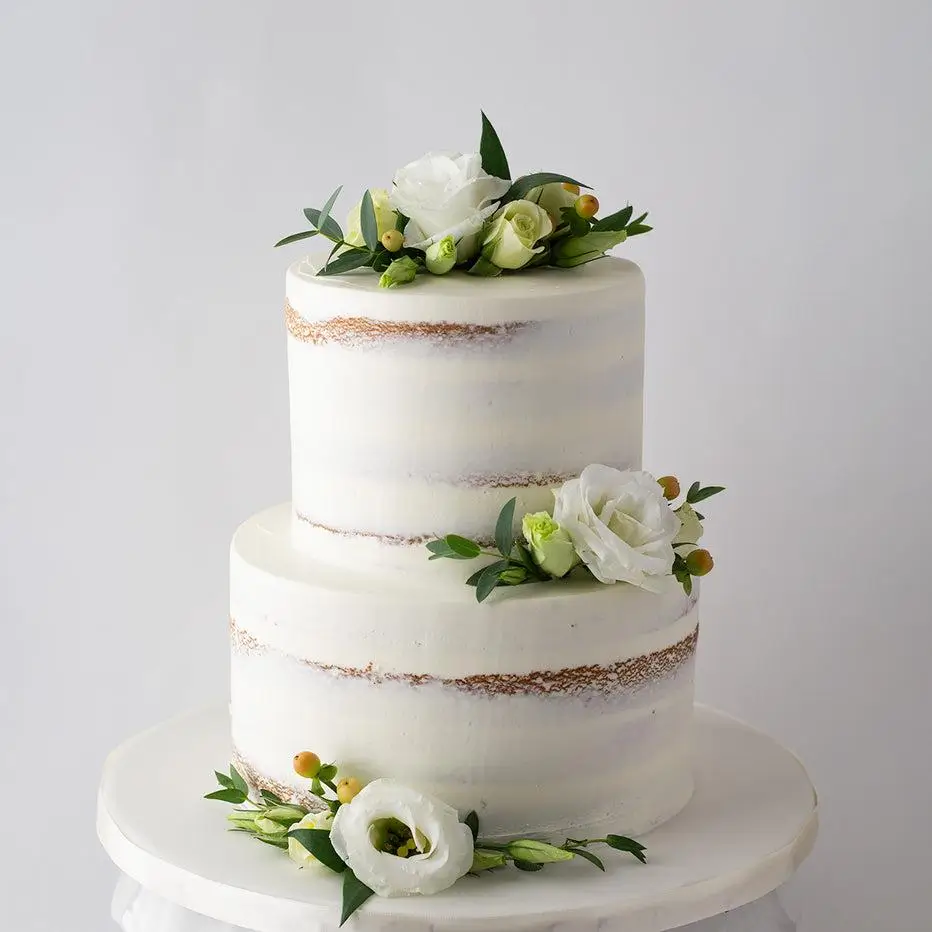
A minimalist naked cake uses clean lines, restrained decoration, and carefully finished layers. A small floral accent or simple topper may be all the decoration it needs.
Best for: Contemporary weddings, minimalist venues, and couples who prefer understated design.
Styling tip: Prioritize straight sides, even layers, and a clean cake stand. A restrained design leaves little room for uneven finishing to go unnoticed.
How to Choose the Right Naked Wedding Cake
Before choosing a design, consider how it will work with your wedding rather than selecting it on appearance alone.
Match the cake to your wedding theme
| Wedding style | Recommended cake design | Decoration ideas |
| Rustic | Fully naked | Berries, greenery, wooden stand |
| Romantic | Semi-naked | Roses, delicate foliage |
| Modern | Minimalist semi-naked | Clean tiers, simple topper |
| Boho | Naked or semi-naked | Dried accents used safely, earthy tones |
| Garden | Semi-naked | Suitable fresh flowers and seasonal fruit |
| Formal | Refined semi-naked | Edible gold accents, restrained florals |
| Autumn | Chocolate or vanilla naked cake | Figs, pears, seasonal berries |
Choose one or two decoration elements that reinforce your theme. Combining too many flowers, fruits, metallic accents, and toppers can make the cake look busy.
Choose flavors that complement the exposed layers
Because the sponge remains visible, its color and texture become part of the cake’s overall design.
Popular combinations include:
- Vanilla sponge and vanilla buttercream: A classic option that works with almost any wedding palette.
- Lemon sponge and raspberry filling: Bright, fruity, and well suited to spring and summer celebrations.
- Chocolate sponge and chocolate ganache: Rich and dramatic, especially with berries.
- Almond sponge and cherry filling: A sophisticated combination for romantic or autumn weddings.
- Carrot cake and cream cheese frosting: A flavorful choice for rustic celebrations, provided refrigeration and stability are handled appropriately.
- Red velvet and cream cheese filling: A striking contrast between the red sponge and pale filling.
Ask your baker to confirm that the selected filling is stable enough for the number of tiers and the expected display conditions. Fillings containing cream cheese, custard, fresh cream, or fruit may require refrigeration and additional handling precautions.
How Many Tiers Do You Need?
The number of tiers depends on your guest count, cake dimensions, serving size, and whether you plan to provide other desserts.
Use the following table as an initial planning guide, not a guaranteed serving calculation.
| Guest count | Possible cake arrangement | Planning note |
| 10–25 guests | One small tier | Suitable for an intimate celebration |
| 25–50 guests | One large tier or two small tiers | Confirm the actual yield before ordering |
| 50–80 guests | Two or three tiers | Consider serving size and additional desserts |
| 80–120 guests | Three tiers or more | Ask about tier dimensions and kitchen-cutting portions |
| 120+ guests | A larger tiered cake or display cake with kitchen cake | A separate cake can help manage serving quantities and cost |
A tier count alone does not determine how many guests a cake serves. Two cakes with the same number of tiers can have very different yields depending on their diameters and heights.
Practical tip: Give your baker the final guest count, desired portion size, and dessert plan. Ask for a written serving estimate based on the exact dimensions of the proposed cake.
Naked Wedding Cake Budget: What Affects the Price?
A naked wedding cake is not automatically cheaper than a fully frosted cake. Although it may need less exterior buttercream, the overall price depends on the baker’s labor, ingredients, size, structure, decoration, and delivery requirements.
The following factors typically influence the quote.
| Cost factor | Why it matters |
| Number and size of tiers | Larger cakes require more ingredients and preparation |
| Cake flavor | Premium ingredients and multiple flavors may increase costs |
| Filling | Specialty fillings can require additional preparation and refrigeration |
| Decoration | Fresh flowers, berries, gold leaf, and custom toppers add expense |
| Structural support | Tiered cakes need suitable boards, dowels, and assembly |
| Delivery and setup | Distance, venue access, and on-site assembly affect the service |
| Design complexity | Detailed finishing and custom styling require additional labor |
How to manage your cake budget
- Set a total budget first. Tell your baker the maximum amount you want to spend, including delivery and setup.
- Prioritize size over unnecessary decoration. A well-finished cake with a simple design can look beautiful without extensive embellishment.
- Choose seasonal fruit and flowers. Availability varies by location and season, so ask which options offer the best value.
- Limit the number of flavors. Multiple flavors may add preparation and coordination requirements.
- Consider a display cake with kitchen cake. A smaller decorated cake can provide the centerpiece while additional cake is prepared for serving, subject to your venue’s arrangements.
- Compare complete quotes. Check serving counts, decoration, delivery, setup, rental items, and any extra charges before choosing a baker.
Request quotes from several bakers using the same guest count, design reference, and flavor requirements. This makes the comparison more useful than comparing headline prices alone.
Fully Naked vs. Semi-Naked Wedding Cake
Both styles showcase the sponge, but they create different visual effects and require slightly different care.
| Feature | Fully naked cake | Semi-naked cake |
| Exterior frosting | Little or none | Thin, partially transparent coating |
| Overall appearance | Rustic and natural | Soft, polished, and romantic |
| Sponge visibility | Very prominent | Visible through a thin frosting layer |
| Moisture protection | Less exterior frosting | Buttercream provides some additional protection |
| Best suited to | Casual, rustic, and natural themes | Classic, modern, and garden weddings |
| Display considerations | Can dry out more quickly | May offer slightly better surface protection |
A semi-naked wedding cake is often a practical choice if you want exposed layers without the completely bare appearance. However, neither style is immune to drying, heat, or moisture-related problems.
How to Order a Naked Wedding Cake From a Baker
Ordering early helps you secure your preferred baker and gives you time to finalize flavors, decoration, and logistics.
Step 1: Confirm your guest count
What to do: Estimate how many guests will receive a slice.
How: Use your latest RSVP count and account for other desserts, serving sizes, and whether everyone will be offered cake.
Why it matters: Your guest count determines the cake’s approximate size and affects the quote.
Watch out for: Ordering solely by tier count. Always confirm the estimated number of portions.
Step 2: Choose your design and flavor
What to do: Decide whether you want a fully naked or semi-naked finish.
How: Collect two or three reference images and choose your preferred sponge, filling, and decoration.
Why it matters: A focused brief makes it easier for the baker to estimate cost and reproduce the intended appearance.
Watch out for: Selecting a design that requires delicate fresh fruit or flowers without considering the season and venue conditions.
Step 3: Discuss structural stability
What to do: Make sure the cake can safely support its tiers.
How: Ask about cake density, filling stability, supports, and whether the cake will be assembled at the bakery or venue.
Why it matters: Soft sponge and slippery fillings can make a tall cake unstable.
Watch out for: Assuming a simple-looking cake requires no structural planning.
Step 4: Confirm the delivery and display plan
What to do: Agree on delivery time, setup location, and storage requirements.
How: Give the baker the venue address, access information, display schedule, and contact details for the venue coordinator.
Why it matters: Naked cakes have exposed surfaces that can dry out or be affected by heat and handling.
Watch out for: Leaving the cake on a sunny outdoor table or in a warm room for an extended period.
Step 5: Finalize the agreement
What to do: Review the complete quote and written order.
How: Confirm the design, dimensions, flavors, serving estimate, decoration, delivery, setup, payment schedule, and cancellation terms.
Why it matters: Written details reduce misunderstandings and last-minute changes.
Watch out for: Assuming flowers, cake stands, toppers, or venue setup are included when they may be charged separately.
How to Keep a Naked Wedding Cake Fresh
Exposed sponge is part of a naked cake’s charm, but it also creates a practical challenge: the cake can lose moisture more quickly than one fully covered in frosting.
Follow these freshness guidelines
- Confirm storage requirements with your baker. Buttercream, fresh cream, custard, cream cheese, and fruit fillings have different food-safety requirements.
- Keep the cake away from direct sunlight. Heat can soften fillings and compromise the structure.
- Use a suitable covered storage area. Protect the cake from dust, insects, airflow, and accidental contact.
- Limit display time. Ask the baker how long the cake can safely remain on display under the expected conditions.
- Add delicate fruit and flowers at the appropriate time. Some decorations release moisture, wilt, or deteriorate during a long display.
- Follow safe temperature guidance. Perishable fillings must be kept at appropriate temperatures, not simply left at room temperature because the cake is decorative.
For an outdoor wedding, discuss a shaded display area, refrigeration access, and the timing of the cake’s arrival. If the weather is hot or humid, a fully frosted cake or a different dessert may be more practical.
Can You Make a Naked Wedding Cake Yourself?
Yes. A DIY naked wedding cake is possible if you have reliable baking skills, enough preparation time, and a plan for safe transportation and storage.
For a first attempt, a single-tier or two-tier cake is generally easier to manage than a tall, multi-tier design.
Basic supplies
- Cake pans of the required sizes
- Ingredients for your chosen sponge cake
- Stable filling or buttercream
- Cake leveler or serrated knife
- Offset spatula
- Cake board and suitable stand
- Food-safe piping bag, if needed
- Appropriate supports for stacked tiers
- Food-safe decorations
- Cake box or suitable transport container
A practical DIY process
- Bake the layers. Prepare the sponge in advance and allow it to cool completely before assembling.
- Level the cakes. Trim uneven tops so the layers sit flat and stack securely.
- Add the filling. Spread an even layer and use a stable filling that will not slide or squeeze out under the cake’s weight.
- Stack the layers. Align each layer carefully and use suitable internal supports for a tiered design.
- Finish the exterior. Leave the sides exposed for a fully naked finish or apply a thin buttercream coating for a semi-naked appearance.
- Decorate thoughtfully. Add suitable fruit, flowers, or a topper without overwhelming the cake.
- Store and transport safely. Follow the filling’s refrigeration requirements and keep the cake level and protected during delivery.
DIY mistakes to avoid
- Assembling the cake before the layers have cooled completely
- Using a filling that is too soft for stacking
- Applying uneven filling that causes tiers to lean
- Leaving perishable ingredients unrefrigerated
- Decorating too early with wet fruit or delicate flowers
- Attempting to transport a tall cake without suitable support
If you are planning a large wedding, consider hiring a professional baker for the main cake and making a smaller naked cake for a pre-wedding event or intimate celebration.
Common Naked Wedding Cake Mistakes
A naked wedding cake can look effortless, but the best results come from careful planning.
Choosing appearance over stability: A tall cake with soft sponge and loose filling may not hold its shape. Ask the baker to recommend suitable recipes and supports.
Leaving the cake exposed for too long: The sponge can dry out, especially in warm or windy conditions. Arrange the display timeline with the baker.
Using too many decorations: Excess fruit, flowers, and accessories can hide the exposed layers and create visual clutter. Choose a consistent color palette.
Ignoring food safety: Some flowers are toxic, and perishable fillings need appropriate temperature control. Confirm the suitability of all decorations and ingredients.
Ordering the wrong size: The cake may run short even if it looks large on display. Obtain a serving estimate based on actual dimensions.
Forgetting the venue setup: A cake stand that is too small, an unstable table, or an inconvenient display location can undermine the design. Confirm the setup with the venue coordinator.
Frequently Asked Questions
Not necessarily. A naked cake may need less exterior frosting, but the final price depends on the cake’s size, ingredients, filling, decoration, structural requirements, and delivery. Request a complete quote to compare costs fairly.
The answer depends on the recipe, filling, and storage conditions. Cake layers can often be baked ahead and stored appropriately, but the assembled cake needs a plan that preserves freshness and food safety. Ask your baker to set the preparation, assembly, and delivery schedule for your specific cake.
Yes, provided the cake and fillings are suitable for the conditions. Choose a shaded display area and arrange appropriate storage. Heat, humidity, wind, and direct sunlight can affect exposed sponge, buttercream, and fresh decorations.
Use flowers confirmed to be suitable for food-contact decoration by your baker or florist. Many common ornamental flowers are toxic or may contain pesticide residues. A flower’s appearance alone does not establish that it is safe to use on a cake.
Choose a fully naked cake for a rustic, natural look with clearly exposed sponge. Choose a semi-naked cake if you prefer a softer, more polished finish with a thin layer of buttercream. Your venue, weather, filling, and desired display time should also influence the decision.
Final Thoughts
A naked wedding cake can be a beautiful centerpiece for a rustic, romantic, garden, or modern celebration. The key is to balance its natural appearance with practical decisions about flavor, serving size, structure, decoration, and freshness.
Start by choosing between a fully naked and semi-naked finish. Then confirm your guest count, select a stable filling, and discuss the design and display conditions with your baker. With those details settled, you can create a cake that looks beautiful and serves your guests safely.
Emily Carter is a wedding planning writer and editor at MarryPlane. She covers wedding timelines, budgets, venues, invitations, vendors, ceremony planning, and practical details that help couples feel prepared for their big day. Emily focuses on clear, realistic advice that makes wedding planning easier without taking away from the excitement of the celebration.