
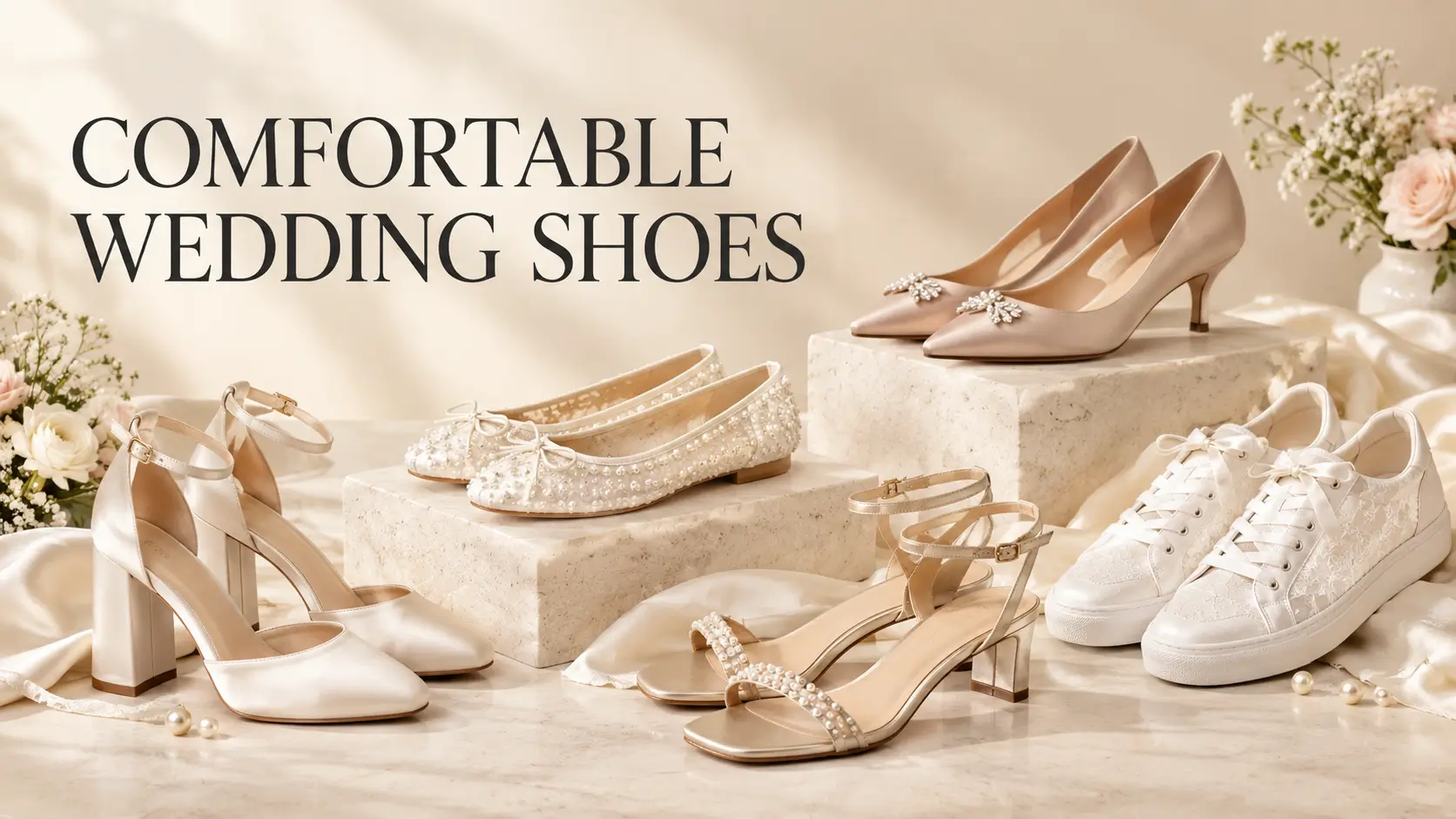
Comfortable wedding shoes combine supportive construction, a secure fit, and cushioning with a polished appearance suitable for a wedding.
The best options include block heels, low kitten heels, cushioned flats, supportive sandals, dressy loafers, and bridal sneakers. Choose a pair that suits the dress code, venue, weather, and expected time on your feet.
Wedding shoes should look beautiful in photographs, but they should also feel manageable during the ceremony, reception, and dancing.
If you are shopping for a bridal outfit, bridesmaid dress, or wedding guest look, the right pair balances style, stability, and all-day wearability.
What Makes Wedding Shoes Comfortable?
Comfort depends on more than heel height. A low shoe can still pinch your toes, while a carefully designed heel can feel surprisingly stable. Look at the shape, fit, support, materials, and construction before choosing a pair.
The most important features include:
- A comfortable fit: Your toes should have enough room without your heel slipping out of the shoe.
- Cushioned footbeds: Padding under the heel and ball of the foot can reduce pressure during long periods of standing.
- Stable soles: A secure outsole and a well-balanced heel can make walking easier on different surfaces.
- Supportive straps or closures: An adjustable ankle strap, secure slingback, or well-fitted upper can help keep the shoe in place.
- Breathable materials: Leather, fabric, and other breathable uppers may help reduce heat and moisture, depending on their construction.
- A suitable heel height: Choose a height you can walk in confidently, rather than one that looks attractive only while standing still.
No single feature guarantees comfort. The complete design needs to work with your feet, walking style, and wedding plans.
The Best Types of Comfortable Wedding Shoes
Different shoe styles suit different outfits and occasions. These are the most versatile options to consider when comfort is a priority.

1. Block heels
Block heels are an excellent choice for brides and wedding guests who want extra height without the narrow base of a stiletto. Their wider heel can provide greater stability on many surfaces, including paved walkways and some outdoor venues.
Look for ivory satin pumps, pearl-embellished sandals, or pointed-toe slingbacks with a padded footbed. A secure ankle strap adds a practical touch and creates a refined silhouette with midi dresses, gowns, and tailored outfits.
Best for: Long ceremonies, receptions, and weddings with mixed indoor and outdoor settings.
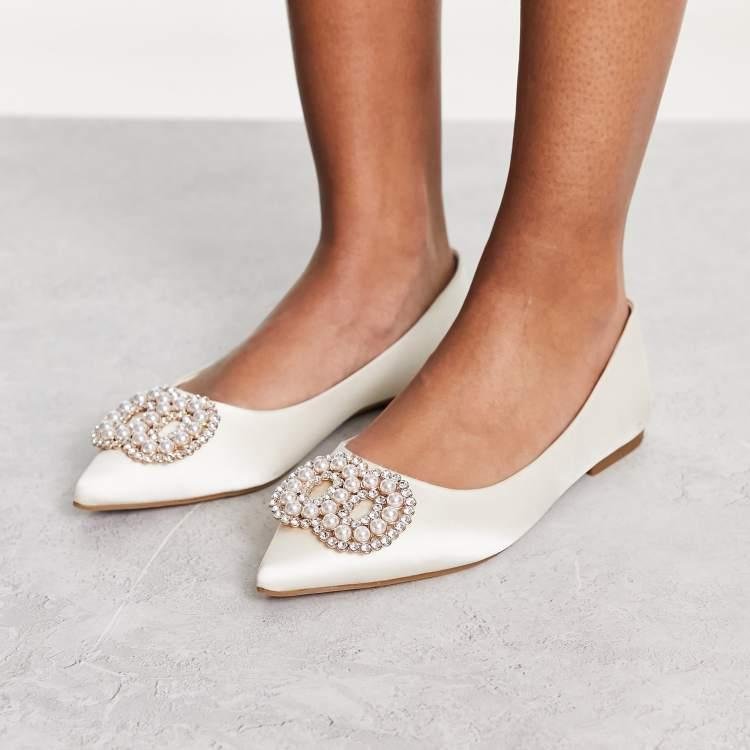
2. Bridal flats and ballet flats
Flat wedding shoes offer a graceful alternative to traditional heels. Choose pointed-toe satin flats for a sophisticated finish, rounded ballet flats for a romantic look, or pearl-detailed styles for a subtle bridal statement.
A structured flat with a cushioned footbed and a secure upper is usually more practical than an extremely thin, unpadded sole. Mary Jane straps and slingback designs can also help keep the shoe in place.
Best for: Brides who prefer no heel, guests attending daytime weddings, and anyone who values ease of movement.

3. Kitten heels
Kitten heels offer modest height with a delicate, dressy profile. Their low heel can feel easier to manage than a high stiletto, although comfort still depends on the shoe’s fit and construction.
Try ivory slingbacks, champagne satin pumps, or embellished pointed-toe styles. They work especially well with minimalist gowns, tailored jumpsuits, and sleek wedding guest dresses.
Best for: Semi-formal and formal weddings where you want a polished heel without substantial height.
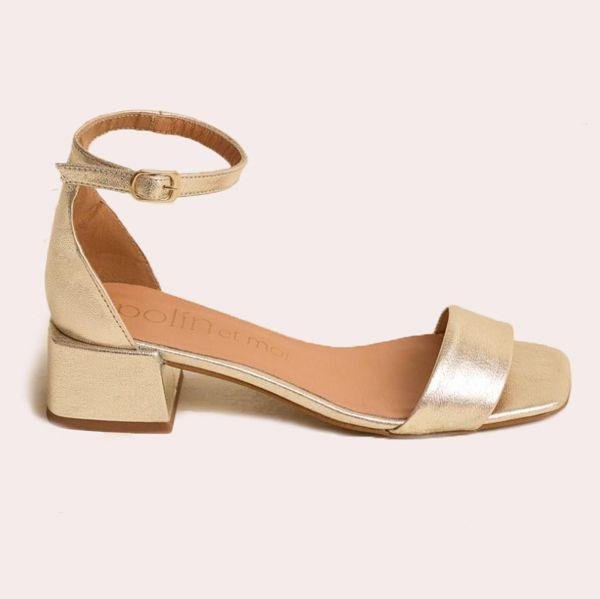
4. Supportive wedding sandals
Dressy sandals are useful for warm-weather celebrations, beachside receptions, and summer garden weddings. Look for soft straps, a secure back or ankle strap, a stable sole, and enough room across the forefoot.
Metallic gold, champagne, silver, and nude shades pair beautifully with flowing dresses and formal gowns. Avoid relying on slippery soles or narrow straps that concentrate pressure on one area of the foot.
Best for: Summer weddings, destination celebrations, and outdoor receptions with suitable walking surfaces.

5. Platform wedding heels
Platforms add height while reducing the difference in elevation between the heel and the front of the foot. This can make some platform designs feel less steep than traditional high heels.
Choose a stable platform with a secure fit rather than an excessively tall or heavy design. Ivory platforms complement dramatic gowns, while metallic versions can add glamour to evening attire.
Best for: Brides who want height and a statement silhouette. They are less suitable if the platform makes walking or balancing difficult.

6. Bridal sneakers
White or ivory sneakers offer a contemporary option for dancing, relaxed celebrations, and second-look bridal outfits. Satin laces, subtle pearls, embroidered details, or clean leather uppers can make them feel special without looking like everyday gym shoes.
Not every sneaker is supportive, so check cushioning, sole flexibility, fit, and stability. A sleek, low-profile design works well with shorter gowns, modern jumpsuits, and casual wedding dresses.
Best for: Reception dancing, informal weddings, and couples who prioritize personal style over traditional footwear.

7. Wedges and espadrilles
Wedges distribute support across a broader base than a narrow heel. Espadrille styles bring a relaxed, romantic feel to garden ceremonies, vineyard celebrations, and destination weddings.
Look for a securely attached upper and a sole that feels stable underfoot. Rope or jute-style soles suit rustic and bohemian outfits, while smooth satin wedges look more formal.
Best for: Outdoor venues, rustic celebrations, and brides who want some height without a slim heel.

8. Dressy loafers and Mary Janes
Loafers and Mary Janes provide a polished alternative to conventional bridal heels. Choose smooth leather, satin, velvet, or restrained pearl detailing for an elevated finish.
A low, stable sole and secure fit can make these styles practical for long events. Loafers pair especially well with tailored suits and jumpsuits, while Mary Janes complement vintage-inspired dresses and midi hemlines.
Best for: Modern wedding guests, city weddings, and anyone who prefers structured flats.
Quick Comparison: Which Wedding Shoes Should You Choose?
| Shoe style | Comfort advantage | Best setting |
| Block heels | Broad heel base | Receptions and garden venues |
| Ballet flats | No raised heel | Indoor ceremonies and dancing |
| Kitten heels | Modest heel height | Formal and semi-formal weddings |
| Supportive sandals | Open design and adjustable straps | Warm-weather weddings |
| Platform heels | Reduced heel-to-toe angle in some designs | Glamorous indoor celebrations |
| Bridal sneakers | Casual, easy-moving design | Dancing and relaxed weddings |
| Wedges | Broad supporting base | Outdoor and rustic venues |
| Loafers or Mary Janes | Secure, structured fit | City weddings and tailored outfits |
The most comfortable option is the one that fits your feet well and suits the surfaces you will walk on. These styles are starting points, not guarantees of comfort.
How to Choose Comfortable Wedding Shoes for Your Role
Comfortable wedding shoes for brides
Bridal footwear should complement the dress while supporting your plans for the day. Consider the gown’s length, the ceremony location, and whether you will wear the same shoes for the reception.
- For a traditional bridal gown: Ivory satin pumps, low block heels, and pearl-embellished flats look elegant.
- For a minimalist dress: Sleek slingbacks, square-toe sandals, or simple pointed flats keep the look refined.
- For a bohemian gown: Espadrilles, soft leather sandals, and delicate flats complement flowing fabrics.
- For a modern bridal jumpsuit: Metallic sandals, dressy loafers, or clean white sneakers create a contemporary finish.
- For the reception: Keep a second pair ready if your ceremony shoes become tiring.
A second pair should still fit securely and suit the venue. Switching to flats or sneakers can help you keep dancing without forcing yourself to stay in uncomfortable heels.
Comfortable wedding shoes for guests
Wedding guests should balance comfort with the invitation’s dress code. Formal events generally call for polished dress shoes, while relaxed daytime weddings allow more flexibility.
For a black-tie wedding, consider elegant low heels, refined satin flats, or formal sandals that complement your outfit. For a cocktail wedding, kitten heels and block-heel pumps offer a dressy middle ground.
At casual weddings, understated flats or sophisticated loafers may be appropriate. Clean sneakers are best reserved for celebrations where the dress code permits them.
Avoid assuming that every outdoor wedding is informal. A garden ceremony can still be black tie, and your shoes should reflect the invitation.
Comfortable wedding shoes for bridesmaids
Bridesmaids often spend considerable time standing for photographs, walking between locations, and participating in the reception. Coordinating the overall appearance does not require everyone to wear identical heels.
Consider choosing a shared color, such as champagne, nude, silver, or black, while allowing different heel heights. One bridesmaid might prefer block heels, while another feels more comfortable in flats.
If the couple wants matching shoes, select a style with a secure fit and offer suitable alternatives when possible. Comfort can help the wedding party move confidently throughout the day.
How to Match Wedding Shoes to Your Outfit
The right color and silhouette help your shoes feel intentional rather than like an afterthought.

Ivory and white
These shades create a classic bridal look. Match the undertone to your dress: warm ivory may look creamier than bright white, while optic white can appear stark beside champagne fabric.

Champagne and metallics
Gold, champagne, and silver bring subtle shine to wedding attire. Coordinate them with jewelry or bag hardware if you want a cohesive appearance, but an exact match is not essential.
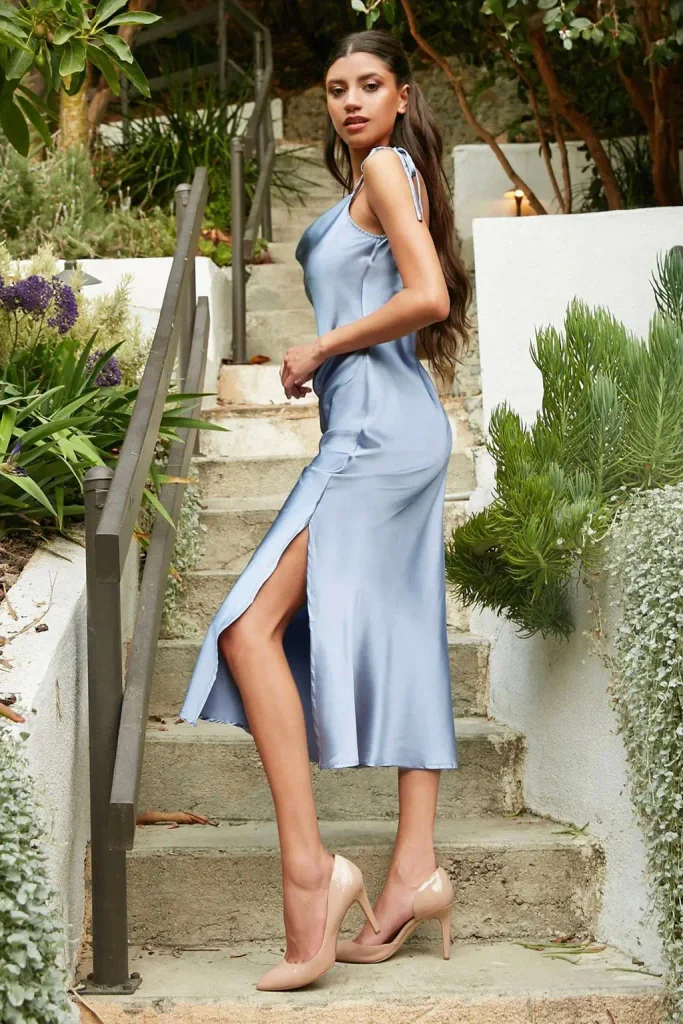
Nude and blush
Neutral shoes work with many dress colors, from dusty blue and sage to burgundy and floral prints. Choose a shade that complements your skin tone or outfit rather than searching for a universal nude.

Bold colors
Ruby, cobalt, emerald, and other rich shades can add personality to a simple outfit. For a balanced look, repeat the color in a small accessory or let the shoes stand alone as an accent.
Texture matters as much as color. Satin looks luxurious with formal gowns, leather offers a clean and versatile finish, and delicate mesh can add visual interest. Crystal or pearl details suit embellished dresses, while minimalist shoes often work better with heavily decorated outfits.
The Best Wedding Shoes for Different Venues
Your venue can make a significant difference to how comfortable your shoes feel.
- Grass and garden paths: Block heels and wedges are often more practical than narrow stilettos, which may sink into soft ground.
- Beach weddings: Flat sandals or secure, low-profile footwear are easier to manage on sand. Consider a separate pair for paved areas.
- Indoor ballrooms: Kitten heels, block heels, flats, and dressy sandals can all work, depending on the dress code and floor surface.
- Cobblestone streets: Choose a stable heel and secure fastening. Narrow heels can catch between stones.
- Staircases and uneven paths: Prioritize traction, balance, and a shoe that stays securely on your foot.
- Cold-weather weddings: Closed-toe pumps, elegant flats, or dressy ankle boots may provide better coverage than open sandals.
If the wedding includes several locations, plan for the most challenging surface rather than choosing shoes based solely on the ceremony photographs.
Seasonal Guide to Comfortable Wedding Shoes
Spring
Spring weddings often pair well with ballet flats, slingbacks, and low block heels. Soft pastels, floral details, ivory satin, and metallic finishes complement the season.
For unpredictable weather, consider a closed-toe option and check whether outdoor paths may become wet.
Summer
Breathable sandals, lightweight flats, and open-toe block heels work well for many summer celebrations. Metallic finishes and soft neutral colors suit daytime ceremonies and evening receptions.
However, open shoes are not automatically more comfortable. Straps can rub, and feet may swell in warm weather. Try the shoes before the event and ensure they remain secure.
Fall
Fall wedding outfits often feature deeper colors, textured fabrics, and richer metallics. Burgundy, chocolate, forest green, and navy pair well with champagne or black footwear.
Closed-toe pumps, structured flats, and dressy loafers are practical choices for cooler evenings.
Winter
Winter celebrations call for shoes that suit the temperature and walking conditions. Consider closed-toe pumps, velvet flats, or elegant ankle boots for appropriate venues.
If you must cross wet or icy outdoor areas, prioritize traction and change into formal shoes once you reach a safe indoor space. Decorative satin soles are not ideal for slippery surfaces.
Are Flat Wedding Shoes More Comfortable Than Heels?
Flat wedding shoes can be more comfortable for people who prefer not to wear heels, but flats are not automatically the better choice for everyone.
A very thin sole may provide little cushioning on hard floors. A narrow toe box can squeeze the toes, and a loose back can cause rubbing. Some people find a low heel more comfortable than a completely flat shoe.
The key is to consider the entire design.
Choose flats with adequate cushioning, a suitable shape, and a secure fit. If you prefer heels, try a lower heel with a broad base and supportive construction. There is no single heel height that guarantees comfort for every person.
A podiatrist’s advice published by Who What Wear also emphasizes that lower heel heights and supportive footbeds can help improve comfort, while individual fit remains important.
How to Find Wedding Shoes That Fit Properly
Even beautiful shoes can become difficult to wear when they do not fit well. Use these practical checks when shopping.
Shop at a sensible time of day
Try shoes later in the day if possible, when your feet may be slightly larger than they were in the morning.
Check toe space
Your toes should not feel crushed or forced into a pointed shape. Pay attention to pressure along the sides as well as at the front.
Walk on a safe surface
Test several steps, turns, and stops. The shoe should stay on your foot without pinching or creating obvious pressure points.
Try both shoes
Feet can differ slightly in size. Check the fit on both sides and choose according to your larger foot.
Wear your intended hosiery
If you plan to wear tights, stockings, or particular socks, test the shoes with them.
Check the return policy
Read the retailer’s rules before wearing shoes outdoors. Keep packaging and try them indoors until you are confident about the fit.
Do not buy shoes that feel painful in the hope that they will stretch enough to become comfortable. Some materials soften with wear, but substantial pressure, slipping, or toe compression should not be ignored.
How to Break In Wedding Shoes Before the Big Day
New shoes can create friction during long events, especially when they are worn for several hours without prior use. A little preparation helps you identify potential problems before the wedding.
- Wear the shoes indoors for short periods, following the manufacturer’s care instructions.
- Walk, turn, and practice standing in them to identify pressure points.
- Check the fit with your wedding outfit, especially if the hem sits close to the floor.
- Use suitable blister-protection products on areas prone to rubbing.
- Pack a backup pair and any small comfort supplies you may need.
Avoid aggressive stretching or heating methods that could damage delicate satin, embellishments, or leather. If the shoes continue to hurt, replace them rather than forcing yourself to wear them.
How Much Should You Spend on Comfortable Wedding Shoes?
Comfortable wedding shoes are available across a wide range of budgets. A higher price does not automatically mean a better fit, and an affordable pair can work well when the construction suits your needs.
Instead of focusing on price alone, compare:
- Footbed cushioning and overall support.
- Material quality and how the upper feels against your skin.
- Sole grip and heel stability.
- Secure straps or closures.
- Durability and potential for future wear.
- Return or exchange conditions.
If you want shoes you can wear again, consider a neutral flat, a classic low heel, or a refined metallic sandal. Brides who prefer a dramatic ceremony shoe can also buy an affordable, simpler pair for the reception.
For current bridal shopping inspiration, The Knot’s 2026 wedding shoe guide covers styles ranging from block heels and flats to sneakers and reception shoes. Its examples are useful for comparing designs, although prices and availability can change.
Comfortable Wedding Shoes: Common Mistakes to Avoid
A few common shopping mistakes can undermine an otherwise thoughtful outfit.
- Choosing appearance over fit: A beautiful shoe is not a good choice if it pinches or slips.
- Assuming flats cannot hurt: Thin soles and narrow toe boxes can still create discomfort.
- Wearing new shoes for the first time at the wedding: You may discover friction or instability too late to make an easy change.
- Ignoring the venue: Stilettos can sink into grass, while smooth soles can be slippery on certain floors.
- Choosing excessive height: If you cannot walk and turn comfortably, consider a lower or more stable design.
- Forgetting the dress hem: Changing from heels to flats can make a long gown drag on the ground.
- Buying the wrong size for a tight fit: Do not rely on painful shoes becoming comfortable after a few hours.
The goal is to choose footwear that lets you enjoy the celebration without constantly thinking about your feet.
Frequently Asked Questions
Block heels, supportive flats, low kitten heels, and well-fitting sandals are useful starting points. Look for cushioning, a secure fit, and enough room for your toes. Your ideal pair depends on your feet and the surface you will stand on.
The best choices include ivory block heels, satin ballet flats, low slingbacks, and bridal sneakers for the reception. Select a style that complements your gown and lets you walk confidently throughout the day.
Yes, when the dress code and couple’s preferences allow them. Clean, minimal sneakers can work for casual celebrations and reception dancing. For formal weddings, choose a dressier alternative unless sneakers are explicitly welcomed.
Block heels often provide a broader base and can feel more stable than stilettos. However, comfort also depends on heel height, shoe fit, cushioning, and the surface underfoot.
Buying several weeks before the wedding gives you time to test the fit, practice walking, and arrange an exchange if needed. For a bridal gown, bring the shoes to fittings so the hem can be adjusted to the intended heel height.
Final Thoughts
The best comfortable wedding shoes are the ones that balance style, fit, and practicality. Block heels offer stability, flats provide a graceful no-heel option, kitten heels add modest height, and bridal sneakers make reception dancing easier.
Before making your final choice, test the shoes, consider the venue, and make sure they complement your outfit. A comfortable pair should help you move confidently, enjoy the photographs, and stay focused on the celebration rather than your feet.

Emily Carter is a wedding planning writer and editor at MarryPlane. She covers wedding timelines, budgets, venues, invitations, vendors, ceremony planning, and practical details that help couples feel prepared for their big day. Emily focuses on clear, realistic advice that makes wedding planning easier without taking away from the excitement of the celebration.